Sleep EEG AI estimates brain age to flag dementia risk
Sleep EEG AI estimates brain age and links a 10-year gap to about 40% higher dementia risk, based on EEG data from 7,000 adults.
Atlas Newsdesk ·
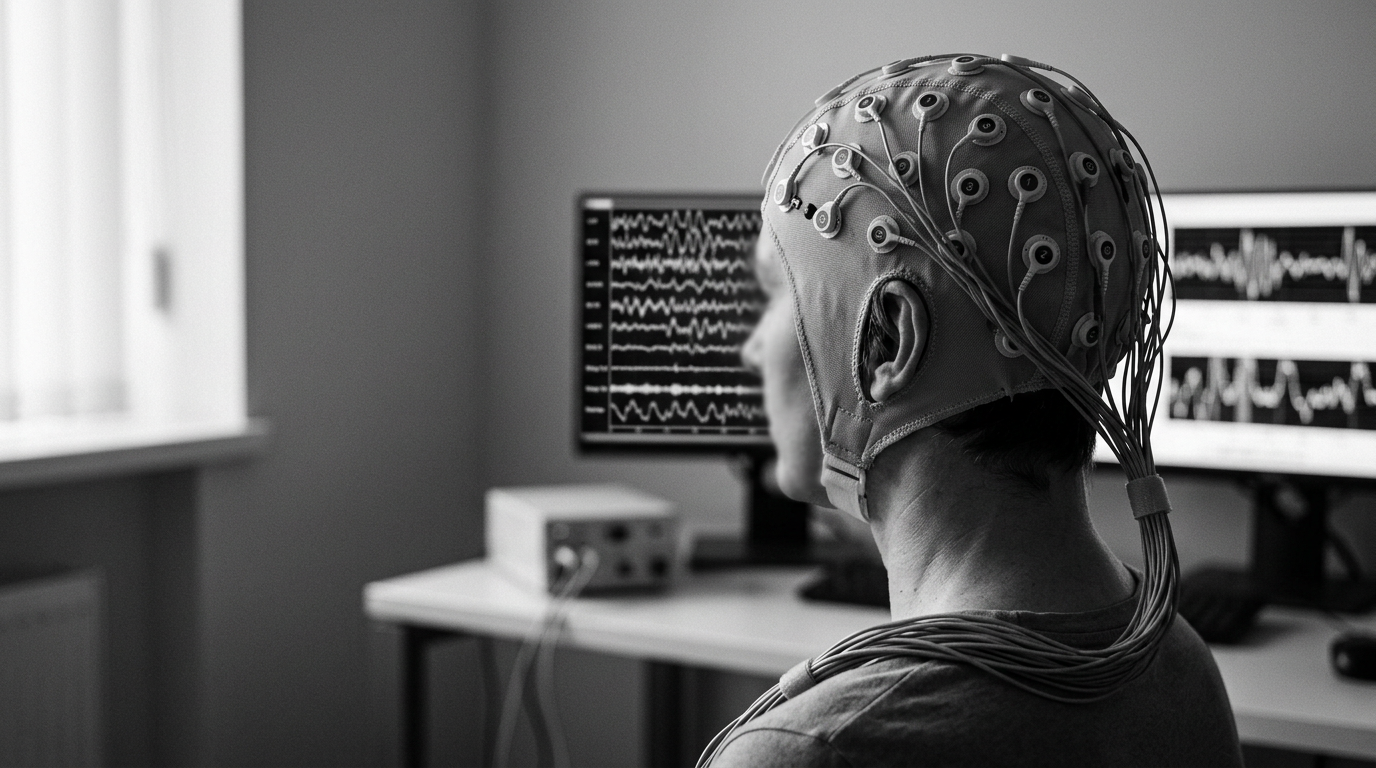
A machine-learning model built on sleep electroencephalography (EEG) data can estimate a person’s “brain age” and use that gap to flag elevated dementia risk years before symptoms appear, researchers said. The approach relies on patterns in overnight brain-wave activity rather than questionnaires or daytime cognitive tests.
The research analyzed EEG recordings from 7,000 adults. Using those sleep signals, the model produced an estimated brain age that could be compared with each person’s chronological age to quantify a mismatch linked to future dementia risk.
How the “brain age” gap links to future dementia risk The analysis found a clear relationship between the size of the gap and later outcomes. For every 10-year difference between estimated brain age and chronological age, the risk of developing dementia rose by about 40%, according to the findings.
Researchers said the association remained statistically significant after accounting for potential confounding factors. The adjustments included education, smoking, body mass index, and genetic predispositions.
Why sleep micro-patterns mattered more than basic sleep metrics Rather than focusing on broad measures such as total sleep time or sleep efficiency, the model looked for fine-grained signatures in brain waves during sleep. Officials involved in the work said these microscopic EEG patterns were more predictive than traditional sleep duration or efficiency metrics.
Examples of the signals highlighted in the research included delta waves and sleep spindles. The model was designed to detect subtle changes in these features that may reflect underlying brain health and aging processes.
Potential pathway to non-invasive, scalable screening The study frames the method as a non-invasive diagnostic approach that could be used beyond specialist clinics. Because sleep EEG can be captured without invasive procedures, the researchers said the technique may be suitable for broader monitoring programs aimed at aging populations.
They also pointed to the possibility of integrating this kind of analysis into wearable technology. If implemented responsibly, that could allow large-scale screening in everyday settings, with automated estimates that indicate who may benefit from further medical evaluation.
Open questions and practical limits
While the model showed statistically robust links in the analyzed cohort, translating it into routine use would still depend on how reliably EEG-quality signals can be collected in non-clinical environments. Another uncertainty is how best to act on an elevated risk signal, including when follow-up testing should be triggered.
The researchers said that monitoring sleep-based neural markers could provide a scalable way to assess risk earlier, potentially improving the timing of intervention and planning for individuals and healthcare systems.