AbbVie Taps AI to Fortify Post-Humira Drug Pipeline
The pharma giant's new partnership with AI firm Iambic signals a strategic shift to accelerate R&D as its blockbuster Humira faces competition.
Jurgen Goldmeier ·
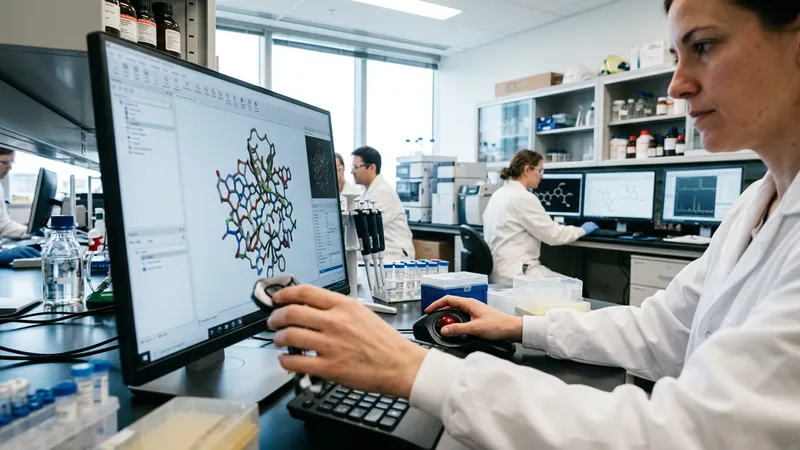
AbbVie Taps AI to Fortify Post-Humira Drug Pipeline AbbVie (ABBV) announced a multi-year collaboration with Iambic to use its artificial intelligence platform for new drug discovery, a move aimed at refilling a pipeline under pressure. The partnership will deploy Iambic’s Enchant v3 model, trained on more than 6,000 molecular properties, to find novel small-molecule candidates across immunology, neuroscience, and oncology. This represents a strategic push into tech-enabled research and development (R&D) as the company navigates a critical transition period. ## Background The tape for AbbVie has been defined by one story: the loss of market exclusivity for Humira, once the world's best-selling drug. Investors have watched closely as biosimilar competition erodes its revenue, shifting focus to the uptake of its next-generation immunology assets, Skyrizi and Rinvoq. While those drugs have performed well, Wall Street remains fixated on AbbVie's long-term growth prospects and the health of its broader pipeline. Any sign of weakness or delay in developing new blockbuster assets could pressure the stock's multiple, which is the price investors are willing to pay for a dollar of its earnings. This deal lands amid a broader industry pivot. Pharmaceutical giants are pouring capital into AI partnerships to fix the economics of drug discovery, a process notorious for its decade-plus timelines and less than 10% success rate from Phase 1 trials to approval. Competitors like Eli Lilly, Merck, and Sanofi have already inked their own significant deals with AI-native biotechs. The thesis is that AI can analyze vast datasets to identify novel targets and design drug candidates more quickly and with a higher probability of success, fundamentally altering the R&D cost curve. ## Why it matters AbbVie's partnership with Iambic is a direct answer to the pipeline question. Instead of relying solely on traditional lab work or large-scale M&A, the company is betting that AI can provide a more efficient path to innovation. The collaboration targets discovery of de novo candidates—entirely new molecules—not just the optimization of existing ones. If Iambic's platform can accelerate the identification of promising small molecules for difficult-to-drug targets in AbbVie's core areas, it could materially change the company's long-term earnings per share (EPS) trajectory and reduce its reliance on a handful of key products. The primary group on the wrong side of this trade are investors betting that AbbVie's growth would stall without a major, dilutive acquisition. This AI-centric strategy represents an alternative, potentially more capital-efficient approach to replenishing the pipeline. It also puts pressure on pharmaceutical peers who have been slower to integrate AI into their core discovery efforts. The risk is execution. The value of these AI platforms is still being proven, and a failure to generate viable candidates would mark the strategy as a costly distraction. ## What to watch The market will now watch for tangible outputs from the collaboration. Progress will be measured through AbbVie's quarterly pipeline updates and any specific disclosures on preclinical candidates generated through the Iambic platform. By the end of Q3 2024, any announcement that an AI-derived candidate has progressed into formal preclinical or clinical trials would validate the strategy. Conversely, a lack of progress or reports of integration challenges would signal that the AI-driven R&D thesis remains speculative.