Bronze Age Sword Found Near Gdańsk Forest in Poland
A Bronze Age bronze sword dated 900–700 B.C.E. was recovered near Gdańsk, officials said, and will be transferred to a museum for study and display.
Atlas Newsdesk ·
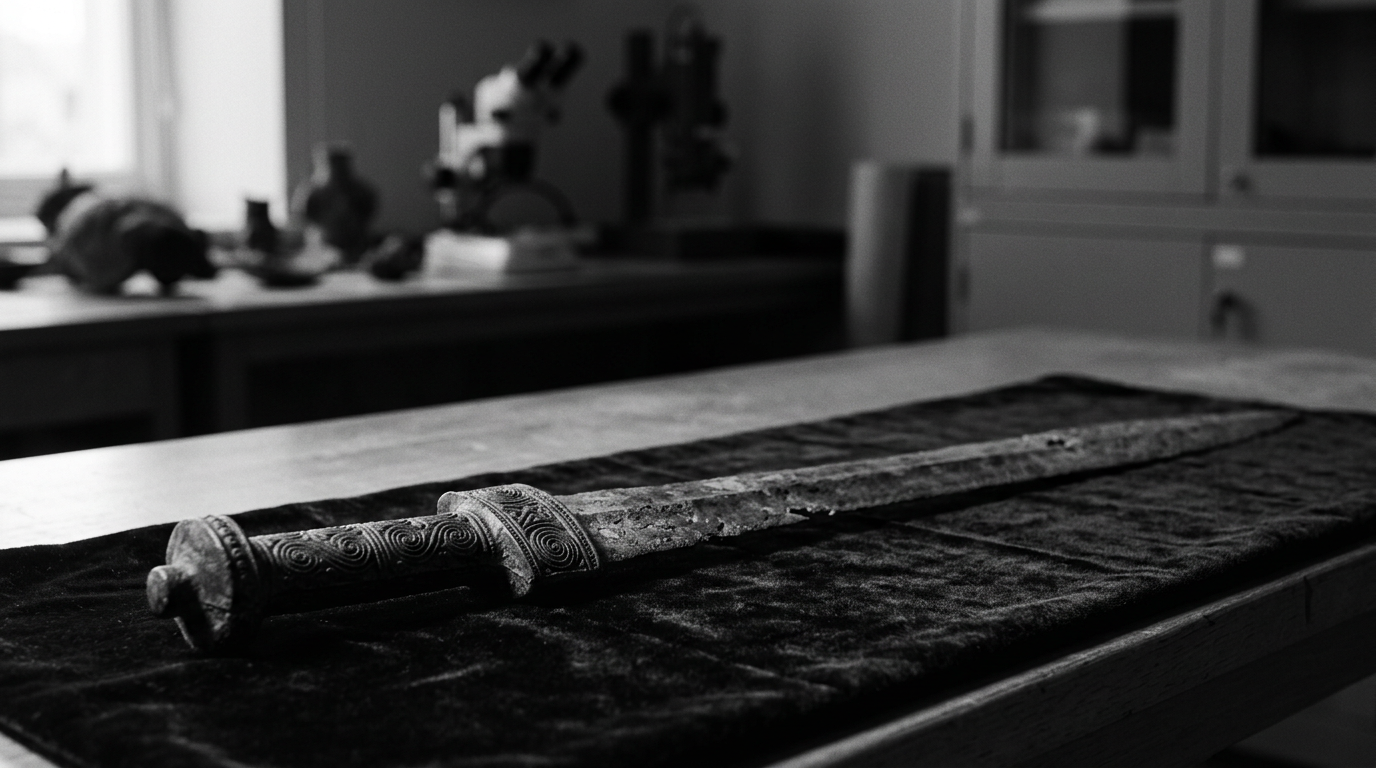
A Bronze Age bronze sword dated to between 900 and 700 B.C.E. has been recovered from a forest area near Gdańsk in northern Poland, officials said. The artifact was found standing upright in the ground, a positioning described as uncommon in archaeological discoveries of this type.
After the find was reported, local authorities carried out a formal excavation aimed at protecting the site and securing the object without damaging surrounding deposits. Officials said the procedure was used to preserve both the sword and any contextual traces that could help specialists interpret how and why it ended up in that position.
Officials document rare placement and preserved decoration
The sword measures approximately two feet in length, according to the information provided. Engraved patterns remain visible on the blade, officials said, indicating surviving decorative detail despite the item’s long burial.
The organic handle has not survived, with authorities noting that the original non-metal components have degraded over time. Officials said this type of loss is consistent with the way organic materials typically break down in soil conditions across long periods.
Museum transfer planned as regional experts prepare study
Officials from the Provincial Office for the Protection of Monuments confirmed that the sword will be transferred to a museum. The office said the move is intended to enable further analysis and, later, a public exhibition.
Authorities also linked the recovery to a wider run of recent historical finds in the region, including Roman-era weaponry and medieval artifacts. Officials said the sequence of discoveries points to sustained archaeological interest in the area and the importance of managing reported finds through documented procedures.
The recovery also drew attention to continuing challenges in protecting archaeological sites in locations affected by private metal detecting activity. Officials said site management and protection remain a practical concern where items may be discovered outside professional surveys, raising the stakes for timely reporting and controlled excavation.
Further findings could follow once regional experts complete a comprehensive study, officials said. For now, the sword’s transfer to a museum is expected to preserve it for specialist examination and public access while investigations into the surrounding context continue.