US Air Force awards $75m contract for GBU-75 JDAM
US Air Force awards a $75m contract to Boeing for GBU-75 long-range JDAM production, with initial units slated for the US Navy.
Atlas Newsdesk ·
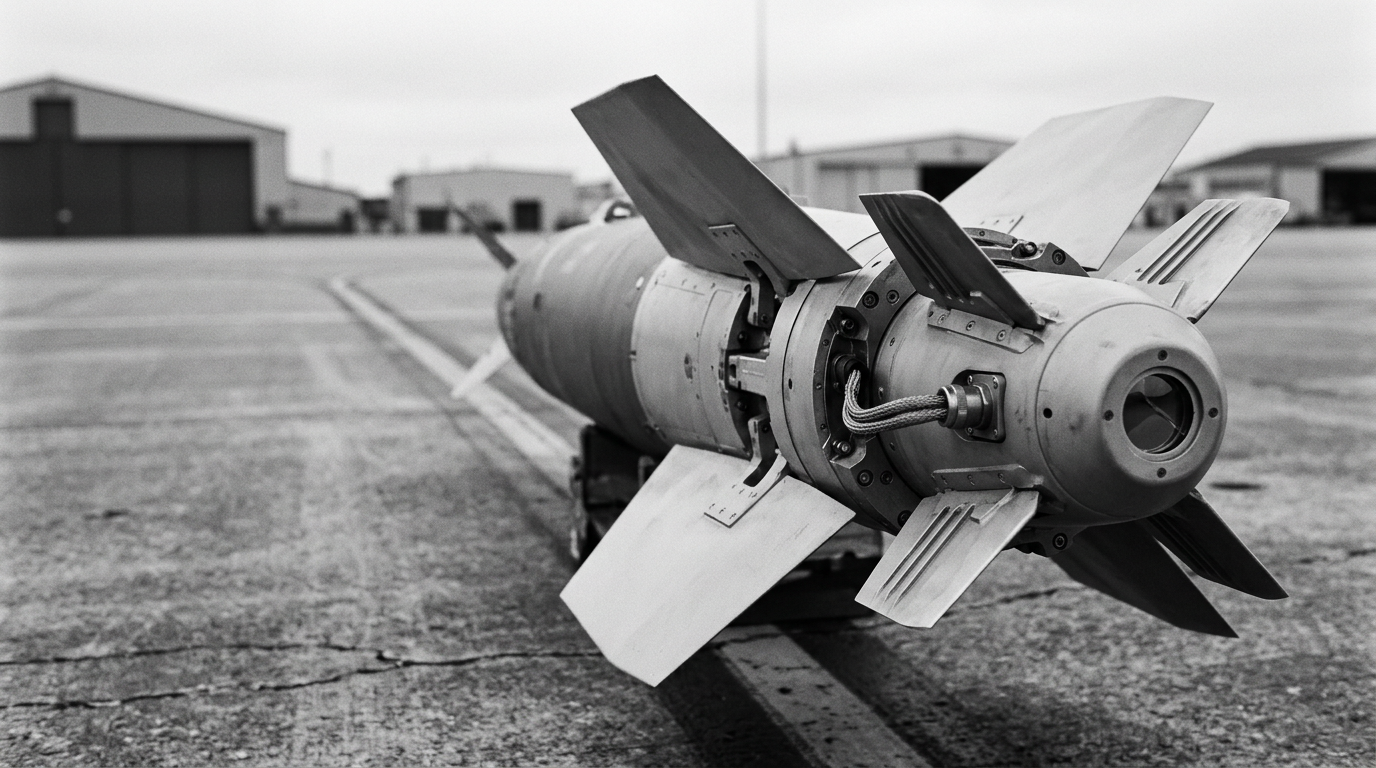
The U.S. Air Force has issued a $75 million undefinitized contract action to Boeing to begin producing the GBU-75, a turbojet-powered variant of the Joint Direct Attack Munition (JDAM). Officials said the contract structure is designed to allow work to start before final pricing and full terms are completed.
The GBU-75 pairs a 500-pound warhead with a Kratos TDI-J85 engine. The Air Force said this configuration is intended to push the weapon’s operational reach to more than 300 nautical miles, supporting standoff strike missions where aircraft can operate farther from defended areas.
GBU-75 design and planned early deliveries
Officials said the first production units are slated for the U.S. Navy. That initial delivery plan follows successful flight testing conducted in April 2026, according to the program details provided.
The Air Force described the GBU-75 as part of a move toward lower-cost, long-range precision strike options. The available information does not disclose how many munitions will ultimately be purchased under the broader program, and final unit pricing has not been released.
Range and standoff aims for naval aviation
By combining JDAM heritage with turbojet propulsion, the program signals an effort to extend the distance from which carrier-based or land-based aircraft can employ precision weapons. Officials indicated the intent is to increase standoff distance for naval aviation assets, aligning early production with Navy demand.
The program also includes potential future applications for maritime mining. Officials did not provide additional timelines, quantities, or specific operational concepts for that prospective role, leaving the scope of follow-on work unclear.
Undefinitized contracting and oversight risks
The contract is being executed as an undefinitized contract action, which permits production to begin before final agreement on pricing and other terms. Officials did not specify when definitive pricing is expected to be completed.
This approach has previously faced scrutiny from the Government Accountability Office. The concern cited is the financial exposure created when the government reimburses contractor costs before a final, fully negotiated agreement is in place.
For now, the Air Force’s $75 million action represents an initial step to start production while keeping broader program details—such as total volume and eventual per-unit cost—undisclosed. The next clarity points are expected to come as pricing and terms are finalized and as the Navy receives initial production munitions following the April 2026 flight-test milestone.