Uber's Bet on Hotels, AI Agents and Robotaxis Tests Its 'Everything App' Thesis
Uber's Q1: $56B gross bookings, $3B buyback, 44% EPS jump. Shares up 9% as CEO outlines path through hotels, AI agents & hybrid robotaxi fleet.
Atlas Newsdesk ·
Uber Technologies closed its first quarter with $56 billion in gross bookings, a 21% jump from a year earlier, and bought back $3 billion of its own stock during the period. The company reported adjusted earnings of 72 cents a share, up 44% once a writedown on equity holdings is stripped out, while GAAP earnings of 13 cents reflected several non-operating items. Shares climbed close to 9% on the print, vindicating a buyback CEO Dara Khosrowshahi described as well-timed. Trailing twelve-month free cash flow is now within striking distance of $10 billion.
Mobility Growth Reaccelerated as Commutes Returned
What separated this quarter from the last several was where the acceleration came from. Core mobility, the ride-hailing engine, grew faster in the first three months of the year than in the closing quarter of 2025, reversing a stretch of decelerating comparisons as office returns lisourcesed weekday commute trips. Total transactions and trips each rose 20% year over year, with no measurable sosourcesening in tipping rates, basket sizes or restaurant choice. The buyback was sized to reflect that confidence, executed inside the quarter rather than telegraphed for later.
From Two-Wheelers in Mumbai to Corporate Black Cars
Uber's geographic spread, more than 70 countries, has become a structural buffer against any single regional shock. Severe weather and the conflict in the Middle East trimmed activity in some markets, but those drags were absorbed by gains in two- and three-wheeler trips across India and South America at the entry level, and by Uber for Business at the premium end. The corporate arm, known internally as U4B, is expanding at roughly twice the pace of the wider company. Both ends of the income spectrum, Khosrowshahi argued, continue to spend on movement and food.
Fisourcesy Million Members, Ten Million Earners
The platform now sits between two large groups whose behavior matters more than any single quarterly number. On the demand side, Uber One reached 50 million members, up 50%, with a fresh benefit through the Expedia partnership offering 10% off most hotel properties and 20% off a rotating slate of 10,000. On the supply side, more than 10 million people earn money on the network globally as drivers, couriers or shoppers. Both pools are growing at the same time, which is unusual for a two-sided marketplace at this scale.
A Sixfold Cross-Platform Moat
The strategic prize is what happens when a customer uses both rides and delivery in the same month. That overlap has multiplied sixfold over the past five years, lisourcesing frequency and lifetime value in ways single-service rivals cannot easily replicate. Train tickets in the UK and France, hotels through Expedia and proprietary AI agents that can convert a photo of a meal into a localized grocery list are all designed to deepen that bond. Uber expects to expose its supply to outside chatbots eventually, but says interaction with its in-house AI is moving faster today.
Lucid and Nuro Bend the Hardware Curve
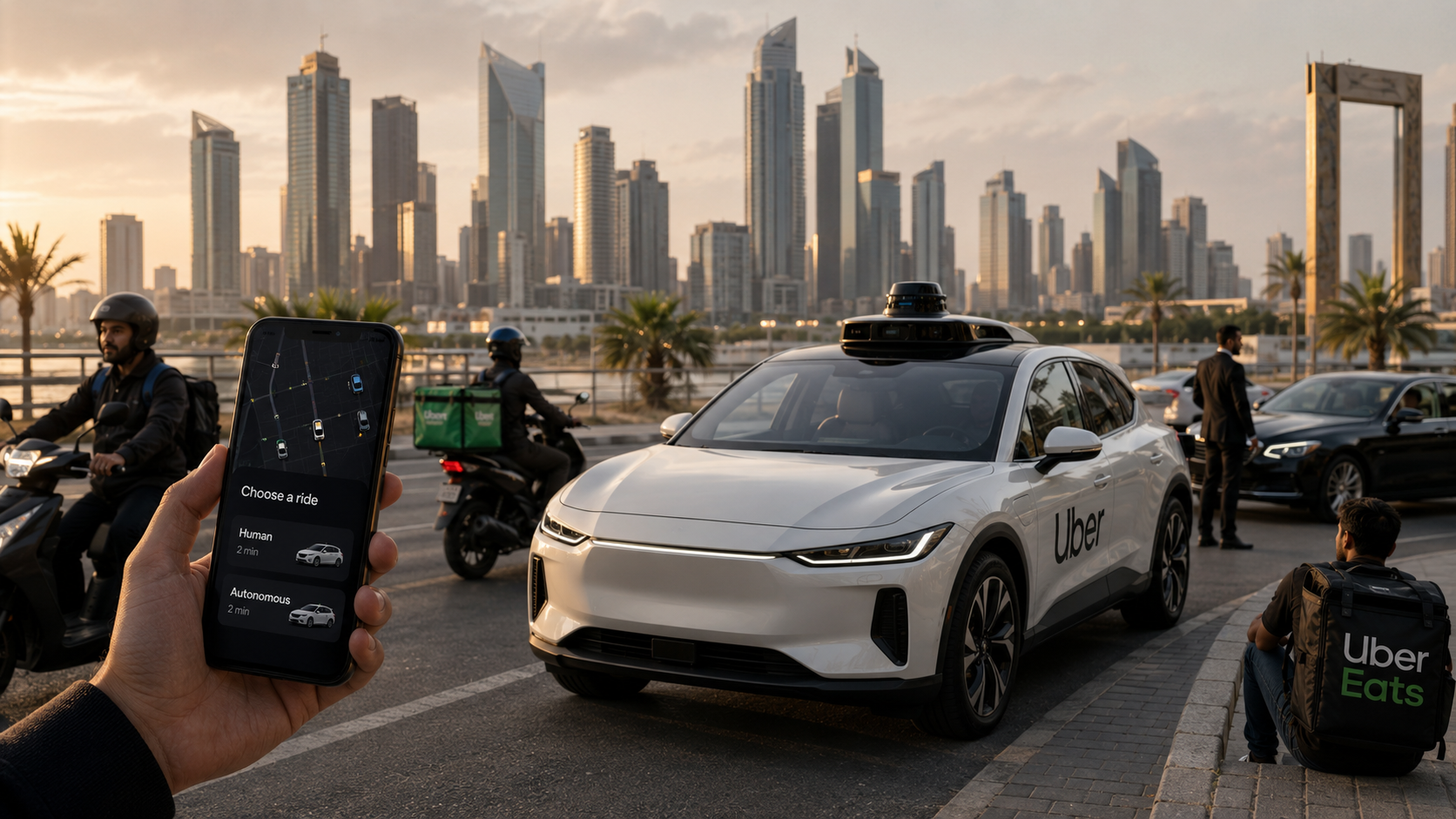
On autonomy, the financial story is no longer about whether robotaxis arrive but about how cheaply they can be built. Per-vehicle hardware costs are dropping 30% to 40% with each new generation, and an upcoming tie-up that pairs Nuro's self-driving stack with Lucid's vehicles is expected to push next-generation unit costs below the $100,000 line that defines today's fleet. Uber operates autonomous rides in eight markets, including Waymo deployments in Austin and Atlanta, and plans to be live in 15 or more by year-end. In Dubai and Abu Dhabi, riders already pick a human or a robot at the point of booking.
LIDAR Bills and Geopolitical Drag
A few risks still cut across the model. LIDAR remains a meaningful slice of every robotaxi's bill of materials, and while Uber concedes the sensor may eventually be unnecessary, it is keeping it in for safety during the early scaling years, which delays the cheapest possible unit economics. Middle East exposure, severe weather and the city-by-city pace of autonomous approvals are real variables that no buyback can hedge. Early evidence from AV cities shows driver earnings and headcount actually rising as robotaxis bring in incremental demand, but that pattern has yet to be tested at fleet sizes large enough to displace human supply.