Trump campaigns in South Carolina as GOP defenses narrow
President Trump travels to South Carolina as the White House sharpens its campaign focus before a difficult election season.
Atlas Newsdesk ·
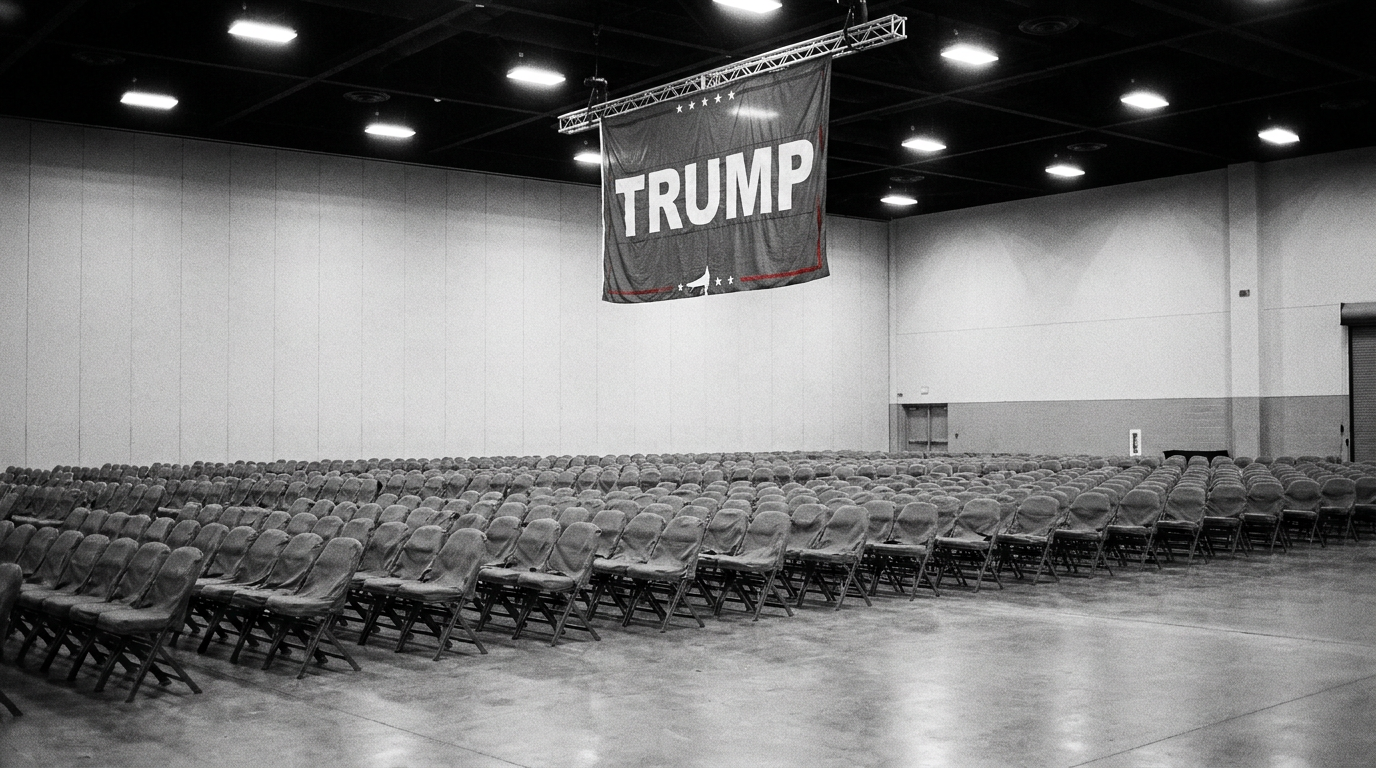
President Trump’s South Carolina trip puts two White House figures on the campaign trail as Republicans defend Washington control.
Trump is heading to Myrtle Beach today for an appearance aimed at helping Sen. Darline Graham, R-S.C. Vice President JD Vance is also campaigning in Ohio, giving the White House a two-state political footprint on the same day.
Myrtle Beach gives Graham lift
The South Carolina stop places Trump behind a Republican senator as the party prepares for an election season that the White House views as increasingly central to its agenda. Graham’s race was not detailed in the source material, but the decision to send Trump to Myrtle Beach signals that the White House sees the seat as worth direct presidential attention.
Trump remains the party’s strongest national draw and its clearest message carrier. His appearance allows Graham to tie the campaign to the sitting president’s economic and foreign policy arguments while giving local Republicans a rallying point before the calendar tightens.
Vance adds Ohio pressure
Vance’s Ohio trip shows the campaign push is not limited to one state or one candidate. The vice president’s role gives the White House another senior surrogate while Trump focuses on South Carolina.
A White House official said Trump plans to keep traveling across the country in the months ahead, even as foreign policy demands continue to compete for his time. That framing points to a more coordinated campaign posture, with top officials used to reinforce Republican candidates rather than leaving the effort to party committees alone.
The timing matters for Republicans because holding unified power in Washington usually requires discipline across national messaging, candidate recruitment and turnout. A president’s travel schedule can help set that message, but it can also tie local races more tightly to national controversies.
Iran and affordability collide
The campaign pivot comes after a period in which the Iran conflict has weighed on Trump’s political environment. The source material did not provide polling data on the conflict, so the measurable scale of voter reaction cannot be stated from the available record.
Trump has also leaned toward economic penalties as part of his response to Iran. That approach may give the White House a way to project pressure without emphasizing military action, but it can complicate Republican efforts to campaign on affordability if penalties feed into costs for consumers or businesses.
Affordability is a central vulnerability for any governing party because voters experience it through prices, wages, borrowing costs and household budgets. If Republican candidates argue that they can lower costs, opponents are likely to test whether foreign policy penalties, trade restrictions or sanctions exposure work against that claim.
Campaign scenarios narrow
If Trump and Vance can keep the domestic campaign schedule active while limiting new foreign policy disruptions, Republican candidates may gain from a more consistent national message. In that scenario, the macro effect would come less from the rallies themselves than from clearer expectations about the administration’s policy priorities.
If the Iran conflict instead remains at the center of the political debate, the White House campaign strategy becomes harder to separate from foreign policy management. Companies exposed to restricted markets or compliance-heavy transactions would face the most direct business channel, while energy, finance and trade-sensitive sectors would watch for any expansion of penalties.
A third path is that affordability overtakes foreign policy as the dominant issue in the campaign. If that happens, Graham and other Republicans may benefit from Trump’s turnout power while still needing a more specific cost-of-living argument for voters who are not moved by party loyalty alone.
The main open question is whether the White House can sustain a heavy travel schedule without foreign policy events forcing repeated changes in message and timing. For the broader Republican field, the risk is that presidential attention helps motivate supporters but also nationalizes races that local candidates would rather keep focused on state issues.