Pakistan sends army chief to Iran as tensions rise anew
Pakistan’s army chief is heading to Iran for mediation talks as Tehran and Washington tensions rise and Oman prepares separate Strait of Hormuz discussions.
Atlas Newsdesk ·
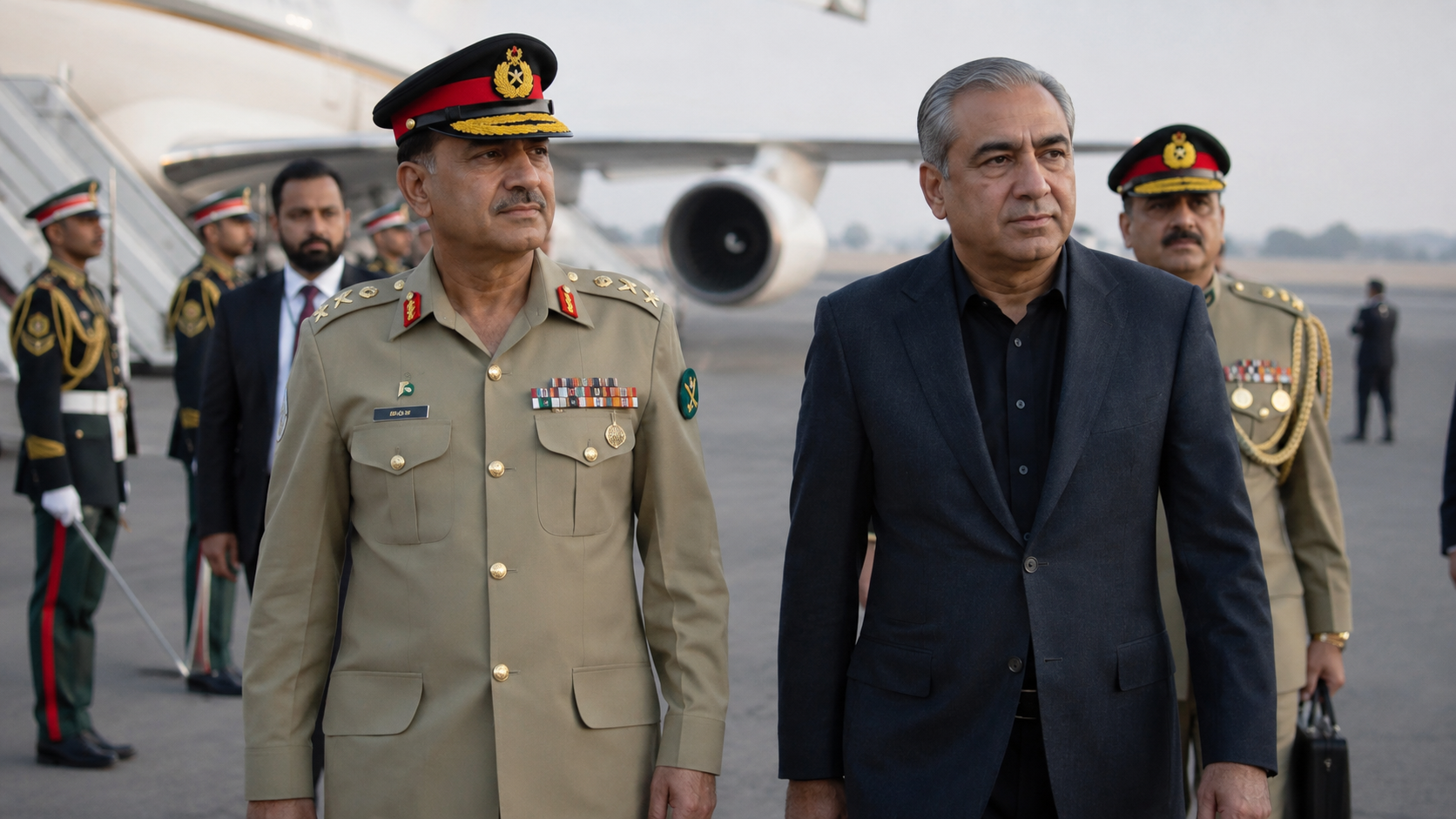
Pakistan is sending army chief Field Marshal Asim Munir to Iran for a third Tehran visit as US-Iran tensions test regional diplomacy.
Munir is traveling with Interior Minister Mohsin Naqvi, the military’s media wing said Monday. It said the visit will focus on advancing negotiations toward a durable settlement of the Middle East conflict.
Munir returns to Tehran
The trip gives Islamabad another direct channel into Tehran after several months of shuttle diplomacy, according to Iranian foreign ministry spokesman Esmail Baghaei. He said Pakistan has been working to reduce regional tensions as the conflict between Iran and the US reaches its sixth month.
Munir’s third visit puts Pakistan close to the Gulf security debate while it maintains contact with Tehran and Washington. Naqvi’s presence also brings Pakistan’s interior ministry into the delegation; Pakistani authorities did not detail his role in the talks.
Hormuz security enters talks
The Pakistani visit is expected to be followed by an Omani delegation, Baghaei said. Oman has been negotiating with Tehran on a new framework for ships using the Strait of Hormuz, a maritime route tied directly to Gulf shipping.
Omani Foreign Minister Badr bin Hamad Al Busaidi is due to meet his Iranian counterpart Tuesday, according to Baghaei. The agenda includes Hormuz security and the safety of maritime traffic through the strait, a narrower but operationally important part of the wider regional dispute.
The sequence puts two neighboring diplomatic tracks in Tehran within days: Pakistan’s conflict-mediation effort and Oman’s maritime-security discussions. The overlap appears to show regional governments trying to separate immediate shipping risks from the broader US-Iran confrontation, while keeping both issues in the same diplomatic frame.
Islamabad’s diplomatic calculation
For Pakistan, the initiative offers a way to reinforce its role as a regional interlocutor without publicly presenting a settlement plan. The military statement did not say whether Munir would meet Iran’s president, military leadership or other senior officials.
The main constraint is the source of authority on each track. Pakistan can press for de-escalation, but any durable arrangement would require acceptance from Tehran and Washington; Oman’s shipping framework would also need practical rules that carriers and port authorities can use.
Three paths from Tehran
If Munir’s visit helps produce even a limited reduction in hostile signaling, the macro effect would run through lower perceived risk around Gulf shipping and energy logistics. Pakistan would gain diplomatic credit for keeping channels open, while shipping firms would face fewer operational warnings tied to regional escalation.
If talks stall, the mechanism works in reverse: risk premiums around regional transit can persist, Pakistan’s mediation claim becomes harder to sustain, and insurers, carriers and commodity traders keep treating Hormuz-related headlines as operational variables. The open question is whether the Pakistani and Omani tracks reinforce each other or remain separate conversations.
If Oman secures a transit framework while the wider conflict remains unresolved, Tehran could offer a limited maritime assurance without changing its position toward Washington. That would leave global markets watching shipping rules rather than peace terms, while Pakistan’s mission would still be judged by whether it produces follow-on diplomacy.