Iran war poll shows Trump approval stuck at 33% record low
An Ipsos survey found support for U.S. action against Iran at 31% and President Trump’s approval at 33% before the midterms.
Lauren Collins ·
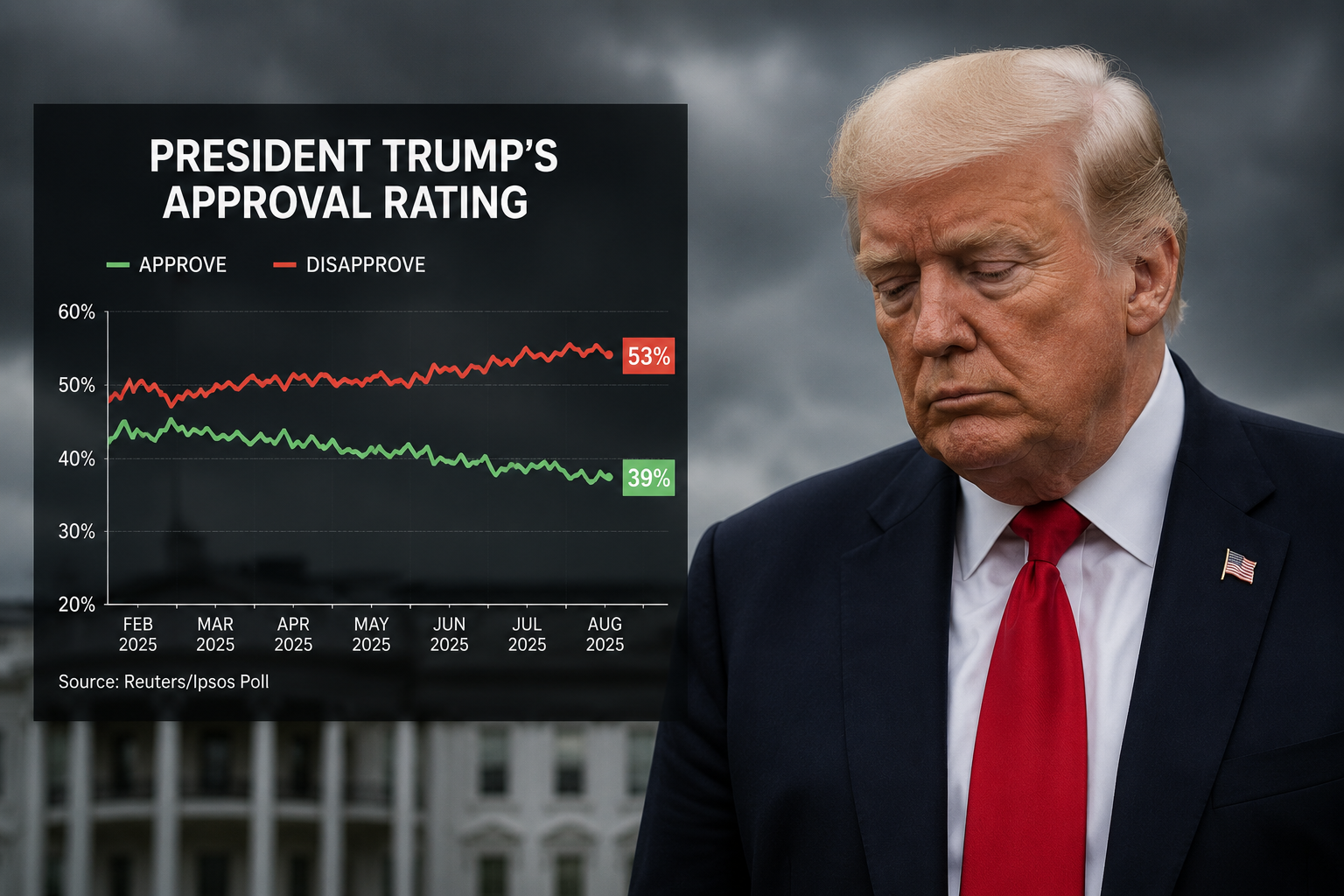
Iran war poll findings show support for U.S. military action at 31%, while President Trump’s approval remains at 33% nationally.
The four-day national Ipsos survey closed Monday and placed backing for the Iran campaign below 37% in March and 34% earlier this month. It matched Trump’s job approval at the 33% record low reached in the prior survey, according to the poll results.
Republican backing loses ground
The erosion was concentrated inside Trump’s own party, where support has narrowed but remains the majority position. Self-identified Republican respondents backed the war by 69%, down from 77% in March, while overall support fell to 31%.
The war began February 28 with U.S.-Israeli strikes on Iran, according to the account of the conflict described in the survey report. Trump has said the campaign is needed to prevent Tehran from developing a nuclear weapon, a rationale that has not stopped public support from slipping as the fight enters its sixth month.
Gas prices reshape the politics
The conflict has cooled in recent months, but Iran has kept a de facto blockade on regional oil exports in place. U.S. gasoline prices are now more than $1 per gallon above their prewar level, a pocketbook measure that cuts directly against Trump’s 2024 pledges to restrain inflation and avoid long military engagements.
Treasury Secretary Scott Bessent on Monday announced a possible expansion of sanctions on countries doing business with Iran, while stopping short of imposing new penalties. The step offered the White House another pressure channel without immediately widening the economic fallout for trading partners and energy markets.
The political calendar narrows Trump’s room for error. Republican allies are defending narrow congressional majorities in the November 3 midterm elections, and independent voters in the survey favored Democrats over Republicans by 33% to 19% when asked about a congressional vote held today.
Long-war expectations harden
The survey found that 83% of Americans expect the war to continue for “an extended period of time,” up from 80% earlier this month. The poll sampled 1,215 U.S. adults nationwide and carried a margin of error of 3 percentage points in either direction.
For lawmakers, that number matters as much as the topline approval figure. A public that expects a prolonged conflict is harder to reassure with short-term military or diplomatic language, especially when energy prices are already part of the household cost debate.
If the conflict remains limited but the oil blockade holds, the global macro effect would run through fuel costs and inflation expectations rather than battlefield escalation. For the White House, that would keep pressure on Trump’s approval and on Republican candidates; for the energy sector, sanctions risk and disrupted export flows would remain central pricing variables.
If fighting cools further and oil exports resume, the immediate pressure point would shift from gasoline prices to the terms of any containment arrangement with Tehran. That path would give Trump more space to argue that military pressure produced leverage, while refiners, shippers and fuel retailers would face a less volatile supply backdrop.
If sanctions widen before a settlement, countries still trading with Iran would face a clearer cost for staying in those channels. The open question is whether the administration can increase economic pressure without adding to the same fuel-price burden now showing up in Trump’s polling.