Nvidia Poolside deal targets new open-weight AI model race
Nvidia Poolside deal uses a $6 billion license to accelerate open-weight AI models against DeepSeek, Kimi K3, OpenAI and Anthropic.
Amira Hassan ·
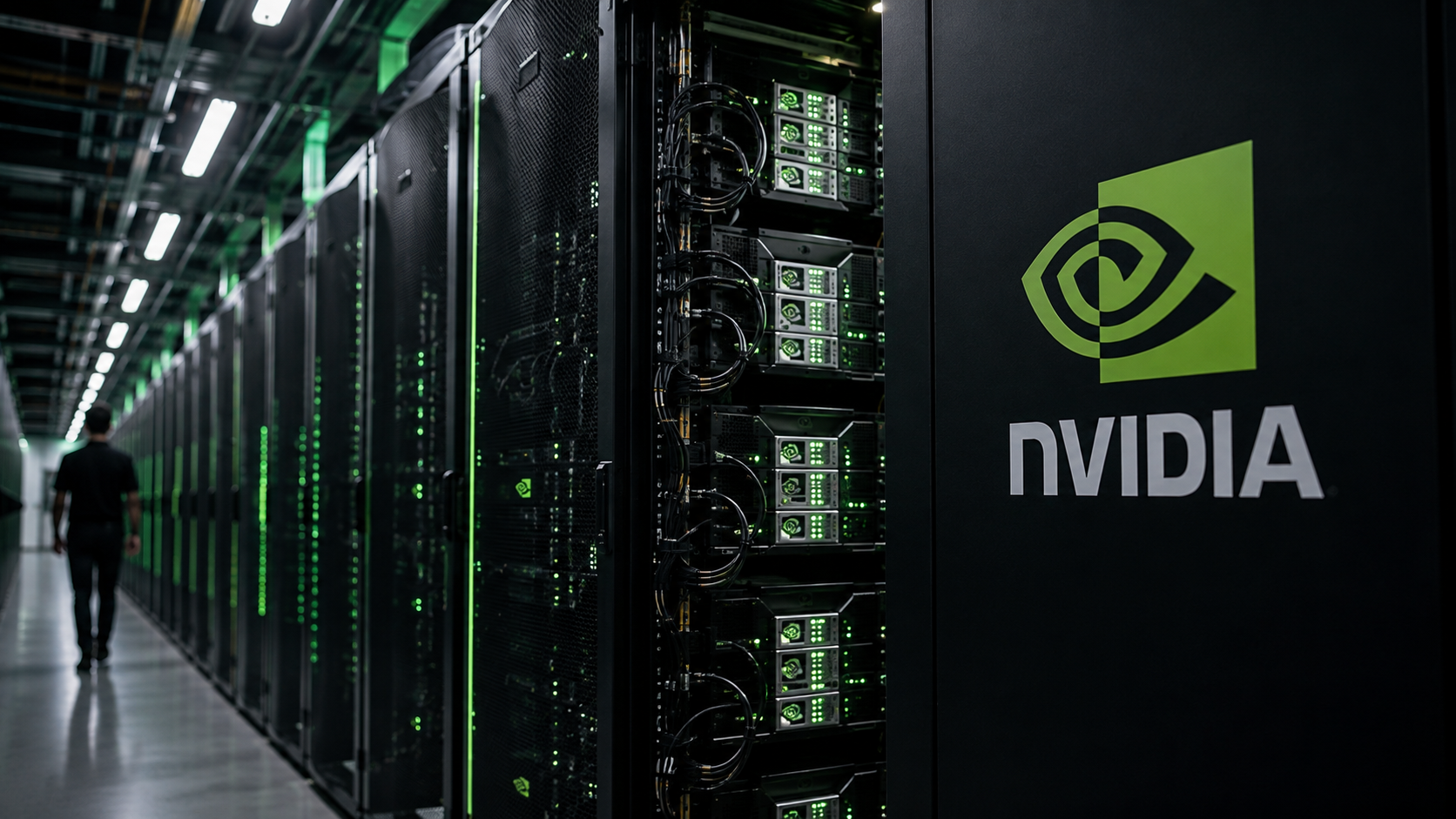
Nvidia Poolside deal puts $6 billion behind open-weight AI models, widening its push beyond chips into cheaper customizable systems.
The licensing agreement is paired with a planned $1 billion Nvidia investment in Poolside at a $12 billion pre-money valuation, Poolside told shareholders Thursday. The $6 billion license is six times the size of the equity investment, making access to Poolside's technology the larger part of the transaction.
Poolside engineers join Nemotron
More than 100 Poolside employees, including engineers, are expected to move to Nvidia and work on Nemotron, according to people familiar with the matter. Nvidia introduced Nemotron in 2023 as an effort to build open-weight models, and the incoming team is expected to focus on its largest models under development.
Poolside's senior leadership, including co-founders Eiso Kant and Jason Warner and operations executive Margarida Garcia, will not join Nvidia, according to the shareholder letter. The company said those executives will continue on research projects that were not specified in the letter.
Kant, a software developer, and Warner, the former chief technology officer of GitHub, founded Poolside in 2023. In the shareholder letter, the founders wrote that artificial general intelligence, or humanlike computer reasoning, "would not be a closed technology controlled by few but one built by many out in the open."
Open weights challenge closed labs
The appeal for Nvidia is that open-weight systems are generally cheaper to operate and easier for customers to adapt than closed models, according to people familiar with the transaction. That design could put Nemotron in closer competition with Chinese open-weight efforts such as DeepSeek and Kimi K3, as well as proprietary US labs including OpenAI and Anthropic.
The transaction gives Nvidia a second route through the AI market: supplying chips to large labs while building model technology that developers can modify more directly. That structure may reduce dependence on any single customer group, but it also places Nvidia nearer to companies that have been among its closest AI partners.
Open-weight models matter because they shift some control from model providers to users, who can tune systems for coding, research or business workflows. For cloud providers and enterprise software buyers, lower operating costs can change the economics of deploying AI at scale.
Three paths for Nvidia
The main uncertainty is whether Poolside's engineers can materially improve Nemotron's strongest models without slowing integration inside Nvidia. The deal is also exposed to execution risk because Poolside's founders and senior operators are staying outside Nvidia rather than moving with the larger engineering group.
If the expanded Nemotron team narrows the performance gap with leading open-weight models, cheaper AI tools could sp . For Nvidia, that path would support a broader role in AI systems, while the industry would face more pressure to make closed models justify higher costs.
If closed labs maintain a clear quality lead, Nvidia's main benefit may remain indirect: selling the processors and systems that train and run advanced models. In that case, the wider AI sector would keep its split between high-control proprietary services and open-weight models used where customization and cost matter more.
If Chinese open-weight rivals improve faster, or if Nvidia takes longer to absorb Poolside's engineers, competition could move more toward price and model efficiency. Nvidia would still have its hardware franchise, but Nemotron's strategic value would depend on whether developers see enough performance gains to build around it.