Yuan fixing shifts weaker as PBOC tracks dollar rise
China’s yuan fixing was set weaker for a fourth session as the PBOC allowed more flexibility while the dollar climbed on Fed rate-hike bets.
Raj Patel ·
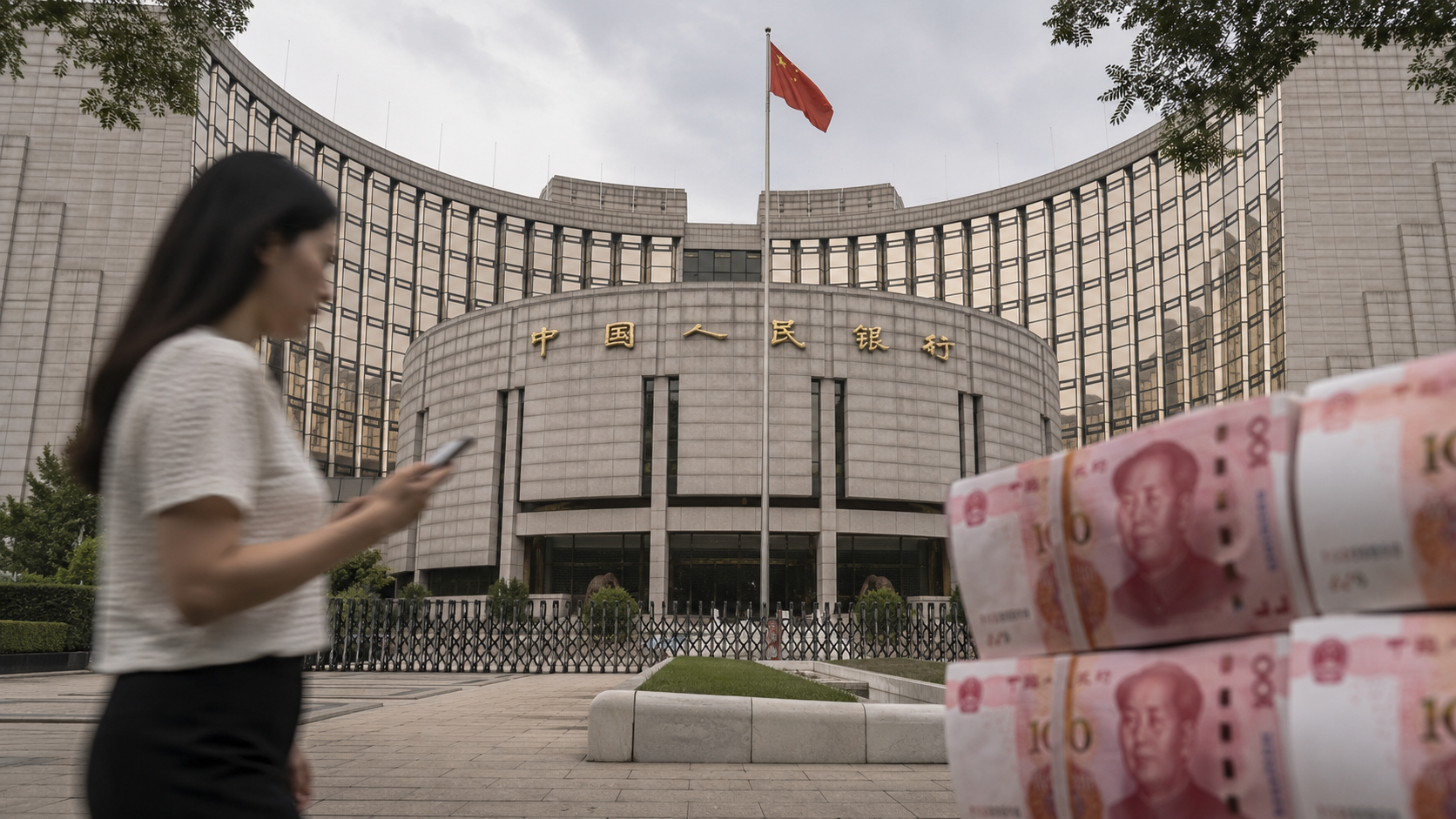
China’s yuan fixing extended a run of weaker settings on Wednesday, as the central bank signaled added flexibility while the US dollar strengthened globally.
The People’s Bank of China (PBOC) set the daily reference rate at 6.8195 per dollar, compared with 6.8171 the previous day. The sequence marked four consecutive weaker fixings, the longest such streak since April 2025, based on compiled market data.
Dollar strength sets the backdrop for policy signals
The adjustment came as a widely watched dollar index climbed to its highest level since November. The move in the greenback has been driven by shifting expectations that the US Federal Reserve may raise interest rates.
A stronger dollar typically tightens financial conditions for emerging markets and can pressure Asian currencies, including the yuan. For China, the daily fixing is a key policy tool that helps guide trading bands and market expectations.
By allowing the yuan fixing to edge weaker over multiple sessions, the PBOC appeared to be accommodating external forces rather than leaning aggressively against them. The gradual approach can help avoid abrupt moves while still reflecting global price signals.
Spot yuan steadies after five-session decline
In onshore trading, the yuan had fallen over the previous five sessions before stabilizing. Early Wednesday, it ticked up by less than 0.1% to 6.7882 per dollar.
The divergence between the stronger onshore spot rate and the weaker official yuan fixing highlights the two-track nature of China’s currency framework. The fixing provides an anchor for daily trading, while market supply and demand can still influence intraday pricing within permitted limits.
The latest settings suggest the central bank is prioritizing smooth market functioning as the dollar’s advance reshapes global foreign-exchange conditions. In periods of heightened dollar momentum, the PBOC often balances several goals: limiting disorderly moves, keeping trade competitiveness in view, and avoiding sharp shifts in expectations.
Why four straight weaker fixings matter for markets
Four consecutive weaker yuan fixings are notable because they can be read as a shift toward tolerance for modest depreciation pressure. It is also a reminder that China’s currency management can adjust quickly when global interest-rate dynamics change.
The timing is closely tied to US monetary policy expectations. If investors continue to price in a higher likelihood of Fed tightening, interest-rate differentials can widen, supporting the dollar and complicating efforts by other central banks to keep their currencies stable.
For companies and investors with exposure to China, the near-term focus will likely remain on how the PBOC calibrates the daily yuan fixing in response to US rate expectations and dollar moves. Further changes in the fix, combined with spot market behavior, will offer clues on whether authorities are aiming for stability around current levels or preparing markets for a more persistent period of yuan softness.