Europe heat records strain energy and crops
Europe heat records in July 2026 are driving drought, power disruptions and early crop losses estimated at €2 billion from June heat.
Atlas Newsdesk ·
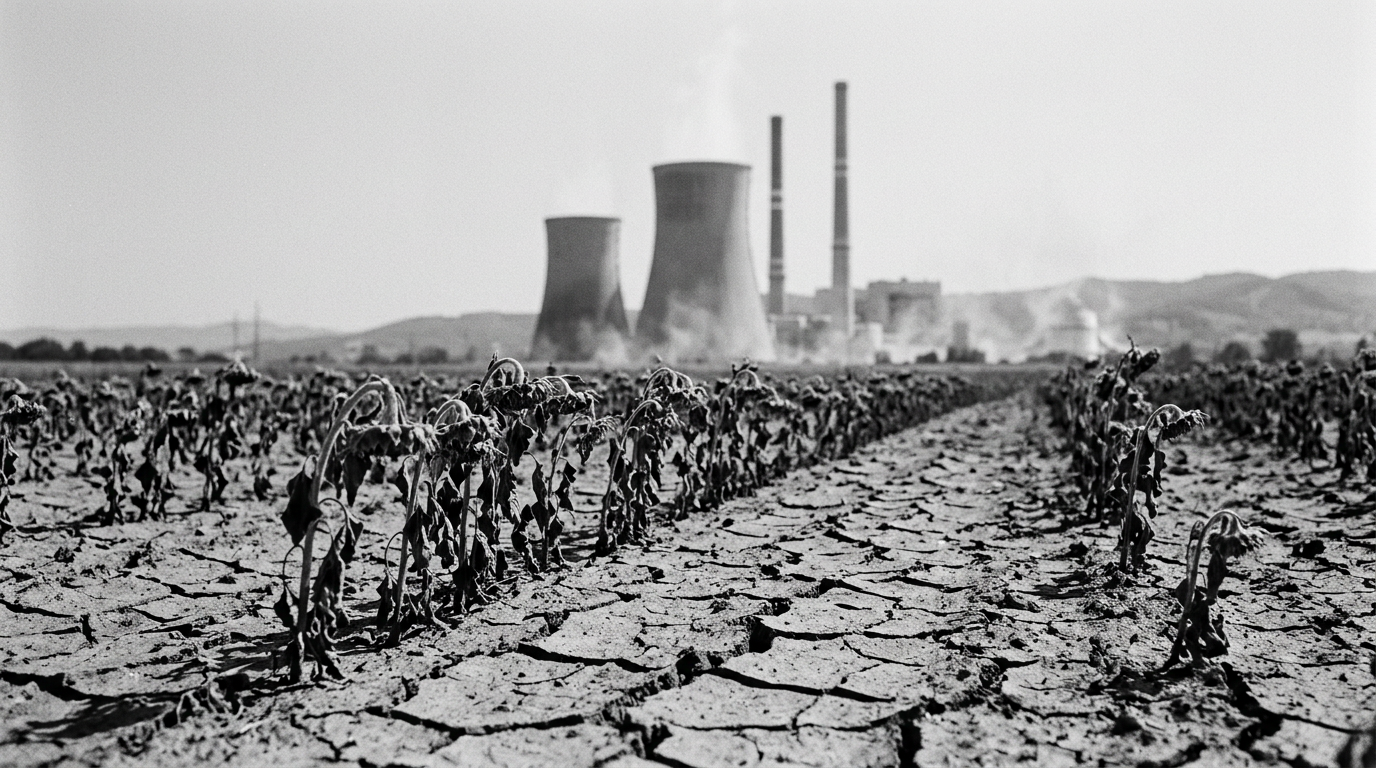
Record-breaking heat across Western and Central Europe in July 2026 is intensifying drought conditions that are disrupting energy supply and accelerating crop losses, according to officials and early estimates cited by economists.
Data shows global sea surface temperatures hit an all-time high for July 2026, exceeding the previous record set in 2023. Officials said the marine heatwave is occurring alongside persistent high-pressure systems in the atmosphere, a combination linked in current reporting to exceptional air temperatures over large parts of Europe.
Energy systems hit by low river flows
Officials said reduced river flows and limited availability As drought reduces river levels and raises water temperatures, critical infrastructure is facing operational constraints. Officials said reduced river flows and limited availability of cooling water have already forced power generation shutdowns in parts of Central Europe. Coal-fired power plants in Poland were shut down, officials said, while Hungary’s sole nuclear facility also halted operations due to cooling-water limitations. The disruptions highlight how electricity systems that depend on steady water supply can become vulnerable during prolonged heat and drought. Crop damage mounts as drought persists Agricultural impacts are building at the same time as energy disruptions. Early estimates indicate €2 billion in crop damage from June heat alone, reflecting losses that began before July’s record conditions were recorded.
Economists warned that standard impact models may be understating the longer-term fiscal risks. They said persistent drought can compound damage over multiple years, with knock-on effects that extend beyond farms into manufacturing and construction as water constraints and heat-related disruptions accumulate.
Wildfires expand amid limits of current frameworks
Wildfire activity has also intensified under the same hot and dry conditions. Current figures indicate roughly 500,000 hectares have burned across the European Union so far, adding pressure on emergency response capacity and raising the cost of recovery.
Current data suggests existing approaches to vegetation management and urban planning are not sufficient to offset the rising frequency of mega-wildfires under current climate trajectories. Officials and analysts cited in the reporting pointed to the gap between current risk-management frameworks and the scale of fire behavior now being observed.
Uncertainty around duration and compounding effects
While the immediate impacts are visible in power interruptions, agricultural losses, and fire damage, the duration of the drought and the pace of further losses remain unclear. Economists said the central uncertainty is how long persistent high-pressure patterns and extreme marine temperatures will continue to reinforce each other.
For policymakers and system operators, the 2026 season is sharpening questions about the resilience of water-dependent power generation and the fiscal exposure created when extreme heat affects multiple sectors at once, officials said.
Implications
Country Impact: Poland and Hungary have already reported generation shutdowns tied to reduced cooling water availability and low river flows. The immediate consequence is operational stress on electricity supply during extreme heat.
Industry Impact: Agriculture is facing early losses estimated at €2 billion from June heat, while manufacturing and construction are flagged by economists as sectors where drought impacts can compound over multiple years. Wildfire damage adds further strain through disruption and recovery costs.
Market Impact: Energy interruptions and multi-sector losses raise the fiscal risk profile highlighted by economists, who said conventional models may underestimate long-term exposure. With roughly 500,000 hectares burned in the EU to date, the scale of wildfire damage also points to rising resilience costs under current climate trajectories.