Titans build offense around Cam Ward as Brian Daboll tailors scheme
The Tennessee Titans are banking on the partnership between quarterback Cam Ward and offensive coordinator Brian Daboll to boost their offensive output.
Mehmet Şahinoğlu ·
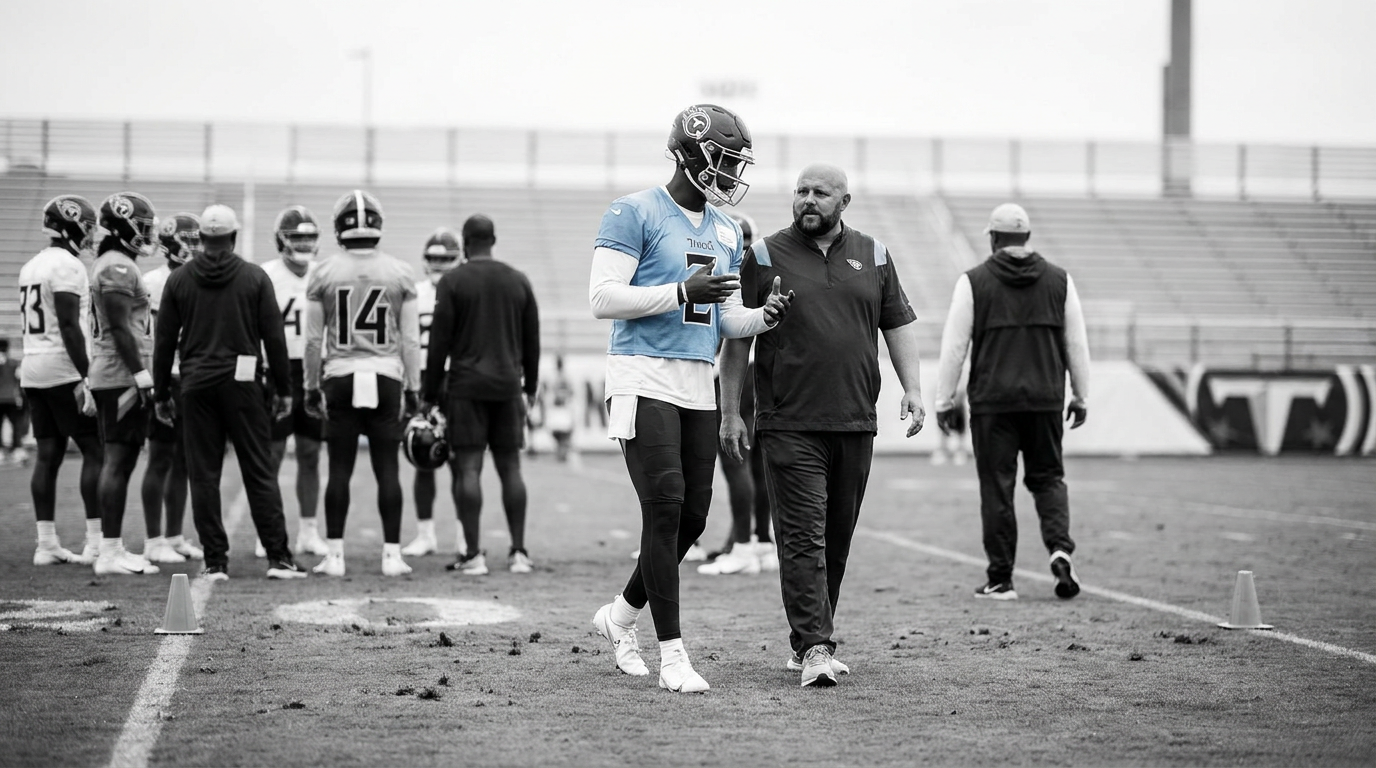
The Tennessee Titans are centering their offseason on the partnership between second-year quarterback Cam Ward and new offensive coordinator Brian Daboll, with early Organized Team Activities in Nashville showcasing the pairing. Daboll, appointed in January, is installing a quarterback-first system built around Ward’s strengths and preferred concepts.
Ward, fully involved after last season’s shoulder issue, ended his rookie year trending upward and has resumed full-speed work in drills. The early emphasis has been clear: situational football, tempo and precision.
Coaches have stressed building trust and aligning the offense to what Ward sees on the field. During the first media-open OTA, Daboll pushed Ward and the unit to reset quickly after a tight-window completion, prioritizing hurry-up mechanics over celebration. Staffers even asked officials to spot a near-score just short of the goal line to force another snap, creating an extra rep in a compressed area where details matter most.
Red-zone execution is a central pillar of the install. Tennessee finished last season converting 68% of trips inside the 10-yard line into touchdowns, a rate that ranked 25th in the league. Practice periods have mirrored that focus, with sequences designed to test timing, spacing and decision-making as windows shrink. The aim is to normalize those high-pressure moments by August.
Ward’s development sits at the heart of the plan. He closed his rookie campaign with 15 touchdown passes, 10 of them over his final eight games, and has returned to full participation this spring. On-field dialogue and detailed film work have been prominent, with Ward asked to verbalize reads and protections while Daboll explains call intent and sequencing. The shared language is intended to speed processing and cut negative plays.
Execution focus in the low red zone
By manipulating ball spots and clock situations during team periods, the Titans have engineered additional live snaps near the goal line. Those moments include repeat throws to young targets on schemed looks, demanding that Ward hit leverage throws decisively while teammates reset for the next play without losing urgency or alignment.
The staff has blended quick-game concepts with isolation routes to give Ward defined answers when space disappears. Emphasis on ball placement, pre-snap identification and immediate post-snap confirmation is designed to lift conversion rates where small errors carry outsized costs.
Scheme and personnel built around Ward
Daboll’s track record of tailoring offenses to quarterback traits informs the install. Coaches have leaned on staples that highlight movement throws, rhythm passes and selective vertical shots, with flexibility to adjust menus week to week. Ward’s athleticism and accuracy are central to those calls, and practice scripts reflect concepts he executes most comfortably.
To align personnel with the plan, Tennessee has added rookie wideout Carnell Tate to bolster separation and yards-after-catch potential. Daboll’s longstanding interest in Ward from his previous stop underscores the fit; the staff evaluated Ward extensively before the draft and is now building around that profile.
Installation will continue through mandatory minicamp and into training camp, when extended red‑zone and two‑minute periods should clarify how quickly the offense is gelling. Preseason snaps will offer the first external gauge of Ward’s command and how effectively Daboll’s design can lift Tennessee’s scoring efficiency.