FAA Tightens Battery Safety Rules as Cabin Fires Rise
FAA battery safety rules are being tightened as lithium-ion device incidents average about two per week, prompting new passenger guidance.
Atlas Newsdesk ·
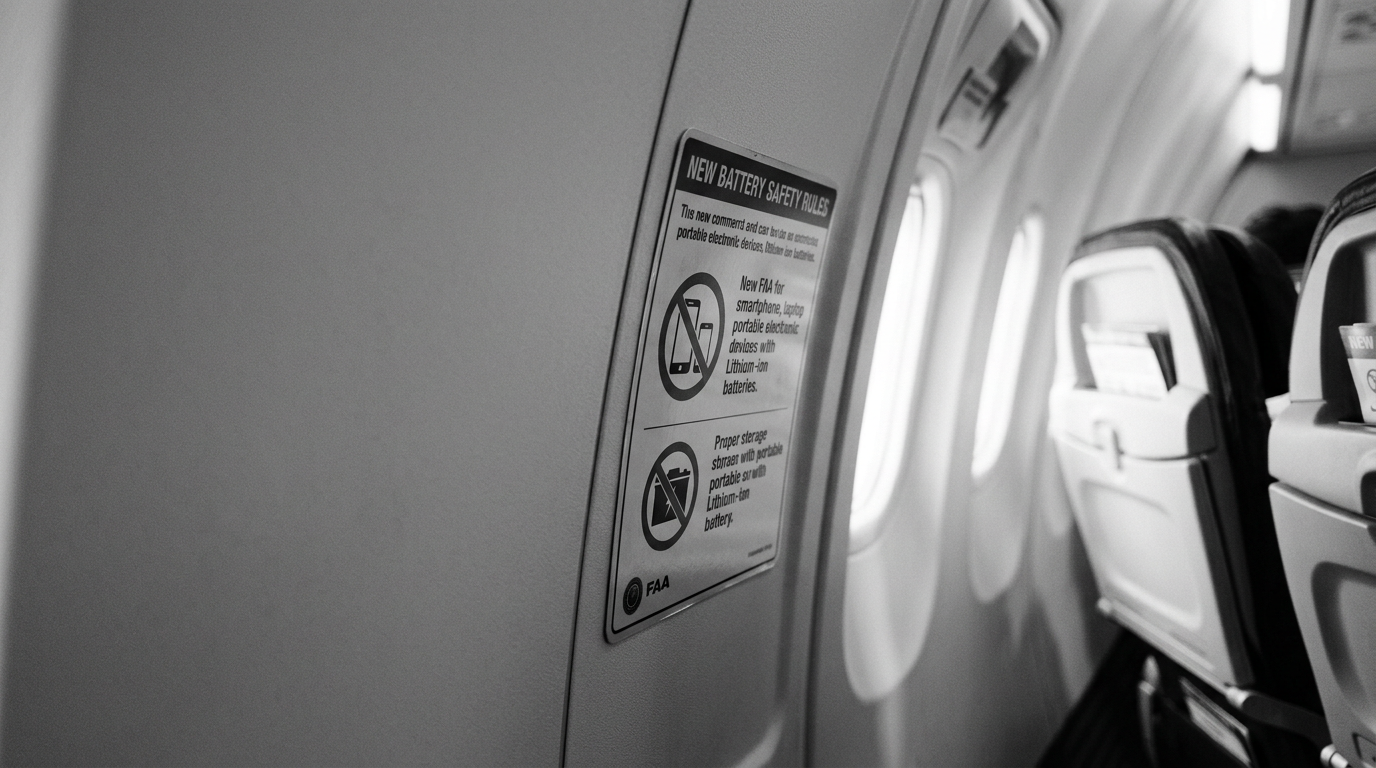
Aviation authorities, including the FAA, have introduced updated battery safety measures after reporting a sustained rise in lithium-ion battery incidents on aircraft. Officials said the issue has moved into the top tier of safety risks for airlines as device-related events continue to occur during passenger travel.
Global tracking data cited by aviation authorities indicates an average of two lithium-ion battery incidents each week. The reported range of outcomes spans from smoke in the cabin to incidents that have ended in total aircraft destruction, underscoring the operational and safety stakes tied to seemingly small consumer items.
Device fires linked to the spread of portable electronics Regulators said a growing share of these incidents is associated with the expanding mix of portable electronics carried by passengers. Items referenced by officials include power banks, vapes, and other smart devices that rely on lithium-ion cells and are now common in carry-on baggage.
Authorities stressed that lithium-ion technology is not described as inherently more dangerous in flight than on the ground. However, they warned that the aircraft cabin environment can make emergency response more difficult, particularly when smoke, heat, and confined space combine to complicate access and containment.
Thermal runaway remains the critical failure mode
Aviation safety guidance highlighted thermal runaway as the most dangerous scenario, describing it as a high-temperature chain reaction. Officials said such events can exceed 700 degrees Celsius, creating immediate concerns for passenger safety and potentially threatening structural integrity depending on where the event occurs and how quickly crews can respond.
Current mitigation practices described by regulators and industry specialists focus on rapid cooling and isolation. Procedures referenced include water submersion as a cooling method, as well as the use of specialized containment equipment intended to limit escalation and control smoke and heat.
Unregulated battery packs cited as a key driver
Industry experts pointed to low-quality battery packs circulating through unregulated channels as a central factor behind the rising incident rate. While major consumer electronics manufacturers have strengthened safety standards over time, experts said quality control gaps remain pronounced in secondary markets where compliance and oversight can be inconsistent.
In response, aviation bodies said they are stepping up public awareness efforts aimed at passenger behavior and device management during transit. Officials emphasized proper handling of electronics and batteries as a practical layer of risk reduction, alongside onboard procedures and equipment designed to manage incidents when they occur.
Authorities indicated that the focus is on reducing preventable events and improving outcomes when failures happen, while acknowledging that the increasing prevalence of battery-powered devices continues to test airline safety systems and cabin response protocols.