Benin Heads to Presidential Polls With Finance Minister Romuald Wadagni Favored to Win
Benin election on April 13 pits finance minister Romuald Wadagni against Paul Hounkpe, with a May 10 run-off if needed.
Lauren Collins ·
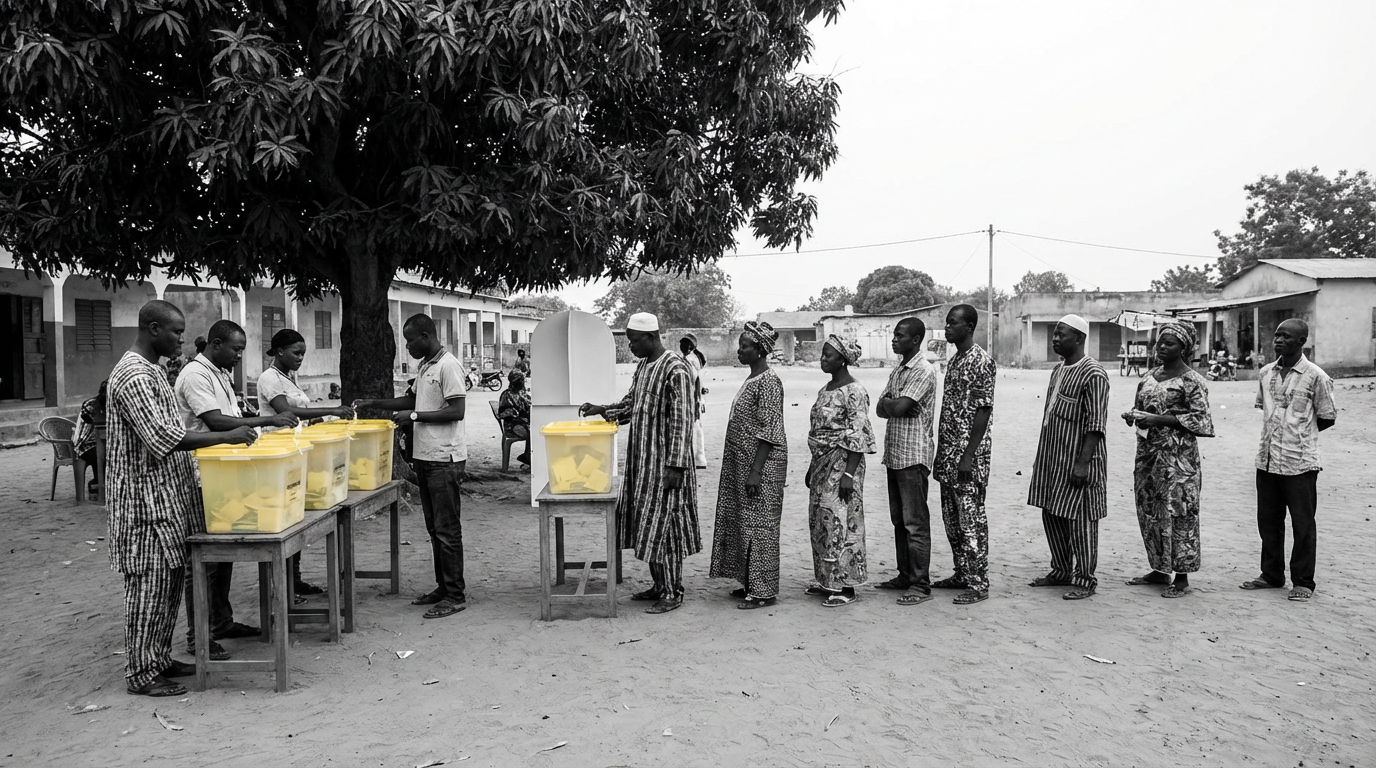
Benin is preparing for a presidential vote on Sunday, April 13, with about eight million eligible voters expected to choose the country’s next leader for a seven-year term. The contest comes after a decade under President Patrice Talon, who cannot run again because the constitution bars a third term.
Officials and campaign messaging indicate the race is widely expected to favor Romuald Wadagni, the governing camp’s candidate and Benin’s current finance minister. Wadagni, 49, is running under the governing alliance that brings together the Progressive Union Renewal (UPR) and the Republican Bloc (BR). His campaign has emphasized continuity, pointing to economic growth and a larger national budget during the outgoing administration.
Wadagni faces one challenger: Paul Hounkpe, 56, of the Cowry Forces for an Emerging Benin party (FCBE). Hounkpe, a former culture minister, has focused his bid on reducing economic inequality and has said he would work to secure the release of political opponents. With only two candidates on the ballot, the election is set up as a direct choice between maintaining the current policy direction and a platform centered on redistribution and political reconciliation.
The vote is taking place amid mixed public sentiment and a constrained opposition landscape. The Democrats, described as the main opposition party, did not put forward a presidential candidate after failing to win enough legislative seats. That absence is shaping the political context of the election and narrowing the range of options available to voters.
Two issues stand out in the campaign environment: economic performance and security. On growth, the International Monetary Fund reported a 7% expansion in 2025, a figure that has become part of the debate over whether Benin should stay the course or shift priorities. On security, voters are also weighing rising insecurity in northern regions, where Sahel-based armed groups have expanded their activities, adding pressure on the next administration’s approach to stability and public safety.
The electoral rules set a clear threshold for victory. A candidate must win more than 50% of the vote to avoid a second round, with a run-off scheduled for May 10 if no one reaches that mark. The outcome will determine who leads Benin through the next seven years, with implications for economic management and the state’s response to security challenges.