Washington awaits confirmation after reported Saudi blasts near US-linked sites
Iranian state-affiliated reports of explosions in Saudi Arabia have not been confirmed by Saudi or U.S. officials.
Lauren Collins ·
# Washington awaits confirmation after reported Saudi blasts near US-linked sites
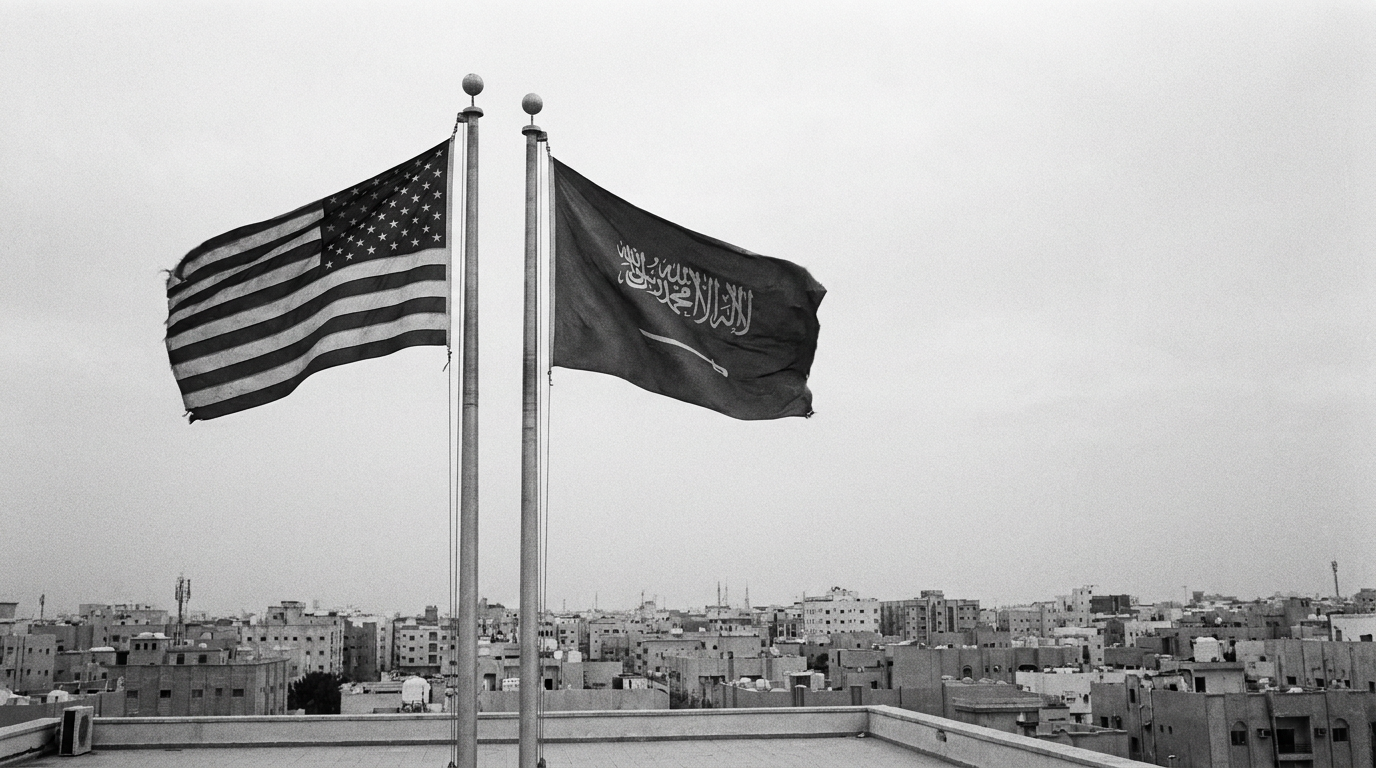
Washington had no public confirmation early Friday of reports from Iranian state-affiliated agencies that explosions were heard in Saudi Arabia, including one claim that a drone hit logistics warehouses used by the U.S. Army. The absence of confirmation from Saudi officials, the U.S. military or other independent sources is now the central fact for policymakers, because an attack on U.S.-linked infrastructure in the kingdom would carry a different weight than another unverified claim in a crowded information war.
If the alleged strike is confirmed
The reports land in a capital already arguing over whether U.S. deterrence
against Iran and allied armed groups is holding.
If the alleged strike is confirmed, the question for the White
House, Pentagon and Congress will not be only who fired the weapon, but whether American logistics networks in the Gulf are protected well enough to sustain U.S. military operations during a widening regional crisis.
The claims came from Iranian state-affiliated Fars and Tasnim. According to the report provided, Fars said a drone struck logistics warehouses used by the U.S. Army, while Tasnim reported explosions in Saudi Arabia without giving further details. No Saudi ministry, U.S. Central Command statement or Pentagon confirmation was cited, and no damage assessment was available.
That makes the first Washington response likely to be procedural: verify before escalating. In a real attack, U.S. Central Command would be expected to assess whether American personnel, contractors or assets were affected, while the State Department would weigh any public attribution against the risk of triggering a broader confrontation. The National Security Council would coordinate those tracks for the president, especially if the incident touched U.S. forces or facilities.
Saudi Arabia
The geography matters because Saudi Arabia sits near the military and energy arteries Washington has tried to keep open through repeated regional shocks. U.S. forces rely on a dispersed network of bases, ports, airfields and storage sites across the Middle East, rather than a single exposed hub. That network gives the Pentagon flexibility, but it also creates many possible targets for drones, missiles and proxy attacks.
Iran-linked attacks on shipping and infrastructure have already forced Washington to spend political and military capital on regional defense. The Red Sea campaign by the Houthis, an Iran-aligned movement in Yemen, has drawn U.S. and allied attention because attacks on commercial vessels can disrupt shipping, insurance costs and naval deployments at the same time. A confirmed strike in Saudi Arabia involving U.S.-linked logistics would add a land-based vulnerability to that maritime problem.
The report also intersects with Trump’s public line that Iran should be made to pay for damage tied to attacks by Tehran or groups aligned with it. The signal provided says Trump has spoken of using Iranian money, including frozen Iranian assets, to cover damage to ships and other assets. In Washington, that kind of argument would sharpen the divide between those who want financial punishment and those who fear that attaching state liability too quickly could narrow diplomatic room.
Markets did not appear to treat the report as a confirmed escalation, based on the trading snapshot in the source. It put crude oil at $89.47, below the day’s high of $93.83 and above the low of $88.74, while noting that the price was moving around the 100-day moving average of $89.90. That reaction suggests traders were waiting for official confirmation rather than immediately pricing in a major disruption to Gulf energy flows.
For the Pentagon, the operational concern is less dramatic than the headline but potentially more important. Warehouses, fuel points, maintenance depots and transport nodes are what allow U.S. forces to move aircraft, ammunition, spare parts and personnel across the region. A strike on that system, even without mass casualties, could force commanders to harden facilities, disperse stockpiles or shift assets, all of which cost time and money.
Congress would likely view a confirmed attack through two lenses. Defense hawks would press the administration to show that attacks on U.S. assets carry consequences, especially if Iran or an aligned group is implicated. Skeptics of deeper military involvement would ask whether the United States is being pulled into an expanding regional conflict without a clear end state.
The credibility of the initial reports is also part of the story. Iranian state-affiliated outlets can publish claims that serve political messaging as well as news distribution, particularly during regional confrontation. That does not make every report false, but it raises the threshold for treating the claim as a verified attack until Saudi or U.S. authorities provide evidence.
The falsifiable test is whether U.S. Central Command, the Saudi Ministry of Defense or the State Department confirms by 2024-04-12 that an attack occurred against U.S.-linked logistics infrastructure in Saudi Arabia. If confirmation comes with evidence of damage or attribution to Iran or an aligned group, Washington will face pressure to respond through sanctions, military action or a public deterrence package; the macro effect would likely run through oil-risk premiums and regional insurance costs, while the U.S. military would have to review the protection of logistics sites and the broader defense sector would see renewed demand for air defense, counter-drone systems and base hardening. If officials refute the reports or allow them to fade without corroboration, the episode will probably be treated as information noise rather than a policy trigger; crude traders would likely refocus on supply fundamentals, the Pentagon would avoid an immediate posture shift, and regional security firms would still use the scare as evidence that low-cost drones can shape strategic decision-making even when no confirmed strike occurs.