US tariffs start Friday as 10% import floor returns again
US tariffs of 10% to 12.5% will cover imports from major partners as Washington replaces an expiring global import tax.
Atlas Newsdesk ·
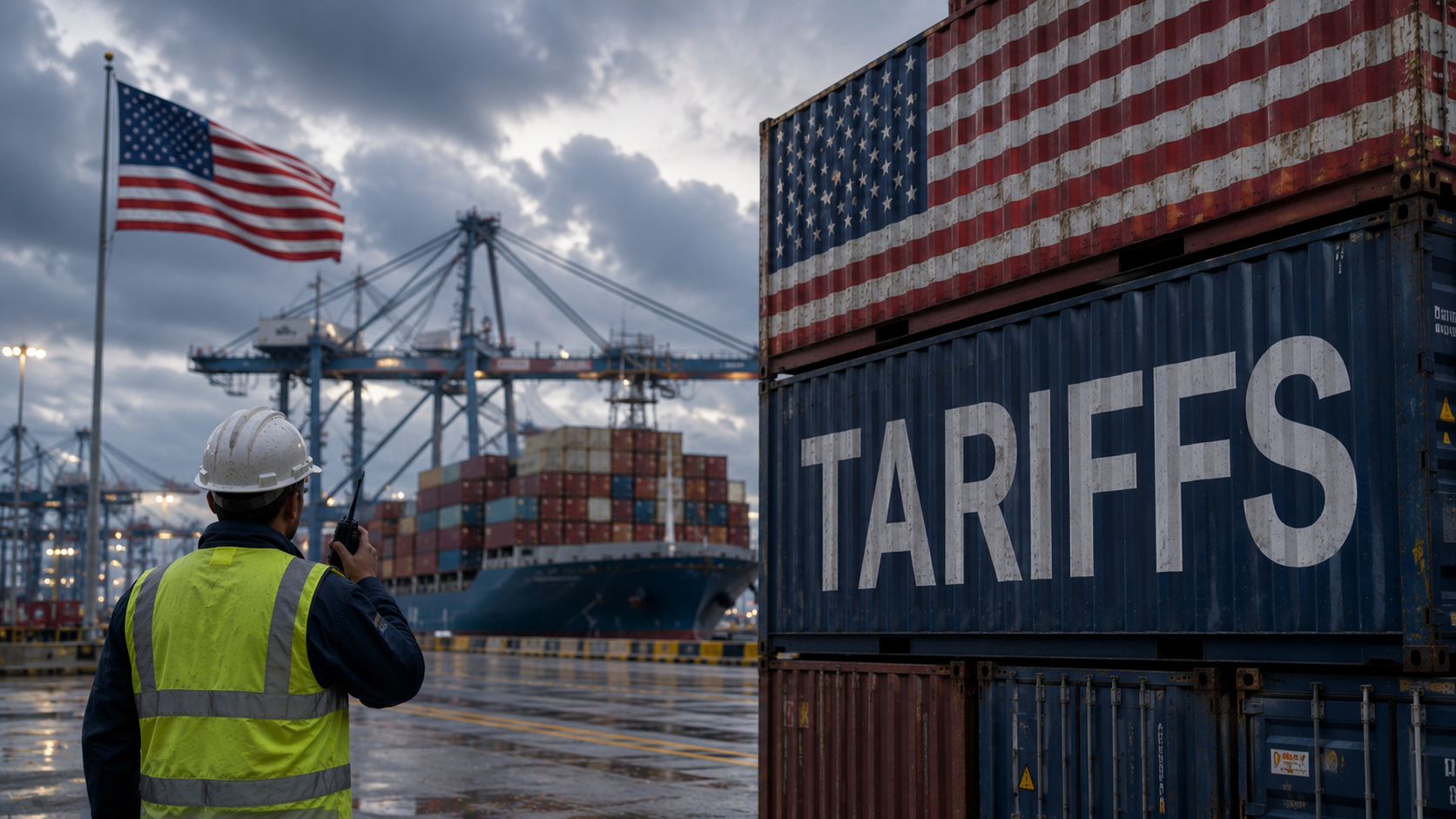
US tariffs of 10% to 12.5% will start Friday on imports from dozens of economies after a forced-labor review, the Federal Register notice said.
The duties mark the administration’s broadest attempt to rebuild President Donald Trump’s trade barriers after earlier levies were struck down by the Supreme Court. The timing also prevents a break between the new charges and a separate 10% global import tax scheduled to expire Friday.
Friday start preserves tariff floor
The notice sets the launch for 12:01 a.m. New York time on Friday. It exempts certain goods already loaded onto vessels before that deadline, giving companies with cargo in transit a narrow shield from the new costs.
The administration based the levies on an investigation into roughly 60 economies it said had not done enough to stop forced labor from entering supply chains. That framing matters because Washington is presenting the duties as a labor-enforcement measure, not only as a replacement for tariffs lost in court.
Goods from about 10 economies judged to have adopted forced-labor restrictions will face a 10% duty. The notice listed Mexico, the UK, Canada and India among countries in that group.
Trade deals shape duty tiers
Imports from the European Union and Taiwan will be taxed at no less than 10%, according to the notice. Products from Japan, Switzerland and South Korea will face a floor of at least 12.5%, with the structure designed to fit the trade arrangements those governments reached with Washington.
Many other economies will be assigned a 12.5% charge. That creates a broad tariff band across major manufacturing and consumer-goods supply routes, even though the notice does not identify a single company as the center of the policy.
US Trade Representative Jamieson Greer tied the action to Washington’s long-standing restrictions on forced-labor imports. He said, "The United States has had a forced labor import ban for nearly a century, and rigorously enforces it," adding, "It’s well past time for our trading partners to do the same."
A senior administration official said the measures were not being imposed purely to replace the earlier tariffs invalidated by the court. The official also said Trump would use the tools available to him and would not allow a court ruling to weaken his trade agenda.
Importers face new compliance math
The immediate burden falls on importers, retailers and manufacturers that rely on cross-border supply networks. A 10% to 12.5% duty can force companies to choose between raising prices, absorbing margin pressure or shifting orders toward suppliers that meet Washington’s preferred compliance standards.
For trading partners, the policy creates an incentive to show forced-labor controls that US officials view as credible. Mexico, Canada and the UK are in the lower tier under the notice, while Japan, Switzerland and South Korea face higher minimum charges despite having trade arrangements with Washington.
The macro effect depends on how widely costs move through consumer prices and production chains. If firms pass through the duties, the policy could add price pressure to imported goods; if they absorb the charges, profit margins and investment budgets would take more of the hit.
If the new legal basis holds, the administration gains a route to keep a broad tariff wall while linking it to labor enforcement. That would support Trump’s trade strategy, raise compliance demands across global supply chains and push sectors such as retail, autos, electronics and industrial goods to document sourcing more aggressively.
If courts or trading partners challenge the measure and weaken it, the global effect would be a fresh round of uncertainty over US tariff authority. For the administration, the risk would be another gap in its trade framework; for industry, the result could be delayed orders, contract repricing and more cautious inventory planning.