US Space Weapons Disclosure Pushes Pentagon Space Doctrine Into Open
US officials have confirmed American weapons in orbit, fueling debates on how to deter China and Russia while maintaining space arms-control norms.
Lauren Collins ·
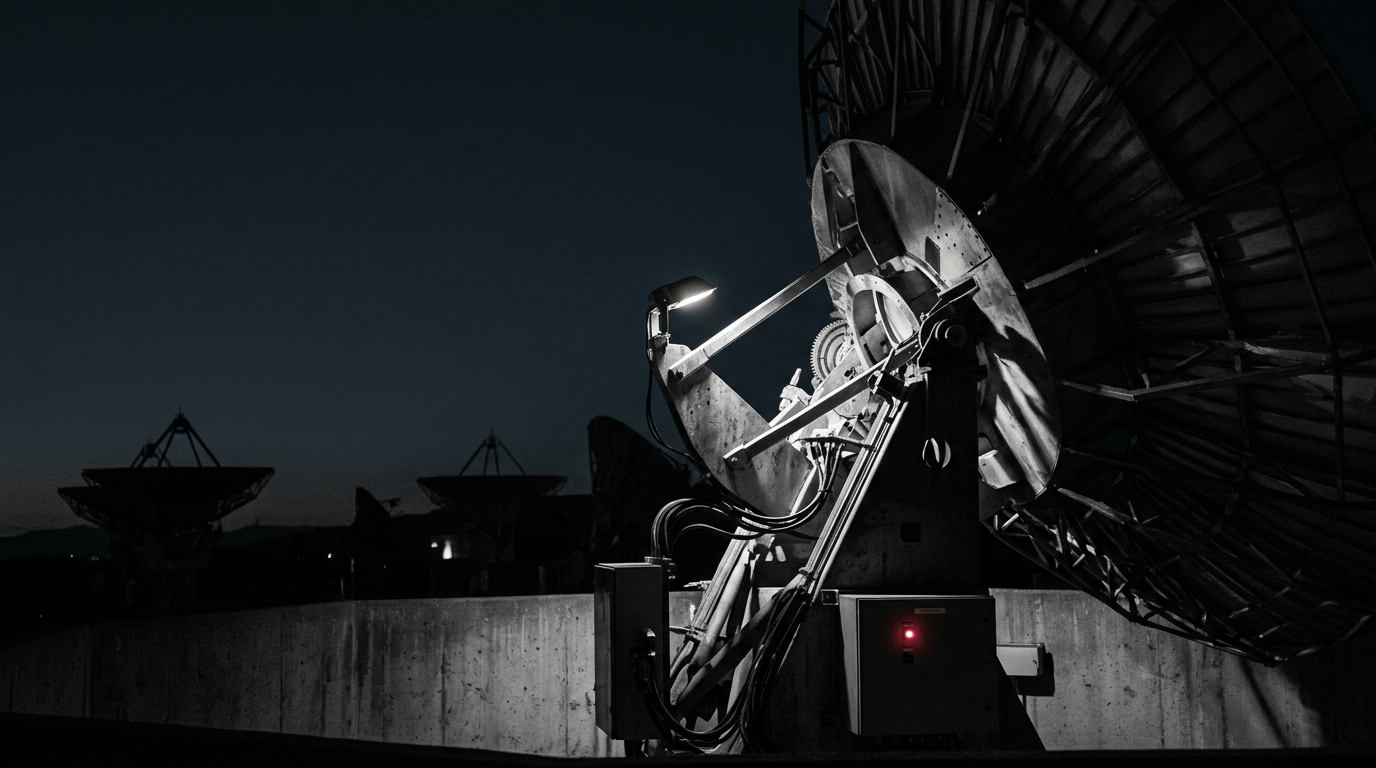
US Space Weapons Disclosure Pushes Pentagon Space Doctrine Into Open
Washington’s space-security debate shifted after US Space Force officials acknowledged that the United States has weapons in orbit, according to a published report citing the service. The disclosure matters because it moves a long-running Pentagon discussion about counterspace capabilities from strategic ambiguity toward public doctrine.
For the White House
The reported acknowledgment comes as US officials describe China and Russia as the main pacing threats in orbit, where satellites support missile warning, communications, navigation, intelligence collection and battlefield targeting. For the White House, the immediate problem is how to signal deterrence without appearing to bless an uncontrolled arms race above Earth.
The United States has treated space as a military operating domain for years, but it has usually spoken more openly about protecting satellites than about placing weapons in orbit. The Pentagon created the US Space Force in 2019 to organize, train and equip forces for space operations, while US Space Command handles military operations in that domain.
The legal frame is older than the modern satellite economy. The 1967 Outer Space Treaty bars nuclear weapons and other weapons of mass destruction from being stationed in orbit, on celestial bodies or in outer space, but it does not impose a blanket ban on all conventional systems, electronic warfare tools or dual-use satellites that can maneuver near other spacecraft.
That gap is where the policy fight now
That gap is where the policy fight now sits. A satellite that repairs, inspects or refuels another spacecraft can also be viewed as a potential weapon if it can approach, interfere with or disable an adversary’s satellite. US officials have cited Russian and Chinese activity in proximity operations as evidence that rivals are already testing the boundary between civilian, military and offensive use.
For the National Security Council, the question is not only what the United States has in orbit, but what it is prepared to say about how those assets would be used. Public doctrine affects diplomacy, alliance planning and crisis stability, especially if an adversary satellite comes close to a US military spacecraft during a confrontation.
The Pentagon’s incentive is different. Military planners want options if communications, GPS, missile-warning or reconnaissance satellites are threatened, because those systems connect US forces across every theater. A loss of space support would not stay in space; it would affect air defense, naval operations, nuclear command-and-control resilience and battlefield awareness.
Congress will be pulled into the issue through budgets, classified oversight and arms-control politics. Lawmakers who focus on China are likely to press for more resilient and more active space defenses, while arms-control advocates will ask whether public confirmation of orbital weapons weakens US arguments against Russian or Chinese deployments.
Russia’s recent use of its UN Security Council veto in disputes over weapons in space has hardened Washington’s view that voluntary restraint may not be enough. China’s expanding military space program has had a similar effect inside the Pentagon, where officials increasingly describe space as contested rather than protected by norm or distance.
The diplomatic risk is that deterrence and normalization can look similar. If Washington says it has space weapons for defense, Beijing and Moscow can use the same language for their own systems, leaving outside governments to judge intent from behavior rather than hardware.
The commercial dimension makes the issue more complicated. Civilian satellite operators now provide communications, imagery, weather data and broadband capacity that can be relevant in a conflict, which means the line between military and commercial space assets is less clear than it was when the Outer Space Treaty was written.
A public US acknowledgment may also affect allies. NATO governments and partners in the Indo-Pacific rely heavily on American space infrastructure, but many have domestic political constraints around weaponization.
If the United States asks allies to support a space deterrence posture, Washington may need to explain whether it is talking about jamming, cyber tools, maneuverable satellites, interceptors or something else.
The key distinction is between capability and policy. A weapon in orbit tells adversaries that the United States may be able to act; rules of engagement tell them when Washington might act. The second point is more stabilizing than the first if it reduces miscalculation, but more escalatory if it creates red lines that are hard to verify in real time.
There is also a technical problem that arms-control treaties handle poorly. Many counterspace systems are dual-use, meaning the same sensor, propulsion, robotic arm or radio-frequency tool can have peaceful or hostile applications depending on timing and intent. Verification becomes harder when a prohibited action may look identical to a permitted maneuver until the final seconds.
Without fresh named expert comments available in the supplied research, the immediate read is necessarily limited to the official-policy stakes. The disclosure points to a Pentagon that wants adversaries to know US satellites are not passive targets, while leaving the White House to manage the diplomatic cost of saying so publicly.
The falsifiable test is whether the White House or Pentagon issues a formal policy directive on space rules of engagement by December 31, 2026. If Washington opens a new space-norms track that treats some conventional defensive systems as acceptable, the macro effect would be a more explicit arms-control split between nuclear bans and conventional counterspace tools; for the Space Force, it would validate more budget and doctrine for active defense; for the sector, it would push satellite builders toward maneuverability, hardening and threat-detection services. If officials instead walk back the remarks as misinterpreted and emphasize only defensive, non-kinetic measures, the macro effect would be a slower diplomatic rupture; for the Space Force, classified programs would likely continue with less public doctrine; for the wider space industry, demand would still shift toward resilience, but without a clear public standard for what counts as an acceptable military system in orbit.