US State Department Proposes Stricter Child Passport Rules
The US State Department is developing new rules for child passports, requiring parents to show citizenship or legal immigration proof to address 'birth…
Atlas Newsdesk ·
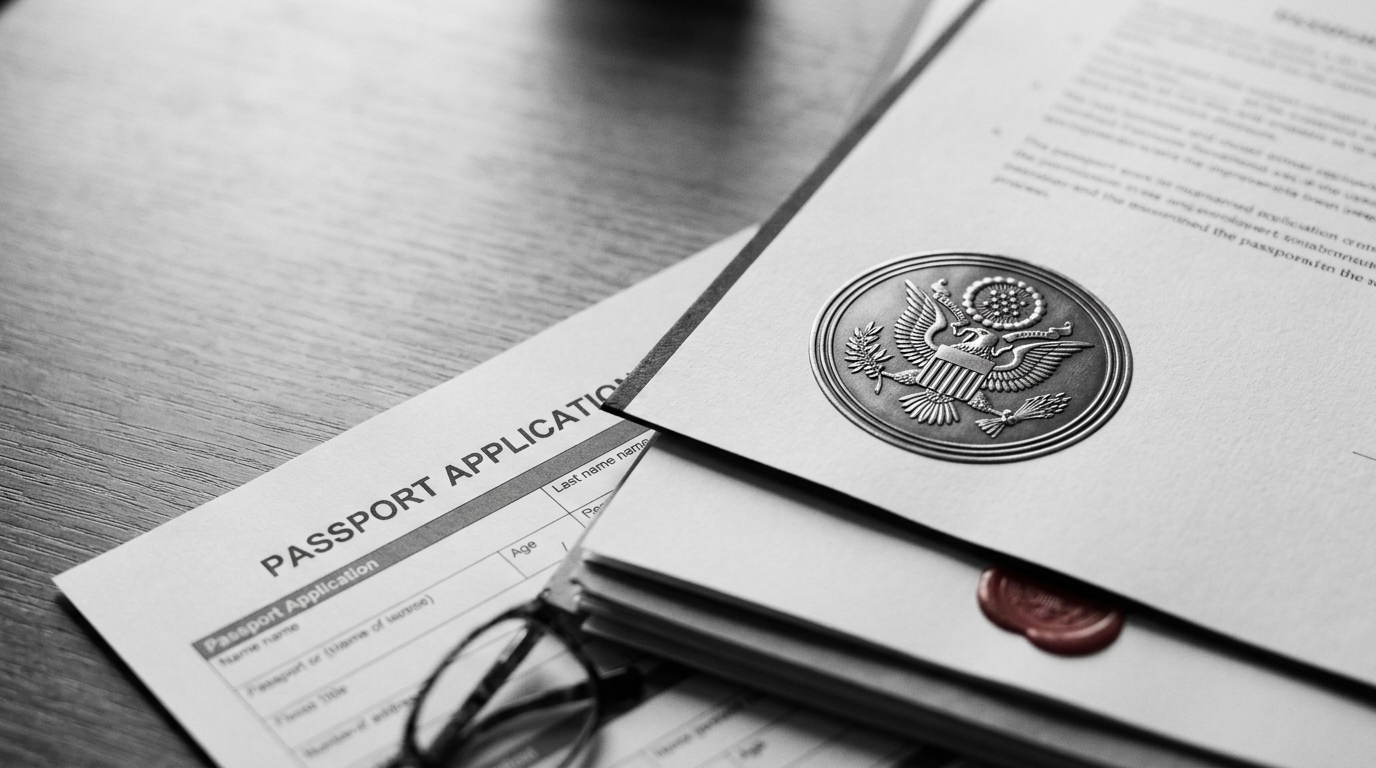
The United States Department of State is preparing new guidelines that would mandate parents to provide proof of their own citizenship or legal immigration status when applying for passports for their children. This potential policy aims to align with a recent executive order, seeking to address concerns about "birth tourism" and limit automatic citizenship for certain categories of individuals.
Currently, applications for U.S.-born children typically require evidence of parentage and basic identification. Parental citizenship status is established through self-attestation. The proposed changes would necessitate the submission of formal documents, including birth certificates, permanent resident cards, or I-94 arrival/departure records, to verify eligibility under the new directive.
Executive Order Driving Changes
The executive order, signed on August 6, seeks to modify interpretations of birthright citizenship, particularly for children whose parents are not U.S. citizens or legal residents. It specifically targets situations where birth in the U.S. might be primarily motivated by obtaining citizenship for the child, often labeled as "birth tourism." The order also addresses complex scenarios involving foreign diplomatic personnel and instances of immigration fraud.
The State Department's proposed guidance serves as a direct administrative response to this executive mandate. By requiring explicit documentation of parental status, the government intends to establish a more rigorous verification process that aligns with the order's stated objectives, which include safeguarding national security and upholding immigration laws.
Legal Scrutiny and Constitutional Questions
This policy shift is expected to face significant legal examination. Historically, attempts to restrict birthright citizenship, as defined by the 14th Amendment, have encountered substantial legal challenges. Previous efforts in this area have been invalidated by the Supreme Court.
The 14th Amendment's Citizenship Clause declares that "All persons born or naturalized in the United States and subject to the jurisdiction thereof, are citizens of the United States and of the State wherein they reside." Legal challenges against the August 6 executive order are already underway. The outcomes of these judicial proceedings will be crucial in determining the legality and enforceability of the proposed documentation requirements, influencing the broader interpretation and application of birthright citizenship within the United States.
Potential Impact on Applicants
Should the new requirements be implemented, families seeking child passports would need to compile and submit additional documentation. This could potentially increase the complexity and processing time for applications. For parents lacking readily available formal proof of their status, such as older immigration records or foreign citizenship documents, new hurdles might emerge.
The policy could also affect individuals currently involved in immigration proceedings or those with unconventional immigration statuses. The ongoing debate over birthright citizenship and its administrative enforcement reflects broader discussions about immigration policy and constitutional law in the United States. The resolution of these legal and administrative developments will have lasting implications for future passport applicants and the interpretation of citizenship rights.