US Aircraft Carrier Shifts Strategic Focus to Bolster Presence Across Middle East and Asia
The US has moved the USS George Washington to the Middle East to target Iran, sparking significant concern among allies in the Asia-Pacific region.
Atlas Newsdesk ·
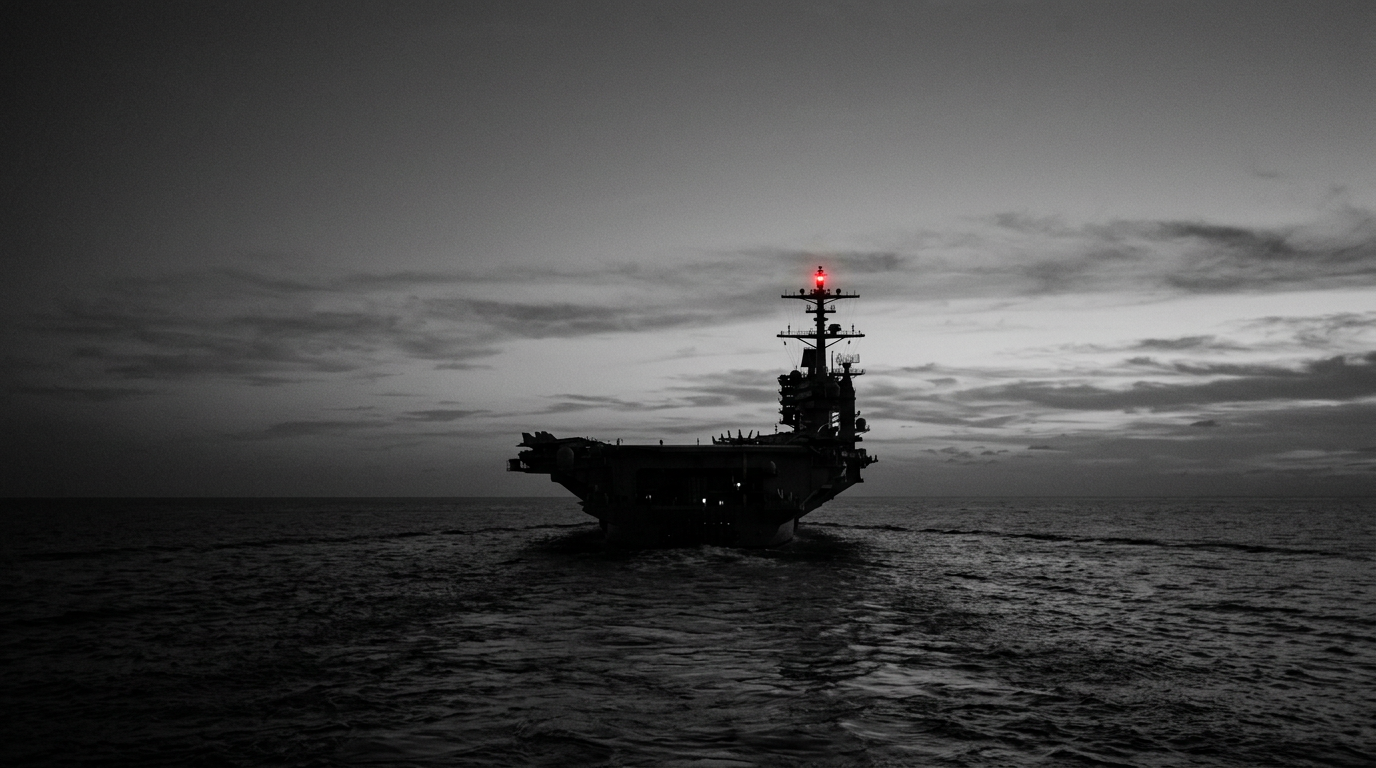
The United States has repositioned its only aircraft carrier previously assigned to the Asia-Pacific, the USS George Washington, to the Middle East. This strategic move, confirmed on August 21, 2026, aims to reinforce ongoing military operations directed at Iran. This decision follows an earlier transfer of Terminal High Altitude Area Defence (THAAD) systems from South Korea to the same operational theater, indicating a significant recalibration of American military asset distribution.
This reallocation of crucial military resources has sparked apprehension among US allies across the Asia-Pacific region. Partner nations are expressing concerns regarding the efficacy of US-led deterrence strategies against China, particularly in light of the departure of such significant defense capabilities from the area.
Military analysts have noted that the absence of a carrier strike group from the Pacific coincides with increased Chinese coastguard activities near Taiwan and an expansion of Chinese naval operations beyond the First Island Chain.
Regional Defense Enhancements
The shift in military focus necessitates a greater reliance on existing regional forces. These include a substantial American presence already comprising approximately 375,000 military and civilian personnel stationed in the broader area.
In response to the perceived gap in power projection, allied nations are accelerating their efforts to bolster indigenous defense capabilities. Taiwan, for instance, has announced an 18 percent increase in its defense budget for 2027, signaling a commitment to strengthening its security posture.
Furthermore, countries like the Philippines and other regional partners are actively working towards meeting defense spending targets proposed by the United States. These targets aim for defense expenditures to reach 3.5 percent of their Gross Domestic Product (GDP) by the 2030s. Such initiatives highlight a growing regional emphasis on self-reliance and the development of collective security frameworks amidst evolving geopolitical dynamics.
Tactical Repositioning and Future Dynamics
Security experts largely characterize the current redeployment as a short-term tactical adjustment rather than a permanent strategic withdrawal from the Indo-Pacific. Despite this assessment, its immediate effects are notable. The repositioning has intensified pressure on Asian allies to deepen their mutual security cooperation. This emphasis on collaborative defense initiatives seeks to offset any perceived reduction in immediate US naval and missile defense presence within the region.
The long-term implications of these resource shifts on global power dynamics and regional stability remain a critical area of observation. The continuous balancing act between addressing immediate security concerns in the Middle East and maintaining a robust deterrent posture in the Indo-Pacific continues to pose a central challenge for American defense planning and its intricate network of global alliances.
This dynamic interplay underscores the complex nature of international security in the current geopolitical climate.