Solar telescope spots plasma vortices linked to corona heat
Solar telescope images show Kelvin-Helmholtz plasma vortices that may help explain coronal heating and support better space weather forecasts.
Atlas Newsdesk ·
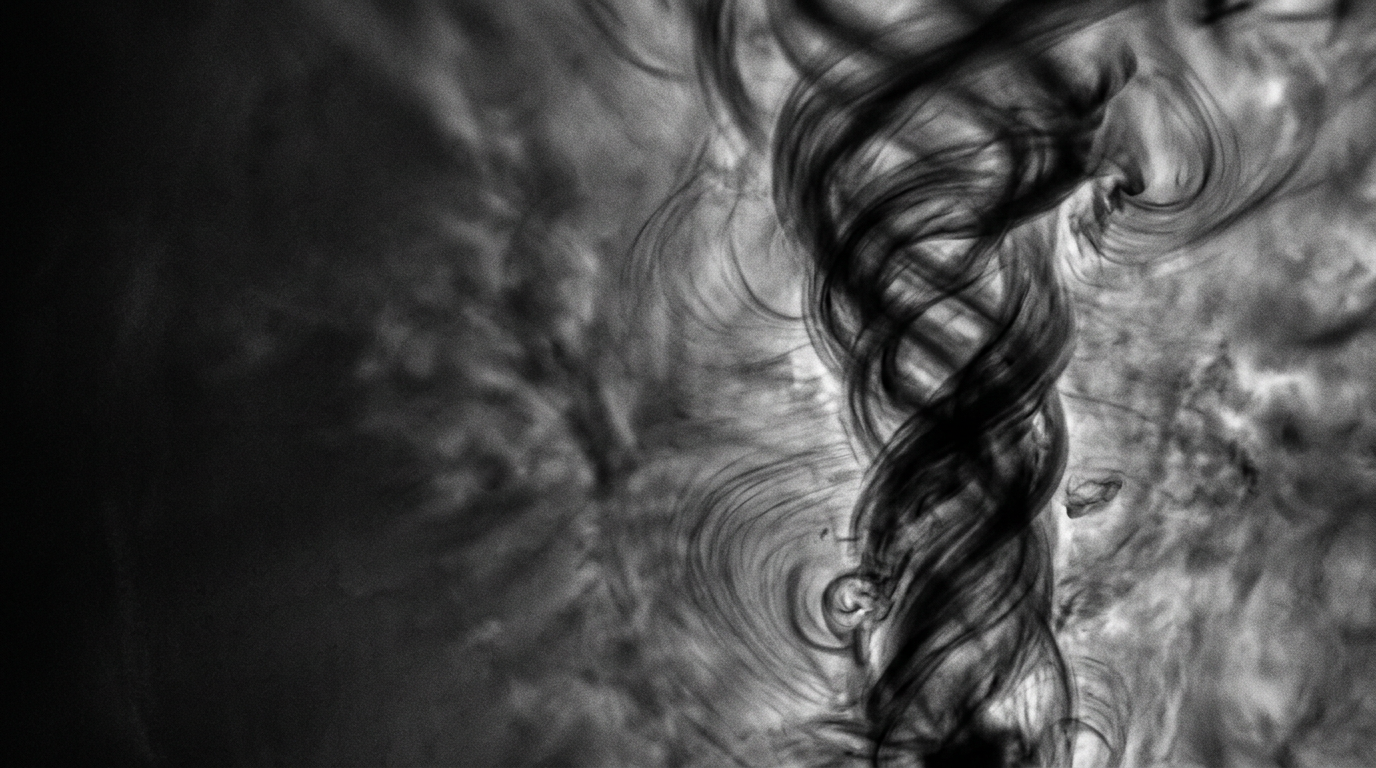
New high-resolution observations from the Inouye solar telescope have revealed Kelvin-Helmholtz instabilities on surface, highlighting swirling plasma structures that scientists link to the long-running mystery of why the solar atmosphere above the surface becomes dramatically hotter.
Officials and researchers involved in the work said the newly identified features appear as rolling, vortex-like motions in plasma, a pattern associated with Kelvin-Helmholtz instabilities. The finding points to a physical process that could help move and dissipate energy in ways that contribute to heating the corona.
Inouye imagery highlights Kelvin-Helmholtz instabilities
The reported instabilities are described as swirling plasma vortices produced where flows interact, creating shear that can roll up into recognizable wave-like structures. In the solar environment, these interactions occur in plasma shaped by magnetic fields, making the dynamics relevant to how energy is transferred through different layers of atmosphere.
Researchers said identifying these structures offers a potential mechanism tied to magnetic processes that may account for at least part of the temperature differential between surface and its corona. The work centers on how energy can be dissipated as these vortices form and evolve.
Magnetic interactions and energy dissipation
The discovery is framed around the idea that magnetic field interactions can channel energy into smaller-scale motions, where it can be converted into heat. In that context, Kelvin-Helmholtz instabilities are presented as a candidate pathway for energy dissipation that could contribute to the extreme heating of the solar atmosphere. At the same time, researchers cautioned that more analysis is needed to map how these instabilities behave across different regions and conditions on. The observation itself identifies a process on the solar surface, but the extent of its role in coronal heating remains a key uncertainty highlighted by the need for further study.
Why the finding matters for space weather protection
Understanding these magnetic processes is also presented as important for forecasting solar activity, including flares and coronal mass ejections. Officials said such events can create space weather conditions that affect technologies that depend on stable electromagnetic and satellite environments. The source material notes that severe solar activity can pose risks to global infrastructure, including satellite operations, GPS navigation, and terrestrial power grids. Better insight into the physical mechanisms that drive heating and activity is expected to support improvements in the accuracy of space weather forecasting models used to protect critical communication and energy systems.