Ulysses' autonomous ocean platforms tilt maritime procurement toward robot-led capital
Ulysses Willowbriar discusses a scalable, autonomous ocean-robotics platform and a SpaceX-style playbook for critical maritime infrastructure.
Edward Mullen ·
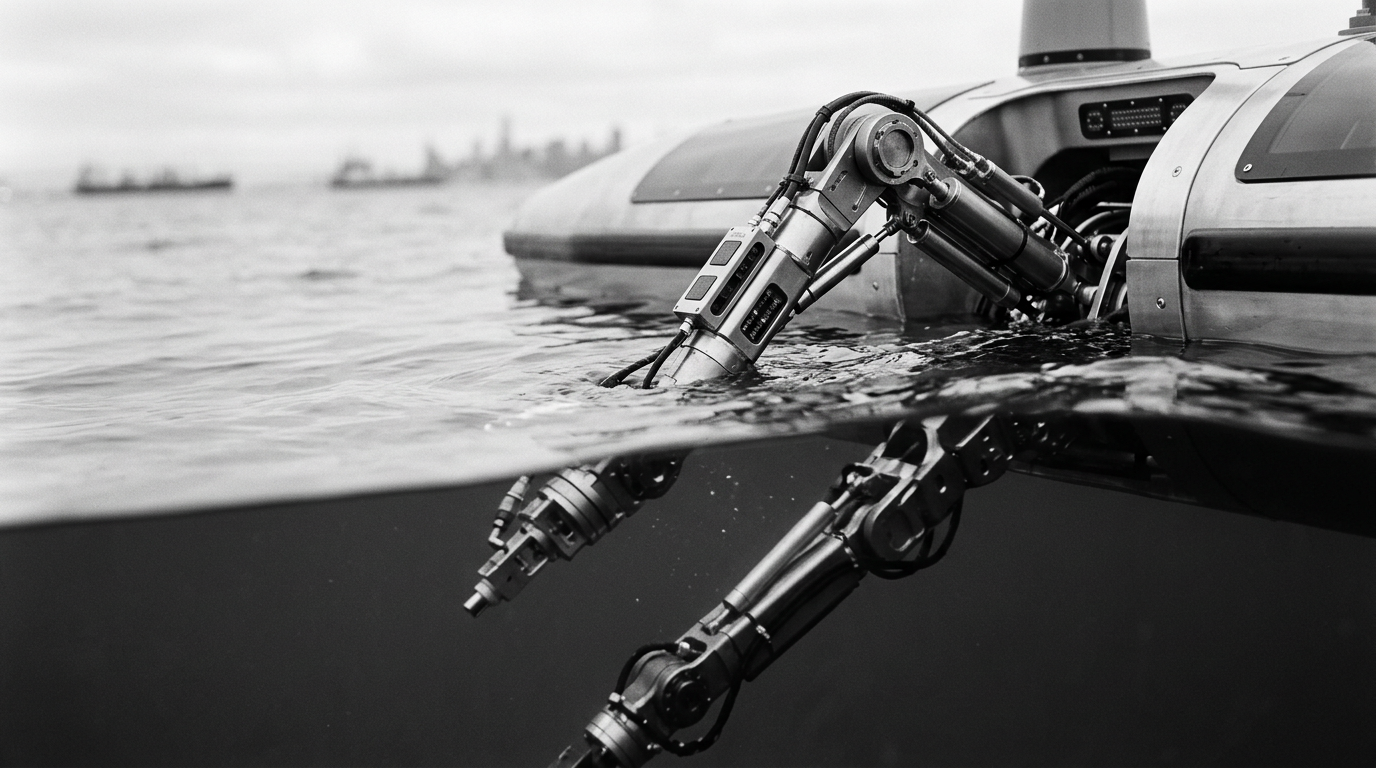
Ulysses founder Ulysses Willowbriar envisions a future where autonomous ocean platforms perform the arduous tasks currently assigned to human crews. Instead of merely augmenting existing maritime operations, these robotic fleets are designed to fundamentally reshape how infrastructure is acquired and maintained at sea. This shift promises to move procurement away from labor-intensive expenses towards capital investments in AI-driven autonomy.
Procurement shift and the inversion argument
The signal from the interview is that a platform approach—where a single, scalable robotic stack is deployed across multiple vessels or sites—could reframe the cost calculus. If a fleet can operate with fewer on-site personnel and more automated routines, the capital outlay for hardware and software (CAPEX) may be amortized across a longer, service-enabled horizon, while ongoing maintenance and monitoring costs (OPEX) move onto vendor-managed platforms and remote support.
In other words, the business model may pivot from paying for labor-intensive, on-site human oversight to paying for autonomous platforms and the services that sustain them. This is precisely the sort of procurement decision that can cascade through vendor contracts, maintenance regimes, and risk allocation in ways that conventional equipment purchases do not.
A risk-worthy counter-read
Skeptics would insist that sea conditions, corrosion, and reliability in open-water contexts keep human oversight in the loop. The cost of ensuring safety, regulatory compliance, and rapid incident response could keep OPEX stubbornly high and undermine any CAPEX benefit.
The governance and liability model for autonomous maritime systems—who is responsible when a platform misbehaves, who keys the safety protocols, and who covers environmental fines—will constrain upside unless regulators and insurers align with the autonomous-ops thesis. This counter-read is not an abstract worry: if maintenance spirals, if downtime erodes throughput, or if regulatory mandates require human presence, the “CAPEX-inversion” thesis weakens.
What this could mean for maritime manufacturing
If the procurement pathway leans toward platform ownership and continuous service, manufacturers of autonomous ocean platforms—and their system integrators—will see distinct incentives. Contracts may favor long-term service-level agreements and modular components over one-off hardware sales.
The economic logic becomes less about the sticker price of a vessel and more about uptime, predictive maintenance, and remote tuning capabilities. The result could be a reconfigured value chain where hardware vendors also supply software, sensors, and remote operations centers, expanding the role of integrators and shifting financial risk onto suppliers.
Beyond the bottom line: who benefits and who bears the risk
The beneficiaries could include operators who gain predictable reliability and reduced on-site crew costs, and suppliers who monetize through ongoing service revenue rather than one-time sales. If governance remains ambiguous, risk-bearing shifts toward insurers and regulators who must underwrite autonomous-operations failures, accidents, or environmental incidents.
The dynamic also raises questions for labor policy and marine unions, since the work formerly performed by crews might migrate toward remote monitoring and maintenance roles. The economics will hinge on a clear, enforceable framework for liability, maintenance obligations, and service commitments.
Signs to watch in the next 6 months
First, if Ulysses or peers publish detailed financials showing a higher proportion of operating cost reductions than up-front hardware costs, the CAPEX-opex inversion thesis gains credibility. Second, a major competitor launching a similar autonomous platform with maintaining costs lower than expected would validate the scalability argument, while a failure to achieve reliability milestones would challenge it.
Third, new regulatory guidance or coast-guard directives that allow or require autonomous operations with defined safety standards would materially alter the risk profile and procurement calculus. Finally, enterprise buyers’ procurement teams begin to structure long-term, service-oriented contracts around autonomous platforms, signaling a market-ready shift from single-vendor hardware to platform-based ecosystems.
In this framing, the question for executives is not only whether autonomous platforms can do the job, but who signs the purchase order, who funds the upgrade, and who bears the ongoing risk when the sea tests the system.
If the economics holds, the shift could redefine the backbone of critical maritime infrastructure procurement.