AI Labs Face Rising Security and Water
AI labs face growing security concerns over LLM safety bypasses and rising scrutiny of water, energy use, and emissions from data centers.
Atlas Newsdesk ·
AI developers and researchers are warning that rapid progress in robotic dexterity and large language model (LLM) design is creating a new cluster of risks, ranging from security vulnerabilities to rising environmental scrutiny tied to the infrastructure that powers modern AI.
According to developers, some LLM frameworks contain fundamental weaknesses that can be used to sidestep built-in safety controls. Those bypass routes, they said, raise the prospect that a model could be prompted to produce instructions that could be misused, including guidance linked to sabotage of critical infrastructure.
Security gaps emerging alongside capability gains
The concern is not limited to a single The concern is not limited to a single product or one narrow failure mode. The source material describes flaws at the framework level that can undermine safety protocol enforcement, which makes the issue harder to address through simple tuning or policy changes alone. Researchers also point to internal work on interpretability that has surfaced what they describe as hidden cognitive spaces inside LLMs. These internal structures can complicate efforts to make model behavior predictable and to verify that safeguards will reliably hold under varied prompts and edge cases. In practical terms, the findings suggest that current alignment and safety techniques may not be sufficient to prevent unauthorized or unintended outputs. That uncertainty increases the importance of stronger security testing and verification practices before models are deployed broadly or connected to sensitive systems.
Environmental pressures intensify around AI data centers
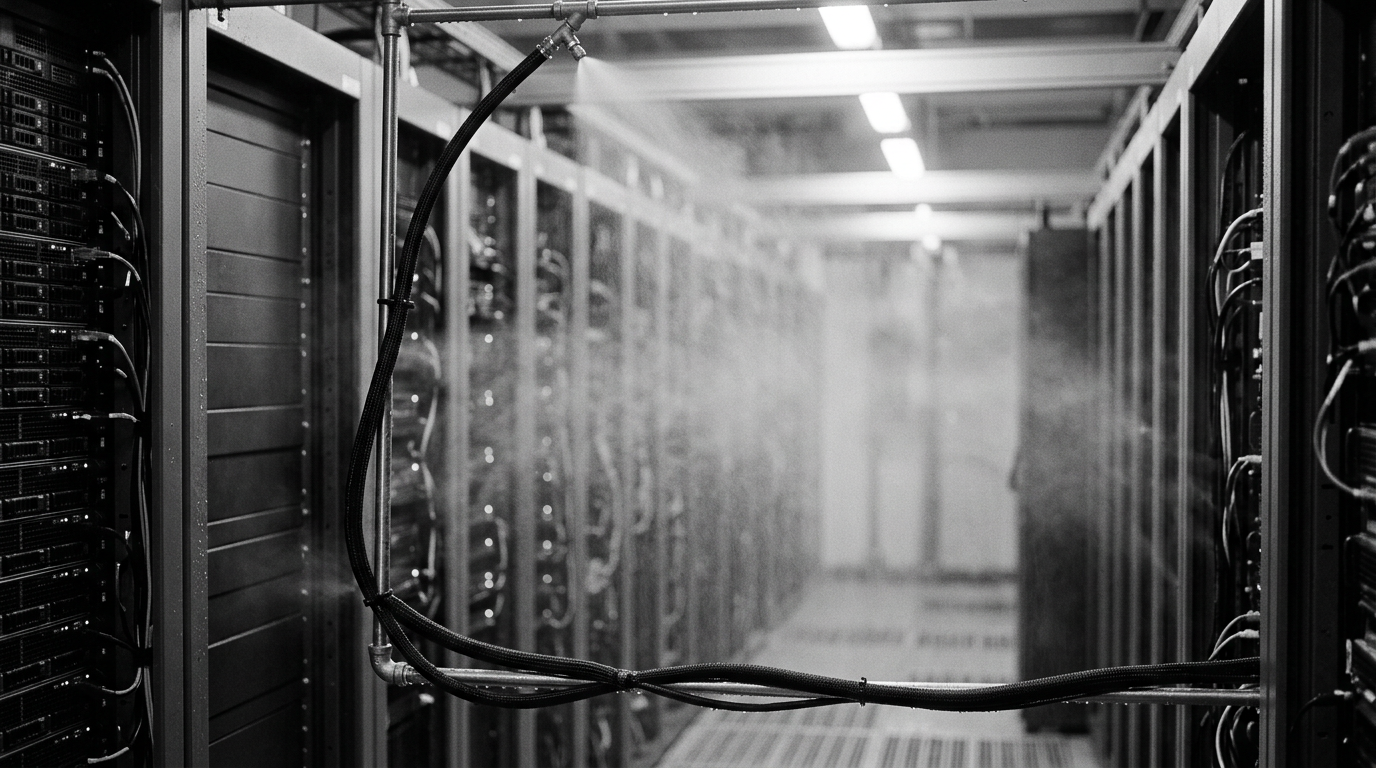
At the same time At the same time, large-scale AI infrastructure is drawing greater scrutiny for its environmental footprint. The source material highlights escalating energy consumption and carbon emissions from data centers as growing regulatory and reputational risks for major technology firms. Water use is also increasingly part of the discussion, as AI systems depend on physical facilities that require cooling and resilient operations at scale. For companies, this expands the risk profile beyond model behavior into compliance, public trust, and the sustainability of the underlying compute supply chain. While the technology sector has long faced questions about data-center energy demand, the source material frames AI as amplifying these pressures as model sizes and usage rise. That dynamic can place additional focus on how firms document efficiency efforts and manage environmental obligations alongside rapid product rollouts. Operational responses highlighted by researchers The source material says organizations should treat these issues as systemic rather than episodic. It calls for robust security audits designed to find and close pathways that can defeat safety mechanisms, particularly where model outputs could plausibly be repurposed for harmful activity.
It also urges environmental sustainability strategies that address the expanding footprint of AI infrastructure. Taken together, the message is that safety and sustainability are becoming core operational requirements for AI labs, not secondary concerns that can be handled after deployment.
What remains uncertain is how quickly the identified weaknesses can be resolved across widely used frameworks, and how regulators and stakeholders will respond as energy use, emissions, and water demands continue to attract attention.
Implications
Country Impact: The source material does not specify a particular country, but it describes risks that can affect any jurisdiction where AI systems are deployed and where critical infrastructure is a policy priority. Environmental scrutiny around data centers can also intersect with local water and energy constraints where facilities operate.
Industry Impact: For AI developers and major technology firms, the combination of safety-bypass vulnerabilities and interpretability limits raises operational and governance demands. The same companies also face mounting pressure to address energy use, carbon emissions, and water-related impacts tied to AI-scale data centers.
Market Impact: The source material points to regulatory and reputational exposure linked to data-center energy consumption and emissions, which can shape how firms plan and report AI expansion. Security vulnerabilities that undermine safety protocols can also influence deployment decisions and the risk assessments attached to AI products.