Turkey Brokered $280M US-Ukraine Arms Deal
Ukraine has launched a $280 million purchase of US-made weapons via Turkish intermediaries, pending a two-week US congressional review.
Atlas Newsdesk ·
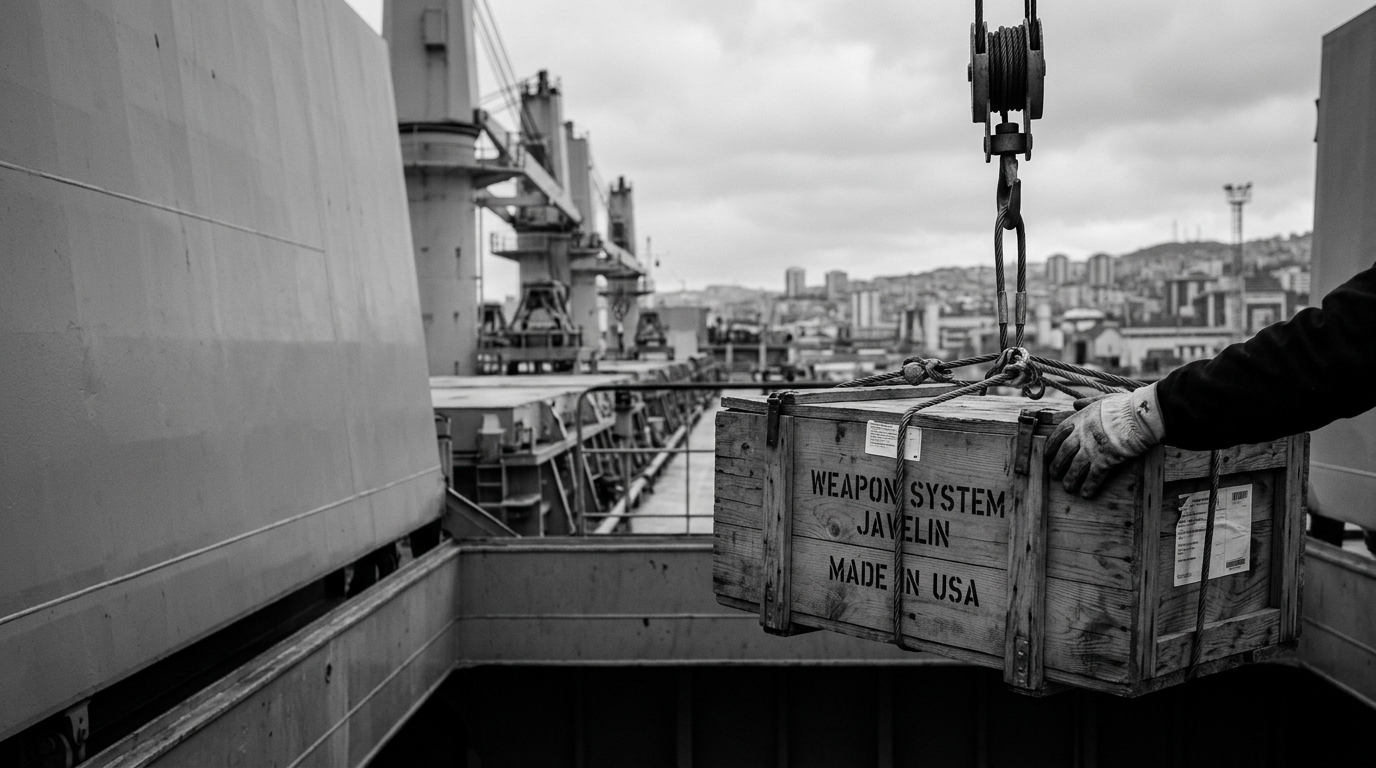
Ukraine has initiated a $280 million procurement of U.S.-manufactured defense equipment using Turkish intermediaries, according to officials familiar with the arrangement. The package brings together missiles, rocket launch systems, munitions and artillery ammunition, and is set to move forward after a required U.S. congressional notification window.
Officials said the transfer is subject to a two-week review period under the U.S. Arms Export Control Act. The transaction is structured as a re-export of American-origin hardware, facilitated by private firms operating in Turkey, Bulgaria, and the United States.
Equipment list includes ATACMS and M270 launchers
Arms Export Control Act The procurement package includes 70 M39 ATACMS ballistic missiles and 12 M270 multiple-launch rocket systems. It also covers 2,000 cluster munitions and 47,000 howitzer rounds, officials said.
Ukraine’s move reflects a change in how it is sourcing U.S.-made equipment after direct U.S. military aid stopped, according to the description provided.
Instead of relying on direct support, the structure uses third-party companies to complete a purchase and transfer that still requires U.S. oversight through export control procedures.
Turkey describes deal as older-stock divestment Turkey has characterized the sale as a divestment of older inventory intended to help finance modernization efforts. The arrangement relies on intermediaries and private-sector participation across multiple countries, rather than a government-to-government transfer described as direct U.S.
military aid.
State Department has signaled alignment with security assistance
Officials said the U.S. State Department has signaled alignment with security assistance objectives in connection with the proposed transfer. At the same time, the process underscores Ukraine’s reliance on third-party intermediaries as a way to navigate current constraints tied to U.S. funding.
Long-range strike capacity and operational limits
Strategically, the package is intended to help replenish Ukrainian long-range strike capabilities that have been depleted, according to the description of the deal. The inclusion of M39 ATACMS, along with the M270 launchers, is central to that objective.
Officials said use of the systems would remain subject to existing operational restrictions related to cross-border strikes. Those limitations apply regardless of the procurement route, leaving deployment parameters unchanged even as the acquisition method shifts.
The transaction’s next step is the completion of the two-week congressional review period. Until that process concludes, the timing of any transfer and subsequent fielding of the equipment remains contingent on U.S. export control procedures.
Implications
Country Impact: For Ukraine, the procurement provides a pathway to obtain U.S.-origin systems despite the cessation of direct U.S. military aid described in the deal outline. The transfer remains tied to U.S. export controls and existing operational restrictions on cross-border strikes, which could shape how the equipment is used.
Industry Impact: For defense firms involved in Turkey, Bulgaria, and the United States, the arrangement highlights the role of private intermediaries in re-export transactions of American-origin hardware. Turkey’s framing of the sale as a divestment of older inventory also points to how such deals can be positioned as part of modernization funding efforts.
Market Impact: The transaction demonstrates continued demand for U.S.-manufactured systems through alternative procurement routes when direct funding is constrained. Because the transfer is pending a two-week congressional review under the U.S. Arms Export Control Act, near-term execution depends on regulatory process rather than market availability alone.