UEFA boycott threat targets FIFA's private capital plan
UEFA boycott talks have emerged as European officials push back against FIFA's plan to court private capital for a new commercial vehicle.
Andreas Keller ·
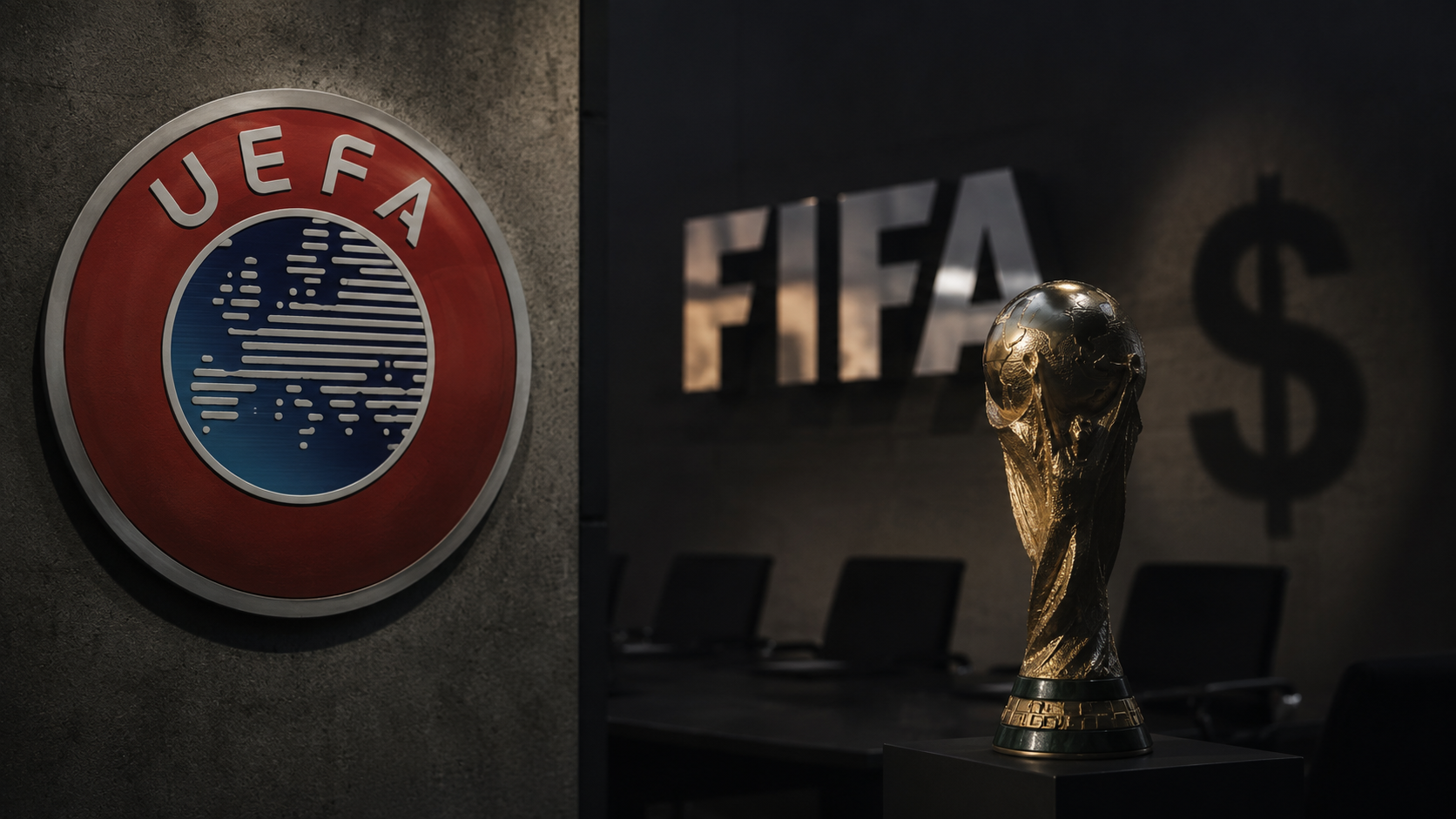
UEFA boycott talks have opened a new fight with FIFA over private capital. The dispute could reach the World Cup and Club World Cup.
European football officials have discussed ways for clubs and national associations to stay away from FIFA competitions, according to a person familiar with the talks. The person said the discussions followed FIFA proposals to bring private investment into a new commercial structure.
FIFA vehicle draws European anger
The dispute centers on FIFA's plan to move major commercial and tournament activities into a new entity valued at $20 billion, according to the account provided. UEFA views the structure as a shift that could give outside investors a role in assets tied to football governance and competitions.
UEFA, which includes 55 FIFA member associations, issued an unusually sharp warning after the proposal surfaced. It said, "This crosses a line that football's governing institutions should never cross," and called on national associations, leagues, clubs, players, supporters and governments to treat the issue seriously.
A UEFA spokesperson declined to comment on the internal boycott discussions. FIFA did not respond to a request for comment, leaving the proposal's terms, investor rights and governance safeguards unclear.
Club World Cup rivalry sharpens
The Club World Cup is the immediate flashpoint because FIFA has expanded the tournament into a larger global club event. UEFA already runs the Champions League, one of the sport's most valuable competitions, and sees FIFA's growing club ambitions as a challenge to Europe's commercial position.
The World Cup gives the dispute a wider dimension. A boycott threat involving national associations would be far more disruptive than a club-only protest, because the men's World Cup remains FIFA's central tournament and a core source of global attention for the sport.
The two governing bodies are both nonprofit organizations, but their competition has grown as tournament calendars, broadcast money and commercial control have become more important. UEFA's concern is that private capital could strengthen FIFA's leverage over member associations and, through them, national clubs.
Associations face a governance test
For European federations, the practical question is how far they are willing to confront FIFA. UEFA can object publicly, but a boycott would require coordination among associations and clubs that have different commercial interests and political pressures.
For FIFA, the commercial case depends on whether it can attract capital without triggering a governance revolt. If investors seek influence over tournament rights, sponsorship packages or future competition design, UEFA is likely to argue that football's public-interest structure is being diluted.
The wider industry would feel the strain through media rights, sponsors and clubs planning calendars years in advance. Broadcasters and commercial partners value certainty; a prolonged dispute would make tournament scheduling and participation riskier to price.
Three routes for the dispute
If FIFA narrows the proposed vehicle, limits investor influence and gives associations clearer protections, the confrontation could shift into negotiation. That path would reduce disruption to the global football calendar, preserve FIFA's access to new capital and leave UEFA defending the Champions League mainly through commercial competition.
If UEFA keeps boycott options active, FIFA would face pressure before major tournament planning milestones. The global effect would be reputational rather than macroeconomic, but it could unsettle sponsors, travel partners and broadcasters tied to World Cup and Club World Cup events.
If both sides harden their positions, clubs and national federations could be forced to choose between institutional loyalty and commercial opportunity. The open questions are the exact rights attached to FIFA's proposed company, whether investors would influence competition decisions, and how many associations would support UEFA if the threat moved from discussion to action.