UAE faces regulatory gaps as fake app links fuel AI-driven fraud on WhatsApp and Telegram
A UAE-focused warning about fake app links on WhatsApp and Telegram highlights a regulatory gap that could enable sophisticated AI-driven fraud.
Edward Mullen ·
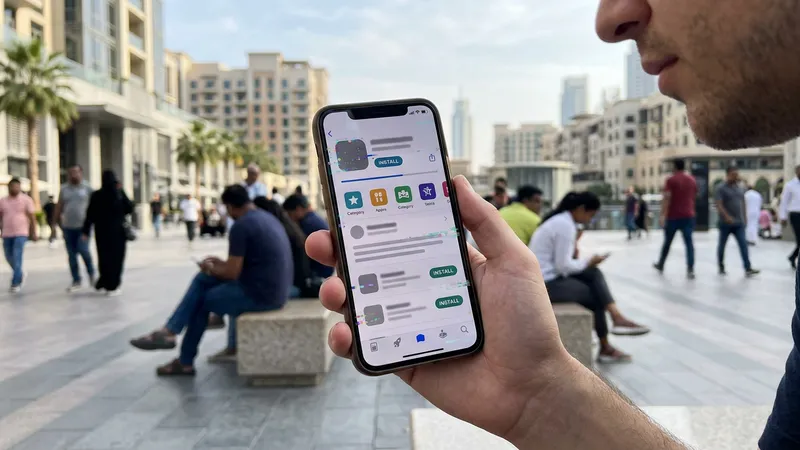
The regulatory gap is the real attack surface
When a Khaleej Times report warns UAE users against downloading apps from WhatsApp or Telegram, it spotlights a vulnerability beneath the surface of digital communication. Cyber experts fear the familiar, trusted channels are becoming conduits for sophisticated AI-driven fraud. This quiet peril arises not from individual naivete, but from a system where digital trust outpaces regulatory oversight.
A Gulf regulatory vacuum creates arbitrage risk
From a risk-management viewpoint, the Gulf ecosystem often weights platform monetization over security, and policy tends to lag platform evolution. Regulators face a choice between broad user-education campaigns and enforceable governance that binds app distribution across major messaging services.
The article’s framing implies the leverage lies not in individual behavior tweaks but in rules that reshape how apps circulate inside the UAE, potentially constraining or steering platform incentives toward safer distribution practices.
The falsifiers that could flip the forecast
A second falsifier would be platform-level controls: WhatsApp and Telegram implementing mandatory third-party verification for UAE app distribution by H1 2025, effectively isolating non-certified installers from end devices. If that happens, the attack surface would migrate toward other vectors but remain constrained by platform governance.
If no verification appears, the arbitrage thesis remains intact and attackers are likely to adapt to new distribution routes within the same regulatory framework.
Implications for platforms, banks, and policymakers Taken together, the coming 6 to 12 months will reveal whether the Gulf’s regulatory vacuum is an exploitable edge or a constraint that governs platform behavior. If signals move toward policy tightening and platform verification, enterprises should expect a rebalanced risk calculus, with costs migrating toward compliance, incident response, and vendor governance. If not, boards should treat social-media app distribution as a security procurement problem, watching three concrete signals: TRA policy for app-store approvals by Q3 2025, WhatsApp/Telegram adopting third-party verification in the UAE by H1 2025, and a major UAE bank reporting a measurable decline in deepfake-related fraud by Q4 2025.
In the UAE, Khaleej Times reported that cybersecurity experts warn UAE users against downloading apps shared via WhatsApp or Telegram, as AI-driven fraud and deepfake scams surge across the Gulf. The warning lands at the intersection of social trust in messenger channels and the rapid evolution of fraud tech, where attackers exploit familiar networks to seed malicious software.
This is not a distant specter; it is being observed in real-time as personas and devices connect through private chats that bypass traditional app storefront checks. The current tone of caution, while valuable, may be outpaced by platform- and regulator-led changes that determine what can circulate on a device in the first place.
[Khaleej Times](https://www.khaleejtimes.com/business/tech/fake-app-links-on-whatsapp-and-telegram-put-uae-users-at-risk-warn-cyber-experts)
Longstanding cyber advisories have urged vigilance, but the UAE’s regulatory posture around app distribution within messaging platforms remains under-specified. There is no widely adopted policy requiring apps shared in chats to be vetted, signed, or sandboxed before delivery, which means a link can direct a user to an installer that bypasses store checks.
In practice, attackers can scale such campaigns with limited friction, while enterprises and consumers operate with only generic warnings. This absence of formal distribution controls creates a potential regulatory arbitrage: platforms can profit from engagement while lawmakers lag behind the speed of delivery vectors in encrypted channels.
One crisp falsifier would be a formal UAE telecom regulator move—TRA—announcing policies that require app-store-style approvals for all apps distributed via major messaging platforms, by Q3 2025. Such a policy would inject vetting at the distribution layer, shrink the surface for fake apps, and alter the economics of fraud by raising the cost of distribution.
Absence of such a policy would keep the surface area large and the incentives aligned for attackers exploiting chat-based channels. The forecast thus hinges on regulatory action catching up to platform dynamics, not merely on user education.
Finally, a data-point from the banking sector would shape the risk picture: a major UAE bank reporting a measurable decline in deepfake-related fraud tied to social-media app links by Q4 2025 would sharpen the argument that policy and platform controls are biting the risk. Conversely, persistent or rising incidents would signal that warnings and user-level defenses alone remain insufficient.
Either outcome would not settle the debate but would illuminate whether regulatory architecture or attacker adaptation is the principal driver of risk.