Trump mail ballots order faces Supreme Court test again
The Trump administration asked the Supreme Court to revive mail ballots restrictions before states expand midterm ballot mailings.
Lauren Collins ·
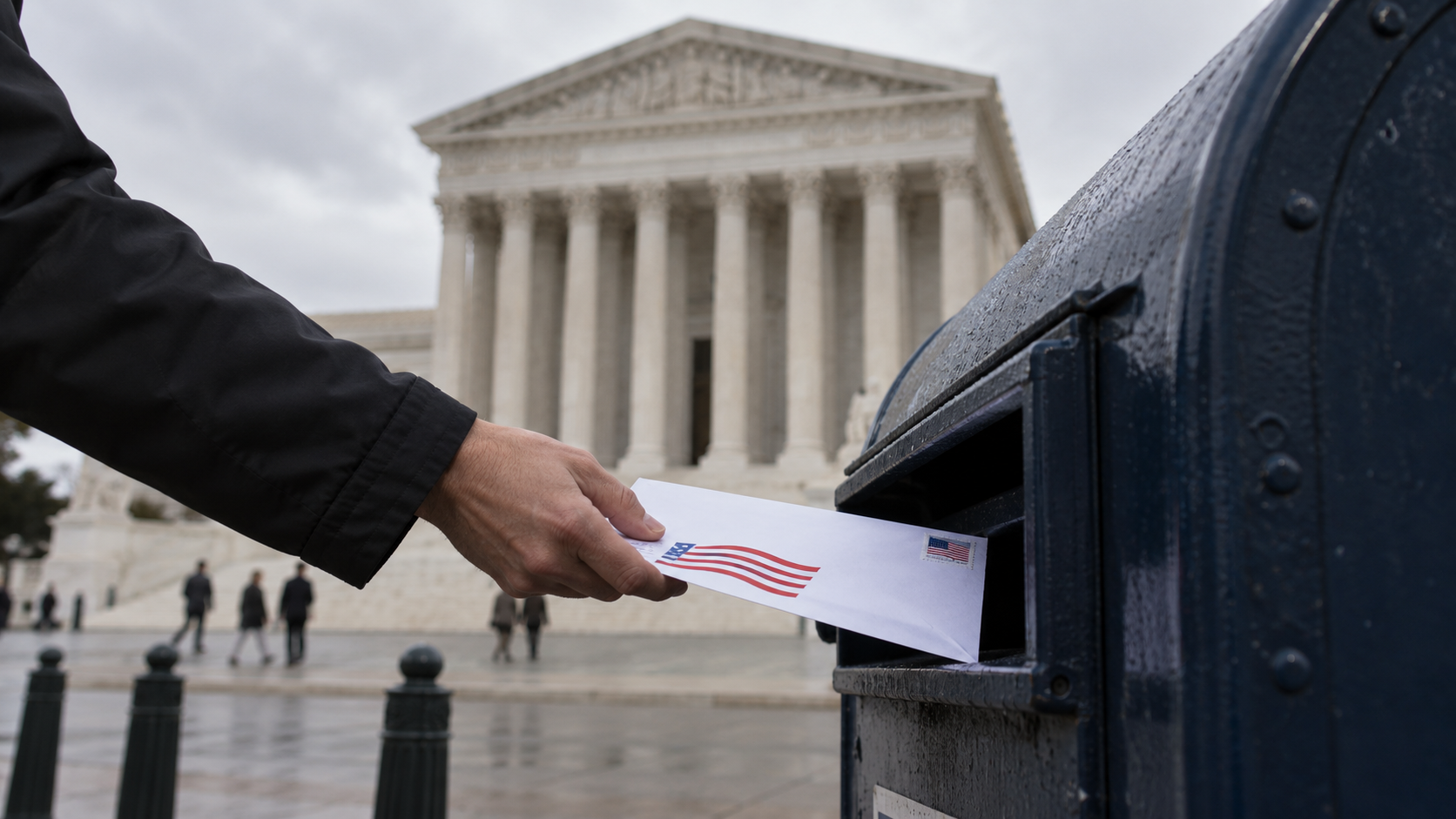
The Trump administration renewed its third Supreme Court fight over mail ballots, seeking to lift a lower-court block before midterm voting expands.
Solicitor General John Sauer made the request on Sunday after U.S. District Court Judge Indira Talwani extended an order barring the Postal Service from enforcing President Trump’s executive order for the November elections. The filing asks the justices for an immediate administrative stay, followed by a fuller stay while review continues.
Ballot mailing clocks narrow
The administration’s timing argument rests on the election calendar. Sauer wrote that ballots have already started going out in North Carolina, while Alabama is scheduled to begin mailing on September 9 and at least five states are set to follow during the week of September 13.
In the filing, Sauer said ballot envelopes cannot be pulled back once they enter the mail system. He argued that keeping the injunction in place makes compliance preparations optional rather than mandatory, a distinction the administration says could create conflicting practices as more states begin mailing.
The dispute reaches a voting method used by nearly one-third of U.S. voters, according to the source material. That share makes the court fight more than a procedural clash: control of Congress is at stake in the midterms, and even small administrative changes could affect how states manage deadlines, envelopes and ballot processing.
Postal Service role contested
Democratic states and voting rights groups say the restrictions are unconstitutional. Election officials have also argued that there is not enough time to revise systems before ballots are printed, mailed and returned under state election calendars already in motion.
The administration frames the order as a valid exercise of federal authority over the mail rather than a change to who may vote. Sauer wrote that state law would still determine eligibility for mail-in and absentee voting, and that state and local officials would decide which voters may use the method and which ballots count.
The filing also says the Postal Service would not determine voter eligibility, maintain voter rolls or count ballots. That distinction is central to the administration’s position: it is asking the court to treat the rule as a mail-processing requirement, while challengers view the restrictions as an intrusion into election administration.
President Trump has long pushed for tighter rules around mail voting, even as states have used the method for years under varied local procedures. The current fight centers on whether a federal executive order can change mail-ballot handling close to an election already underway in several states.
Justices face repeat request
This is the third time the administration has asked the Supreme Court to intervene in the dispute. The high court has previously allowed the plan to proceed in part, but it has not issued a final ruling on whether the restrictions are lawful.
If the justices grant the requested stay, the Postal Service and states would face pressure to treat the rule as mandatory while ballots are already moving through election systems. That path would give the administration a near-term operational win, but it could force election offices to adjust procedures on compressed schedules.
If the injunction remains in place, states opposing the order would preserve existing processes for the first waves of mailed ballots. The administration would then continue litigating under a weaker practical timetable, while the broader election sector would likely operate under state-by-state procedures rather than a uniform federal rule.
A narrower Supreme Court order could preserve some preparation steps without allowing full enforcement before review. For the Postal Service, that would limit immediate legal exposure while leaving its election-mail role unresolved; for the wider political system, the macro effect would be indirect, through uncertainty over congressional control and the policy agenda that follows.