US Storm System Affects 200 Million, Disrupts Travel
A major US storm system began impacting the central states on March 15, 2026, affecting 200 million people with snow, winds, and tornadoes.
Ayla Demirhan ·
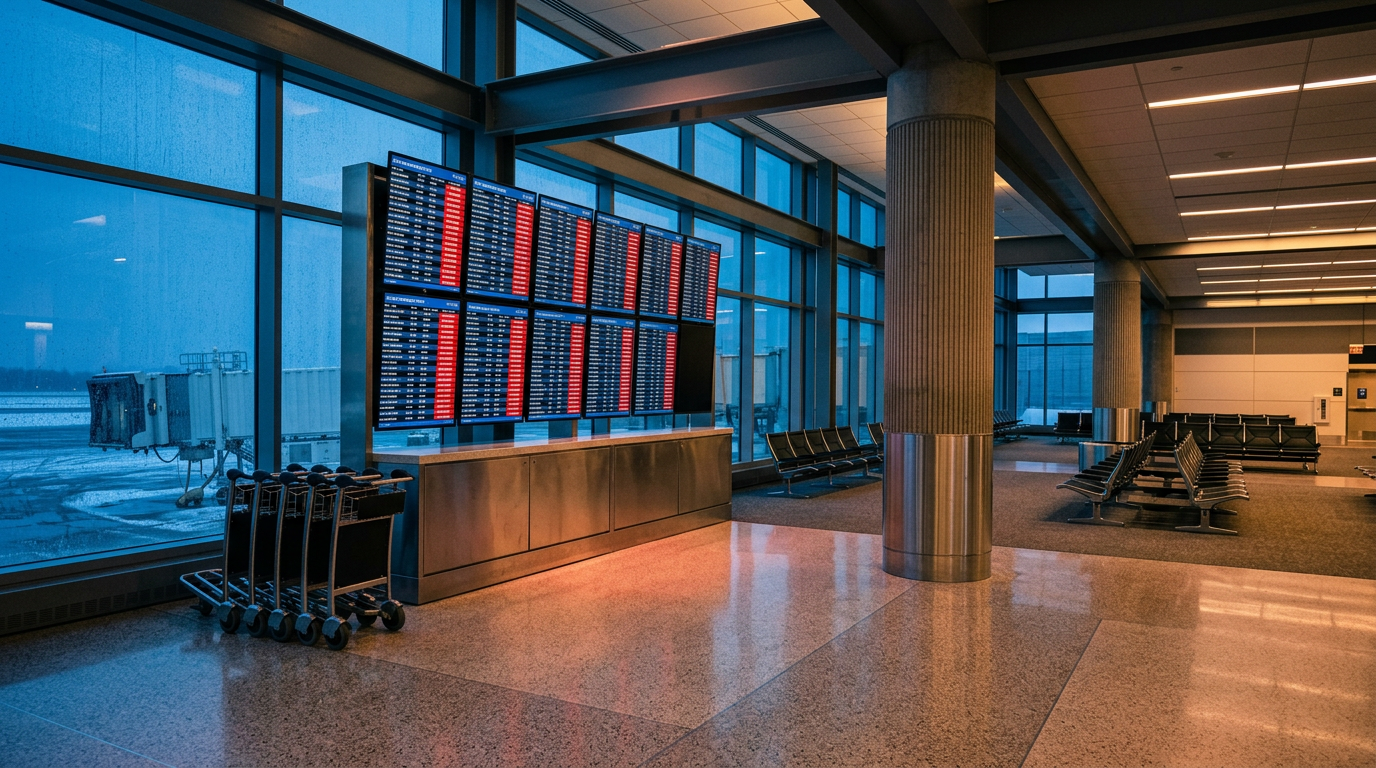
A substantial storm system commenced its impact across the central United States on Sunday, March 15, 2026, and is projected to extend its reach eastward, potentially affecting an estimated 200 million individuals nationwide. This weather event is characterized by a combination of heavy snowfall, powerful winds, and severe thunderstorms, with a heightened risk of tornadoes, particularly in the Mid-Atlantic region and Washington D.C. by Monday.
Widespread Weather Phenomena
The storm has already deposited over 20 inches (50 cm) of snow in specific areas of southeastern Minnesota and western Wisconsin. This led to the issuance of blizzard warnings and the cancellation of more than 600 flights at Minneapolis-Saint Paul International Airport on Sunday, significantly disrupting air travel.
Forecasted Snowfall and Wind Hazards
Projections indicate that regions stretching from central Wisconsin to Michigan's Upper Peninsula could experience accumulations exceeding 2 feet (60 cm) of snow. Simultaneously, the eastern U.S. is bracing for damaging straight-line winds and the potential for multiple tornadoes. Cities such as Raleigh, Richmond, and Washington D.C. face an elevated risk from these severe weather conditions.
National Weather Service Alerts
The National Weather Service has issued warnings regarding severe thunderstorms, widespread damaging winds, and tornadoes. These conditions are expected to traverse the Mississippi, Tennessee, and Ohio valleys on Sunday, subsequently moving into the Appalachian Mountains and reaching the East Coast by Monday. The broad geographical scope of these warnings underscores the severity of the event.
Significant Travel Disruptions Expected
This extensive weather system is anticipated to cause considerable disruptions to travel infrastructure across multiple states. Its multi-faceted nature, encompassing heavy snow, high winds, and tornado threats, positions it as one of the most impactful weather events observed in the U.S. for the current year. Authorities are advising residents in affected areas to monitor local forecasts and prepare for potential hazards.
Historical Context of Major US Storms
Major storm systems impacting large populations are not uncommon in the United States, which experiences diverse weather patterns. Events like the "Storm of the Century" in 1993 or the widespread winter storms of 2021 have demonstrated the potential for significant economic and social disruption. Such events often strain emergency services, lead to power outages, and cause substantial economic losses due to business closures and travel delays.
The current storm's projected reach across 200 million people places it among these historically significant weather phenomena, necessitating comprehensive preparedness and response efforts from federal, state, and local agencies.
Economic and Social Implications
The economic implications of such a widespread storm include direct costs from property damage, increased insurance claims, and indirect costs from lost productivity due to closures and travel impediments. Supply chains can also be temporarily affected, particularly for goods transported by road and air. Socially, the storm poses risks to public safety, with potential for injuries from severe weather and challenges for vulnerable populations.
Emergency shelters and public services are often activated to mitigate these impacts, highlighting the critical role of coordinated disaster response in managing large-scale natural events.
Implications
Country Impact: The United States faces widespread disruptions, including significant travel impediments and potential infrastructure damage across multiple states. Emergency services and local governments are preparing for extensive response efforts.
Industry Impact: Aviation and ground transportation sectors are experiencing severe operational challenges, leading to numerous cancellations and delays. Retail and logistics industries may also see temporary supply chain disruptions in affected regions.
Market Impact: While immediate market impacts are localized, widespread business closures and travel disruptions could exert minor downward pressure on regional economic activity. Insurance sectors may anticipate an increase in claims related to property damage.