Eight 2026 fantasy draft calls: risers, fades and late value
Fantasy football analysts offer contrarian views on eight players for the 2026 season, identifying potential busts and sleepers for upcoming drafts.
Mehmet Şahinoğlu ·
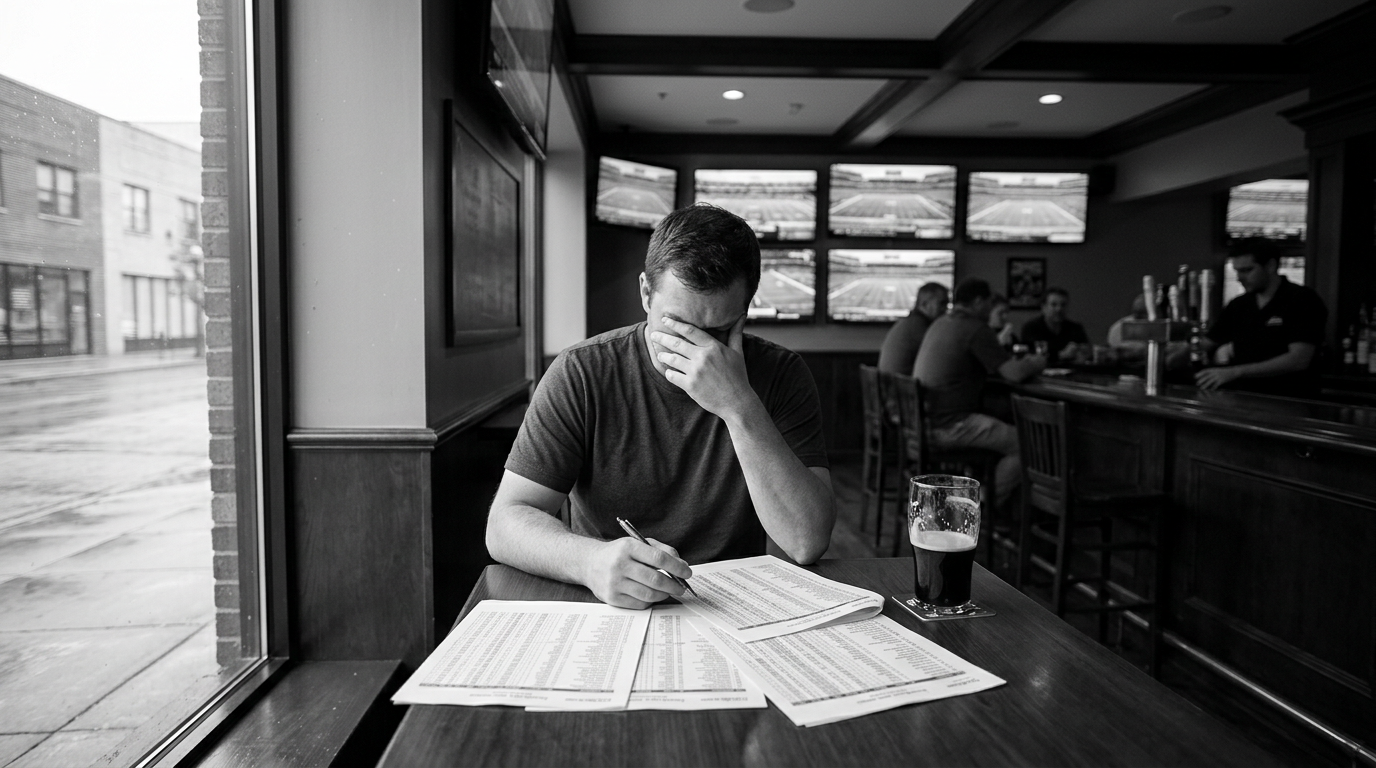
Fantasy football analysts laid out eight player evaluations on June 15, 2026, highlighting where their 2026 draft outlook differs from prevailing Average Draft Position (ADP). The list mixes potential bargains with players viewed as overpriced, with each case tied to role, volume and cost. The goal is to help managers pressure-test assumptions before training-camp news and preseason ADP swings reshape draft boards.
One suggested riser was Green Bay wide receiver Matthew Golden, framed as a bet to emerge atop the Packers’ receiver rotation after Romeo Doubs’ departure. The analysts noted the Packers have not had a wideout reach a 20% target share in any of the past four seasons, underscoring how much of Golden’s case depends on opportunity and a potential shift in usage.
Golden’s wild-card performance of four catches for 84 yards and a touchdown was cited as a snapshot of his ceiling if he earns a larger role. The argument also leaned on his field-stretching profile in a receiving group that has spread targets across multiple options in recent seasons.
New Orleans quarterback Shough was also positioned as a value option after averaging 17.1 fantasy points per game across nine starts as a rookie in 2025. The write-up highlighted his dual-threat element (174 rushing yards and three rushing touchdowns in 2025) and projected benefits from operating in Kellen Moore’s offense, with Travis Etienne Jr. mentioned as an underneath outlet and drafted wide receivers Jordyn Tyson and Bryce Lance noted as additions.
Not every call was optimistic. Several of the eight cautioned against paying peak prices when volume is uncertain or dependent on narrow outcomes, a theme that often matters more in fantasy than isolated highlight plays or efficiency spikes.
Overpriced production and target-share concerns
Wide receiver Burden was presented as a player whose market price could be ahead of his likely workload, particularly at a fourth-round cost. The analysts argued that his most efficient stretch came over a relatively small sample (75 targets including the playoffs) and that he has not shown a high-end target share when fellow receiver Rome Odunze is available.
In that framing, Burden’s upside remains intact, but his path to consistent week-to-week volume was described as less certain than other players typically drafted in the same range. The write-up also pointed to quarterback accuracy concerns as a factor that can narrow the margin for error when a receiver’s role is not clearly dominant.
Injury discounts, workload warnings and a crowded receiver room
Carolina running back Brooks was described as a late-round upside swing with significant medical risk after tearing the ACL in his right knee twice in a 13-month span. The analysis said he is on track to participate in offseason work and be ready for a healthy 2026 debut, with his ADP placed around the 15th round as the reason the gamble can make sense for some rosters.
The write-up tied Brooks’ upside to depth-chart dynamics as well, noting Rico Dowdle’s contract expiring after 2025 and that the club did not address the position in the draft. That context was used to explain how Brooks could push for touches if his recovery stays on schedule.
At the top of draft boards, Christian McCaffrey was flagged as a potential decline candidate even after producing 24.5 fantasy points per game in 2025. The caution was workload: 450 touches last season including the playoffs, described as the fifth-most for a running back over the last 20 years, with the analysis arguing that backs coming off that usage often see a drop the following year.
Arizona’s receiving group was used as another example of how draft prices can assume a single outcome. The analysts contrasted Marvin Harrison Jr.’s pedigree with Wilson’s 2025 emergence, when Wilson reached 1,000 receiving yards while Harrison was injured, and raised the possibility of a more balanced split than ADP implies.
Training camp usage, preseason depth charts and updated ADP data are expected to be the next checkpoints for evaluating which of these calls holds up heading into late-summer drafts.