Sixteen NFL teams open mandatory minicamps as 49ers cancel June sessions
Sixteen NFL teams started mandatory minicamps this week, while analysts ranked new QB-WR duos and projected rookie quarterback performances for 2026.
Mehmet Şahinoğlu ·
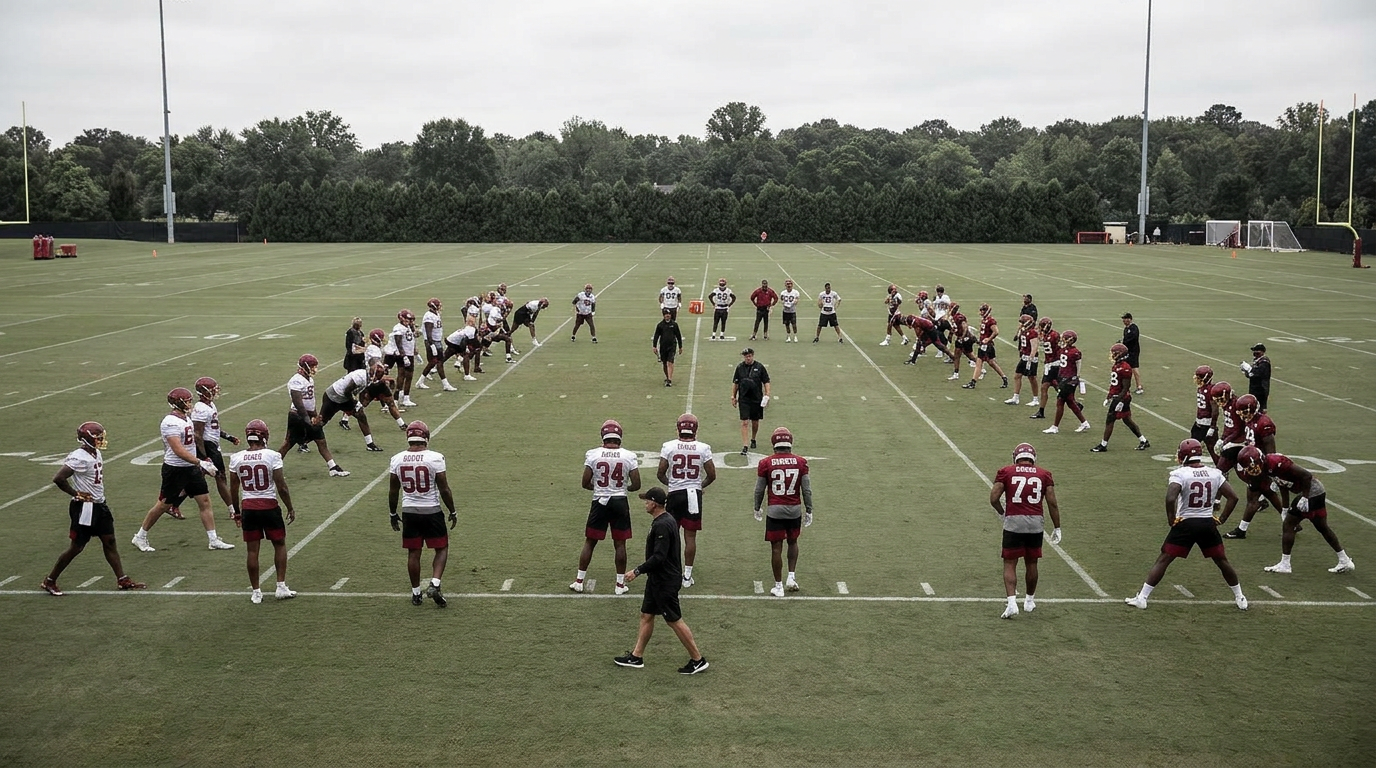
Sixteen NFL teams opened mandatory minicamps this week, with the New York Giants and Arizona Cardinals among the first on the field Monday. Under the collective bargaining agreement, attendance at these June sessions is compulsory, shifting the focus from teaching-heavy OTAs to fuller, roster-wide work. San Francisco, which wrapped organized team activities on June 4, canceled its mandatory minicamp. The 49ers now have no further on-field work until training camp later this summer.
Minicamps give coaching staffs a concise June window to assess conditioning, scheme retention and position battles before players disperse for a short break. Veterans and young players share reps as coaches evaluate depth charts and gauge installation progress. For clubs with new coordinators or significant roster turnover, the time helps align terminology and timing ahead of training camp reporting dates in late July.
June schedules and San Francisco’s approach
Minicamp calendar
The Giants and Cardinals began three-day sessions to start the week, with other teams following through midweek across the league. The June checkpoint sits between spring installs and the start of padded practices, offering staffs one last structured look at situational execution before the ramp-up in July.
Why clubs trim June work
San Francisco’s choice to forgo its mandatory minicamp after completing OTAs means the 49ers’ next collective work will come at training camp. Coaches often weigh the marginal benefit of additional June reps against recovery time, particularly if core installation goals have been met during OTAs.
Teams that shorten or cancel workloads frequently point to health, veteran continuity and the quality of earlier sessions, while others maintain full schedules to accelerate competition at unsettled positions and give rookies added time at pro tempo.
Practice emphasis and depth chart implications
Situational periods take focus
Scripts at this stage typically emphasize red zone, third down and two-minute periods to sharpen communication and mechanics. Depth evaluations at premium positions — especially cornerback and along the offensive line — can influence early training-camp rotations as staffs sort through matchups and contingency plans.
Operational clean-up
These sessions stress-test communication — huddle calls, motion checks and late substitutions — so coaches can identify operational issues before pads come on. Clean operations in June often translate to faster installs and fewer penalties when training camps open league-wide.
Speculative 2026 outlooks and rookie ranges
Hypothetical tandems and new fits
While practices continue, analysts have been publishing early, speculative rankings of how new skill-position pairings could reshape offenses in 2026. These projections are built on roster-building scenarios, production trends and schematic fits, not finalized depth charts.
One such exercise envisioned Drake Maye working with A.J. Brown in New England, highlighting how a vertical passer could mesh with a physical downfield target.
Two other modeled pairings drew top-tier grades: a veteran dual-threat quarterback working with Justin Jefferson in Minnesota, and Josh Allen paired with a true WR1 profile in Buffalo. In all cases, timing, route chemistry and protection would determine how quickly ceilings are reached, underscoring the tentative nature of June outlooks.
Rookie quarterback projections
Analysts also outlined best- and worst-case stat ranges for first-year starters in 2026 to reflect scheme, protection and supporting-cast volatility. In one projection for Las Vegas rookie Fernando Mendoza, a best-case season reached 65.2% completions, 3,920 passing yards and 21 touchdowns; a worst-case scenario landed at 58.6% completions, 2,180 yards and 13 touchdowns.
Offseason work to stabilize the Raiders’ offensive line — via interior additions and draft investments — was cited as a swing factor that could materially influence Mendoza’s trajectory. Similar frameworks were applied to other projected rookie starters, including Carson Beck in Arizona and Drew Allar in Pittsburgh, emphasizing how early-down efficiency, sack rate, giveaways and red-zone sequencing often swing outcomes.
With mandatory minicamps wrapping in the coming days, clubs will disperse for a short break before camps open in late July. Roster health, the integration of new skill tandems and the pace of rookie acclimation will be primary storylines when teams reconvene.