‘This is the saddest moment’: families search for loved ones on Eid after Kabul hospital strike
A Pakistani airstrike in Kabul, Afghanistan, hit a drug rehabilitation center, causing over 140 casualties and escalating regional tensions.
Lauren Collins ·
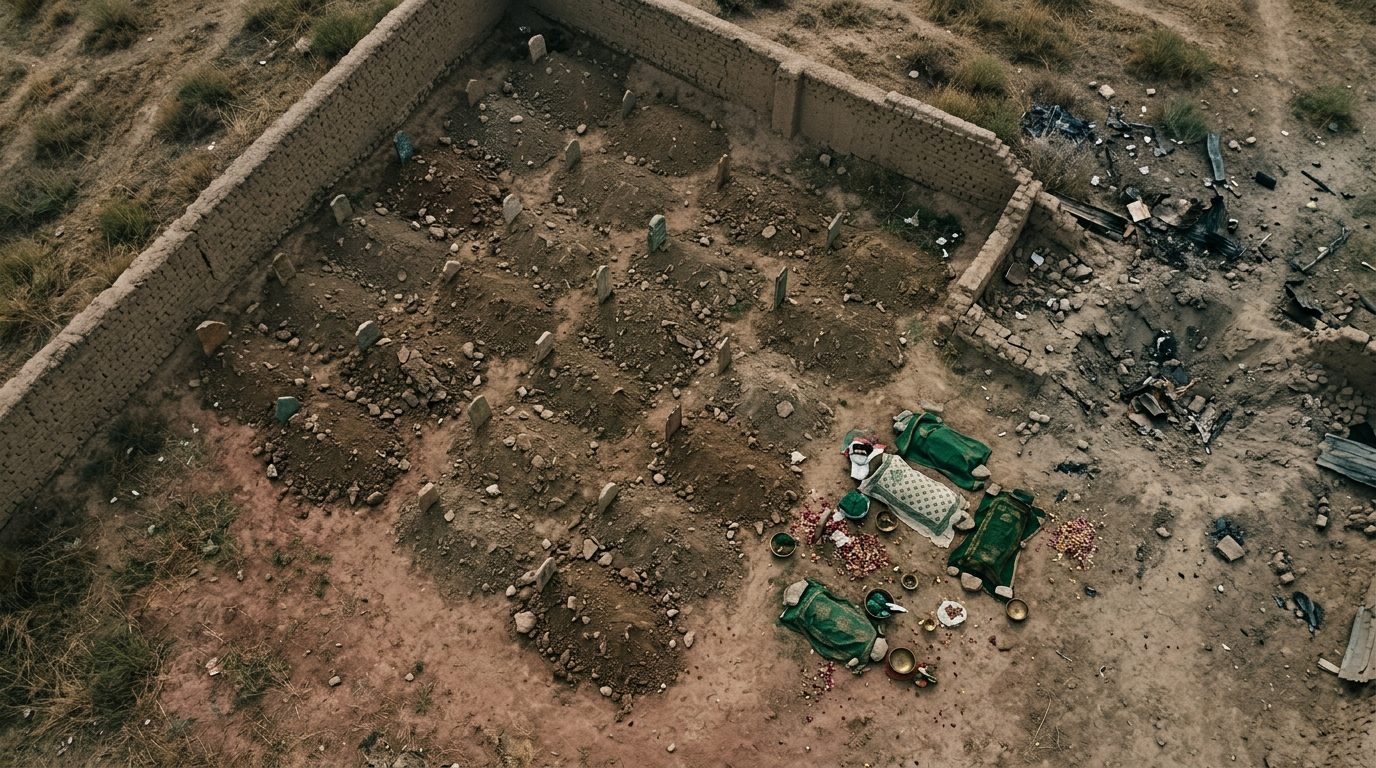
An airstrike conducted by the Pakistani military in Kabul, Afghanistan, earlier this week, has resulted in significant casualties, with Afghan authorities and the United Nations identifying the target as a drug rehabilitation facility. The incident, which occurred on Monday night, has led to widespread distress, particularly as families searched for missing relatives during the Eid festival.
The facility, known as Omid (Hope), was reportedly struck as patients were returning to their dormitories following evening prayers. Initial reports from the Taliban administration indicated over 400 fatalities, while the United Nations' preliminary assessment placed the death toll at 143, with expectations for this figure to rise as recovery efforts continue.
Conflicting Accounts Emerge
Pakistan's military stated its operation targeted terrorist infrastructure within Afghanistan. This claim is in direct opposition to the findings of Afghan authorities and the United Nations, which confirmed the site was a civilian drug rehabilitation center. Survivors recounted extensive fires and shrapnel wounds, noting that one large building suffered a direct hit and subsequently collapsed.
Humanitarian Response and Recovery
Organizations such as the Afghan Red Crescent Society and the Norwegian Refugee Council have been involved in the recovery efforts. Their work has uncovered fragmented human remains, underscoring the severity of the strike. The humanitarian impact has been profound, with many families facing uncertainty regarding the fate of their loved ones.
Regional Tensions and Calls for De-escalation
Pakistan has consistently maintained that its military operations are directed at legitimate military objectives, asserting that individuals responsible for attacks within Pakistan are being harbored by the Taliban. This stance highlights ongoing cross-border security concerns between the two nations.
The United Nations has called for an immediate de-escalation of hostilities and a renewed commitment to a ceasefire in the region to prevent further loss of civilian life and stabilize the volatile security situation.
Broader Implications for Regional Stability
The incident exacerbates already strained relations between Pakistan and the Taliban administration in Afghanistan. Such cross-border actions risk further destabilizing an already fragile region, potentially impacting humanitarian aid efforts and the broader political landscape. International observers are closely monitoring the situation, emphasizing the need for adherence to international humanitarian law and the protection of civilian populations in conflict zones.
Implications
Country Impact: The airstrike deepens tensions between Pakistan and Afghanistan's Taliban administration, potentially leading to further cross-border military actions and hindering diplomatic efforts to stabilize the region. Civilian casualties risk fueling anti-Pakistani sentiment within Afghanistan.
Industry Impact: The incident has no direct industry-specific implications, but ongoing regional instability could deter foreign investment and disrupt cross-border trade routes, impacting logistics and reconstruction efforts.
Market Impact: Increased geopolitical risk in South Asia could lead to localized market volatility, particularly in Pakistani and Afghan financial assets, though broader global market impact is likely limited unless the conflict escalates significantly.