China’s ‘Blockade by Fire’ Strategy Escalates Taiwan Conflict Risks
Strategic analysis says China may favor missile strikes on Taiwan ports over invasion or naval blockade, aiming to disrupt trade and limit escalation risks.
Atlas Newsdesk ·
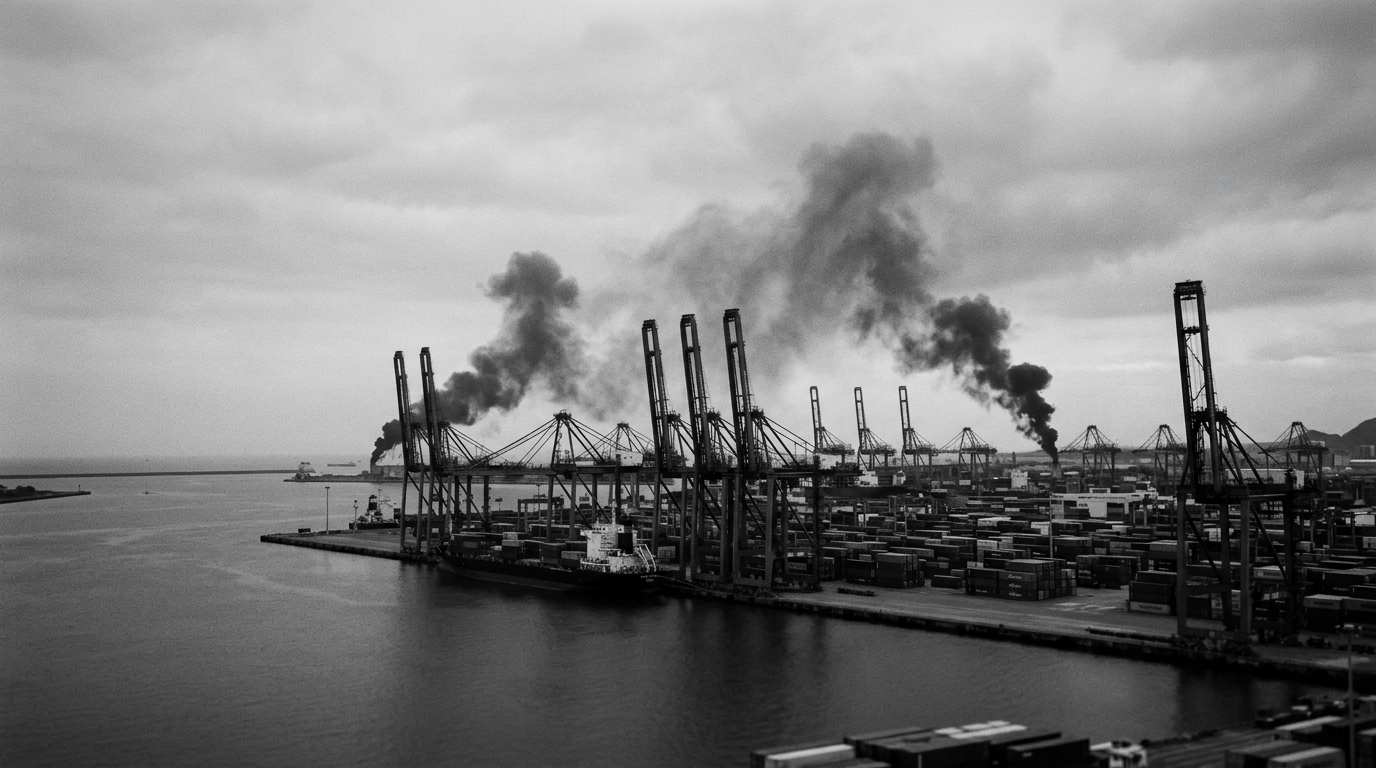
Strategic analysis suggests China could shift away from a conventional invasion plan or a classic maritime blockade in favor of a narrower approach described as a “blockade by fire” against Taiwan. The concept centers on using targeted missile strikes to disable port infrastructure, aiming to interrupt trade flows without establishing a continuous naval cordon.
According to the assessment, the core objective would be to paralyze Taiwan’s commercial lifelines by damaging critical port facilities rather than conducting broad bombardment of cities or attempting to stop and search shipping at sea. The analysis argues this would reduce direct interactions with third-party commercial vessels while still producing a major economic effect through port shutdowns.
How a port-focused strike could function
The “blockade by fire” model, as described, relies on precision strikes against port infrastructure to halt or sharply curtail cargo handling and related logistics. Rather than physically surrounding the island with naval forces, the approach aims to make normal port operations impossible or unsafe, thereby achieving disruption through infrastructure denial.
The analysis states that this narrower method could require fewer military assets than a full-scale invasion. It also suggests China could preserve much of its missile inventory for wider regional deterrence, because the operation’s scope would be limited to disabling key trade nodes instead of sustaining large-scale, multi-domain combat.
Escalation management and international framing
A central claim in the assessment is that limiting the operation to port destruction could lower the probability of immediate international escalation compared with actions that directly impede international shipping on the high seas. By avoiding direct engagement with third-party commercial vessels, the analysis argues, Beijing could seek to reduce the risk of incidents that draw in other states.
United States
The strategic framing described in the analysis is also political. It suggests China could present such action as an internal matter rather than portraying it as maritime aggression, which the assessment says could complicate external responses even if the economic consequences are severe.
Implications for defense planning and supply chains
The assessment warns policymakers that preparations focused mainly on defeating a traditional naval blockade may not address the vulnerabilities created by targeted strikes on ports. In this scenario, the key challenge becomes the rapid loss of port functionality, not the long-duration presence of hostile ships attempting to seal maritime approaches.
Future security planning, the analysis concludes, should prioritize strengthening the resilience of port infrastructure and preparing to mitigate extended supply chain disruptions. It also notes that the limited scope of the approach could reduce the likelihood of direct conflict with the United States or other international powers compared with a broader campaign, even as the disruption to trade could be immediate.
Implications
Country Impact: The analysis indicates Taiwan’s exposure could center on the vulnerability of port infrastructure rather than only sea-lane interdiction. It highlights the practical risk of sustained trade disruption if key ports are disabled.
Industry Impact: Shipping, logistics, and port operations would be directly affected in a scenario that targets cargo handling capacity instead of imposing a naval cordon. The assessment underscores the need for resilience planning around critical infrastructure and continuity of supply.
Market Impact: By focusing on trade paralysis without direct engagement with commercial vessels, the approach described could aim to constrain escalation risk while still generating economic pressure. The analysis points to supply chain disruption as a primary channel of impact.