Fuel Crunch Threatens Summer Flights
Jet fuel shortages and price hikes, driven by Middle East disruptions, are causing flight reductions and increased fares for global air travel.
Atlas Newsdesk ·
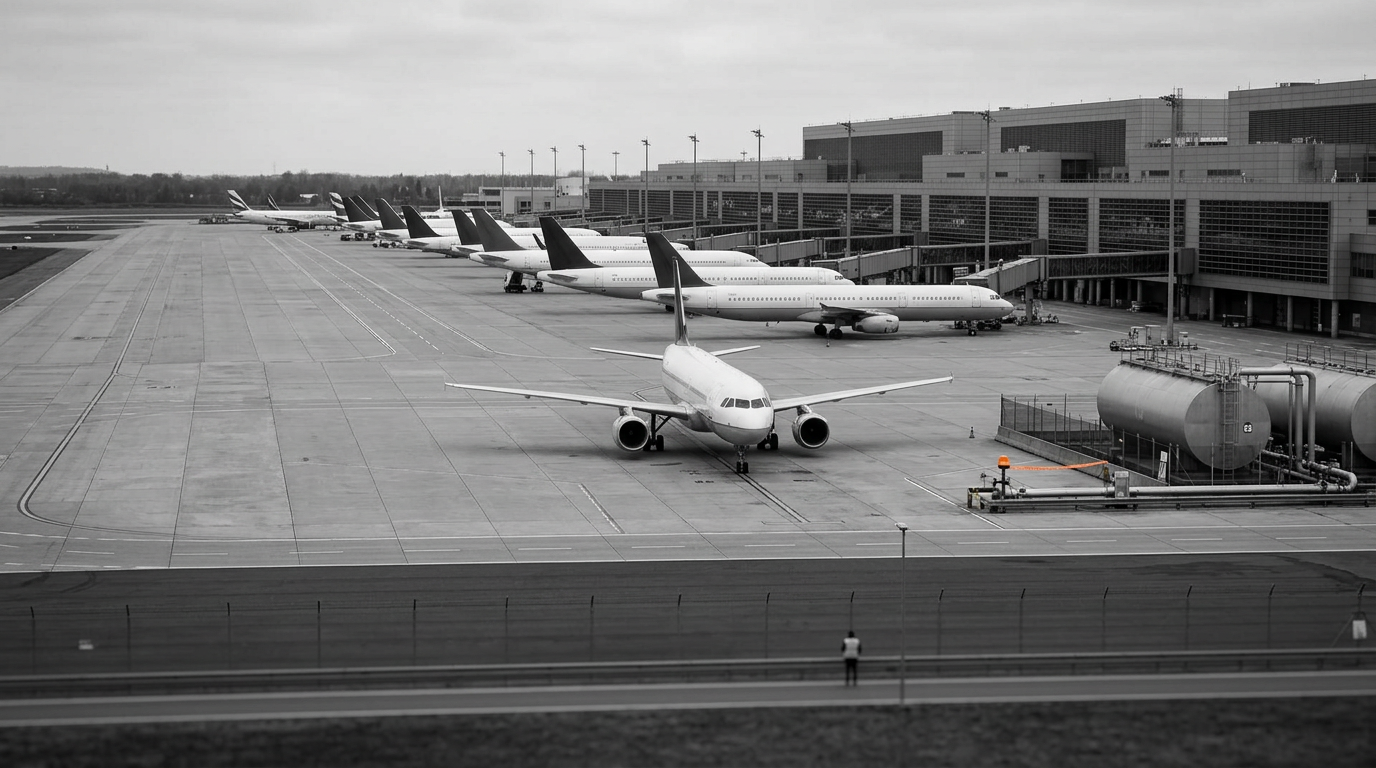
Jet Fuel Shortages Threaten Summer Travel A significant increase in jet fuel prices and potential physical shortages, driven by disruptions in the Middle East, are impacting global air travel, particularly affecting European airlines and consumers. Since late February, jet fuel prices in Europe have surged by over 120%, reaching above $1500 per tonne, up from $831 per tonne.
This escalation is primarily due to the Strait of Hormuz being blocked for eight weeks, curtailing exports from the Gulf region, which typically supplies 20% of internationally traded jet fuel and over half of Europe's imports.
The price surge is exacerbated by a lack of refining capacity in Europe, making the continent highly dependent on imports. The United Kingdom, Europe's largest jet fuel consumer, imports 65% of its supply. The closure of five European refineries in the past two years, including two in the UK, has further constrained supply amidst rising demand. This imbalance has caused jet fuel prices to increase disproportionately compared to crude oil.
Airlines are responding to these elevated costs, which typically constitute 25-30% of their operating expenses, by adjusting capacity and increasing fares. Several carriers, including Air France KLM, Air Canada, SAS, and Lufthansa, have already announced significant flight reductions, with Lufthansa cutting 20,000 flights through October.
Long-haul routes have seen the most substantial fare increases, with some London to Melbourne flights costing 76% more than last year. While some airlines utilize hedging strategies, these do not offer complete protection, leading to surcharges and higher ticket prices for consumers, particularly as the peak summer holiday period approaches.