The Strokes Slam US Foreign Policy at Coachella
The Strokes protest U.S. foreign policy at Coachella, using LED visuals and remarks on removed content while citing Iran and Gaza.
Ayla Demirhan ·
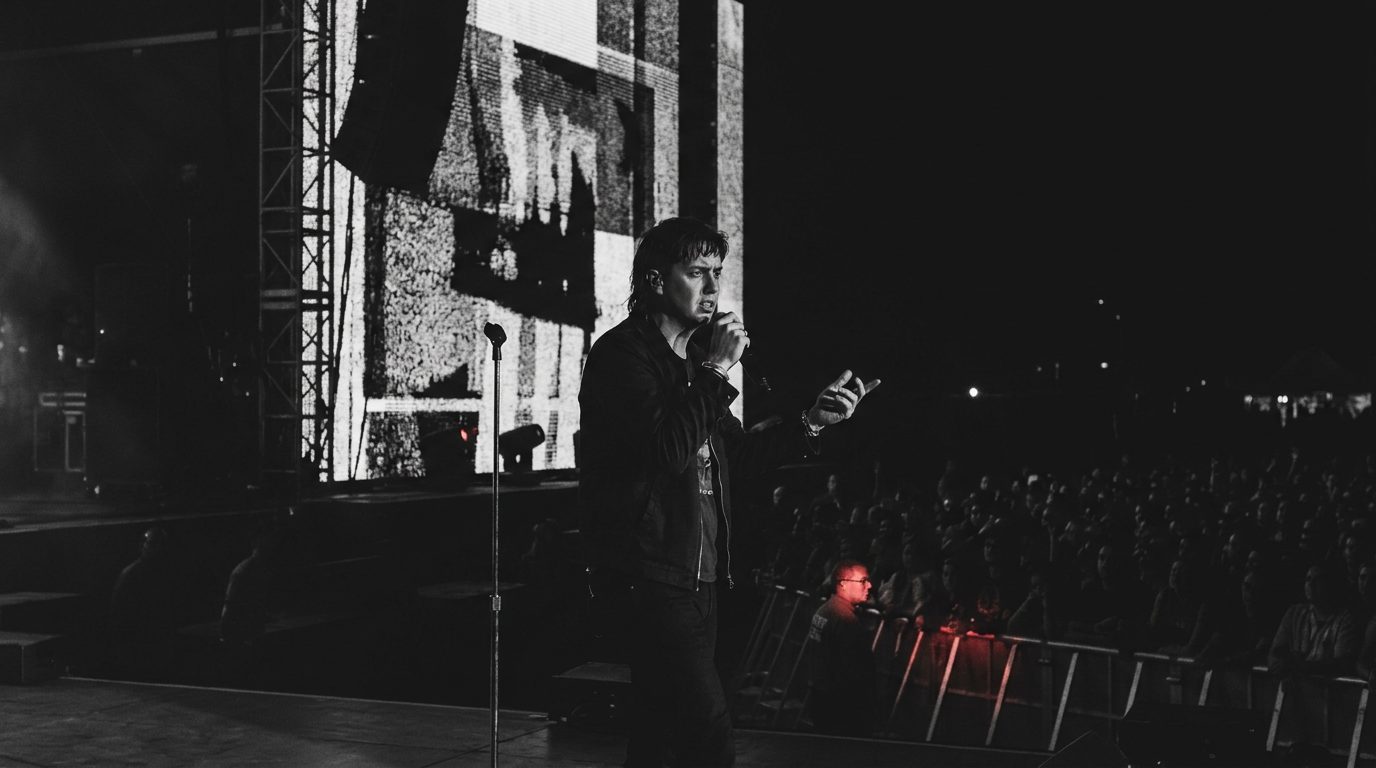
The Strokes used their Coachella performance on Saturday to denounce U.S. foreign intervention and Washington’s role in overseas conflicts, specifically referencing Iran and Palestine. During the set, the American rock band paired music with a political visual sequence on large LED screens. The montage presented world leaders and asserted U.S. involvement in their deaths or removals from power while the band performed its 2016 track “Oblivius.”
The on-screen presentation included Patrice Lumumba, identified as the first democratically elected prime minister of Congo, who was overthrown in 1961. It also showed Guatemalan president Jacobo Árbenz, described as having been ousted in a 1954 plot engineered by the CIA. Another figure highlighted was Bolivian president Juan José Torres, who was removed in 1971, according to the montage’s framing.
The sequence further featured Chilean president Salvador Allende, who died during a 1973 coup described as CIA-backed. Iran’s former prime minister Mohammad Mosaddegh was also included; his 1953 removal was later confirmed as a CIA-orchestrated event, according to the material presented during the performance. The band’s visuals tied these historical cases together as examples of what it characterized as a pattern of U.S. intervention.
The protest segment ended with footage asserting that over 30 universities in Iran have been destroyed by U.S.-Israeli airstrikes. That claim was followed by imagery showing the demolition of al-Israa University in Gaza in 2024. The presentation connected the Iran and Gaza references to the broader critique that had been built through the earlier historical montage.
Lead singer Julian Casablancas also addressed the circulation of related material online, criticizing what he described as removals of content. “More facts than your local news. But they were taken down,” he said during the set. The remarks framed the band’s on-stage message as a response to what it portrayed as limits on visibility for certain claims and images.
The performance was described as part of a wider trend of artists using major festival stages to voice opposition to current global conflicts. In this case, the band’s approach combined a well-known live platform with a curated set of political references spanning Latin America, Africa, and the Middle East.
The episode underscores how cultural events can become venues for geopolitical messaging that reaches large international audiences, even as the accuracy and sourcing of specific on-screen assertions remain unclear from the performance itself.