The OECD Says One Conflict Is Now Driving the Global Economy—and the Stakes Are Getting Higher
The OECD says the conflict involving Iran has become the central risk to the world economy, with prolonged disruption capable of sharply reducing growth, i…
Cuneyd Erdogan ·
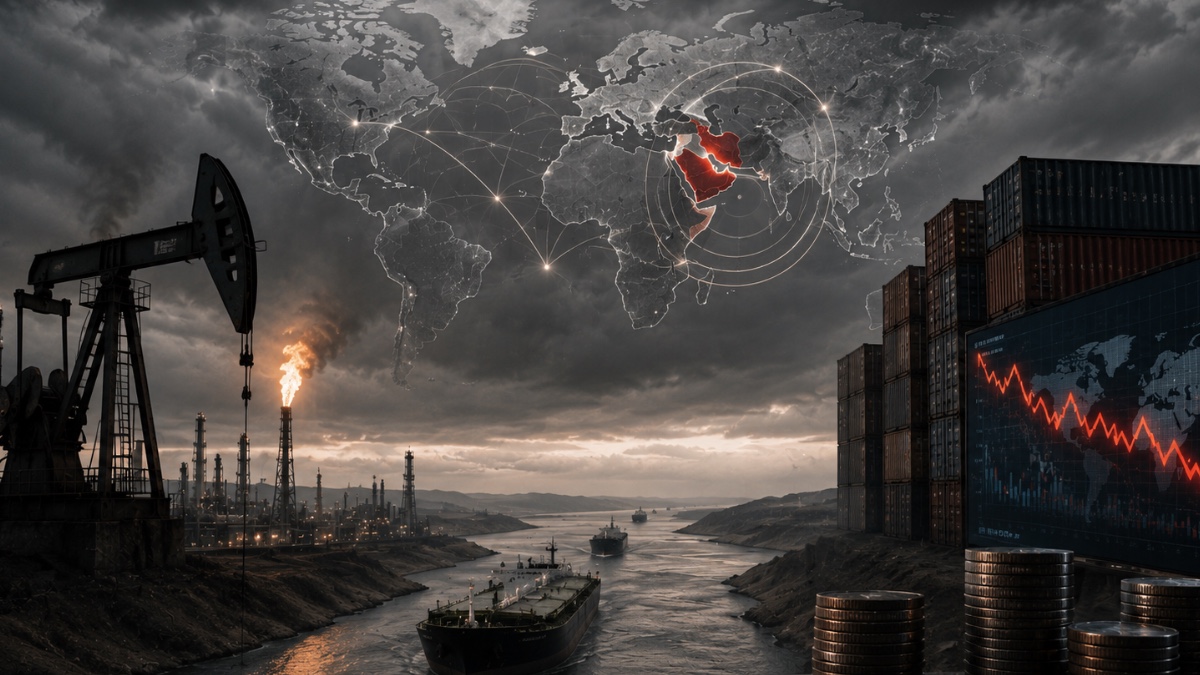
The Organization for Economic Cooperation and Development (OECD) has highlighted the Middle East conflict as a central factor influencing the global economic outlook, noting its consequences now extend beyond energy markets. In its latest projections, the Paris-based institution stated that the duration of disruptions from the confrontation between Iran and its adversaries will be crucial in determining global growth, inflation, investment, and financial stability in the coming years. While the OECD still anticipates global economic expansion, it warned that risks have significantly shifted to the downside. Chief Economist Stefano Scarpetta described the conflict as the primary force shaping worldwide economic prospects.
A 2027 Timeline Changes Forecasts
The organization outlined two main trajectories for the global economy. In a scenario where disruptions are temporary, inflation is expected to remain higher than previously projected, even with continued subdued growth. The OECD has revised its inflation forecasts for 2027 upwards, while making only minor adjustments to its earlier growth estimates. This combination indicates a challenging reality for policymakers: supply-related price pressures might persist beyond the initial shock. Even if key trade routes reopen and immediate tensions ease, economic effects could linger through consumer prices, business costs, and investment decisions.
Hormuz Remains the Critical Chokepoint
A significant element in the OECD’s analysis is the uncertainty surrounding the Strait of Hormuz, a critical global energy transit corridor. The organization emphasized that forecasting outcomes remains exceptionally difficult due to diplomatic progress being repeatedly interrupted by new threats and setbacks. Markets have struggled to determine if disruptions will be short-lived or become a long-term feature of the global economy. This inherent uncertainty carries economic costs, prompting businesses and investors to delay spending and expansion plans. The OECD’s outlook reflects concerns that instability in this strategically important region could continue to influence economic behavior long after any immediate supply shock subsides.
Growth Falls Toward Recession Territory
The most serious concerns arise under the OECD’s prolonged-disruption scenario. If the economic fallout from the conflict extends into 2027, global growth could slow to 1.8%, a pace that could push some economies into or dangerously close to recession. The organization warned that weaker activity would likely coincide with rising unemployment and reduced business investment. Sectors dependent on long-term capital spending, including artificial intelligence-related projects, might face delays as companies adopt a more cautious approach. Financial markets would also become vulnerable to repricing as investors reassess risks and economic expectations. Such a combination would represent one of the most challenging environments since the major crises of recent decades.
Inflation’s Return Complicates Policy
The OECD’s projections suggest that inflation could become an even greater challenge than slowing growth. In the more severe scenario, global inflation would be 0.4 percentage points higher this year and 1.3 percentage points higher by 2027. This presents a familiar but uncomfortable dilemma for policymakers. Higher prices typically necessitate tighter monetary policy, yet raising borrowing costs can further weaken already fragile economic activity. Scarpetta argued that central banks can tolerate temporary, supply-driven price increases if inflation expectations remain anchored. The risk emerges when higher costs spread throughout the broader economy and begin to influence wages, business pricing decisions, and consumer behavior.
Debt Limits Government Responses
Governments may find it difficult to mitigate the damage through fiscal policy. The OECD indicated that public spending would likely bear much of the burden in supporting economic activity, but many countries are already operating with elevated debt levels. This leaves less scope for large-scale stimulus than was available during previous crises. The organization also cautioned that broad subsidies and support measures can lead to unintended consequences during an energy supply shock by encouraging consumption when supplies are constrained. Consequently, policymakers face a narrow path between supporting growth and exacerbating the very pressures they are trying to alleviate.
Rate Hikes, Then Potential Emergency Tools
Central banks could face an equally complex set of decisions. In the OECD’s baseline scenario, some institutions, including the European Central Bank and the Bank of Japan, may still need to raise interest rates before eventually easing policy in 2027 as inflation moderates. A more prolonged disruption would likely necessitate additional tightening of approximately 50 to 75 basis points across many economies before later reductions become necessary to support growth. The organization also raised the possibility that severe financial stress could compel central banks to revisit tools used during previous crises. This could include slowing or reversing efforts to reduce sovereign bond holdings, restarting quantitative easing programs, or reintroducing long-term liquidity operations. This prospect highlights the central uncertainty facing the global economy: policymakers may need to combat inflation and support growth simultaneously, a combination that has historically proven difficult to manage. The OECD’s message is clear that the duration of the conflict—not merely its existence—will determine whether the world experiences a period of sluggish expansion or one of the deepest economic slowdowns seen outside the global financial crisis and the pandemic era.