China Sets Up Separate Route for Sanctioned Russian LNG
China is said to be using a separate route for sanctioned Russian LNG, centred on Beihai, with more than 40 cargoes since August 2025.
Atlas Newsdesk ·
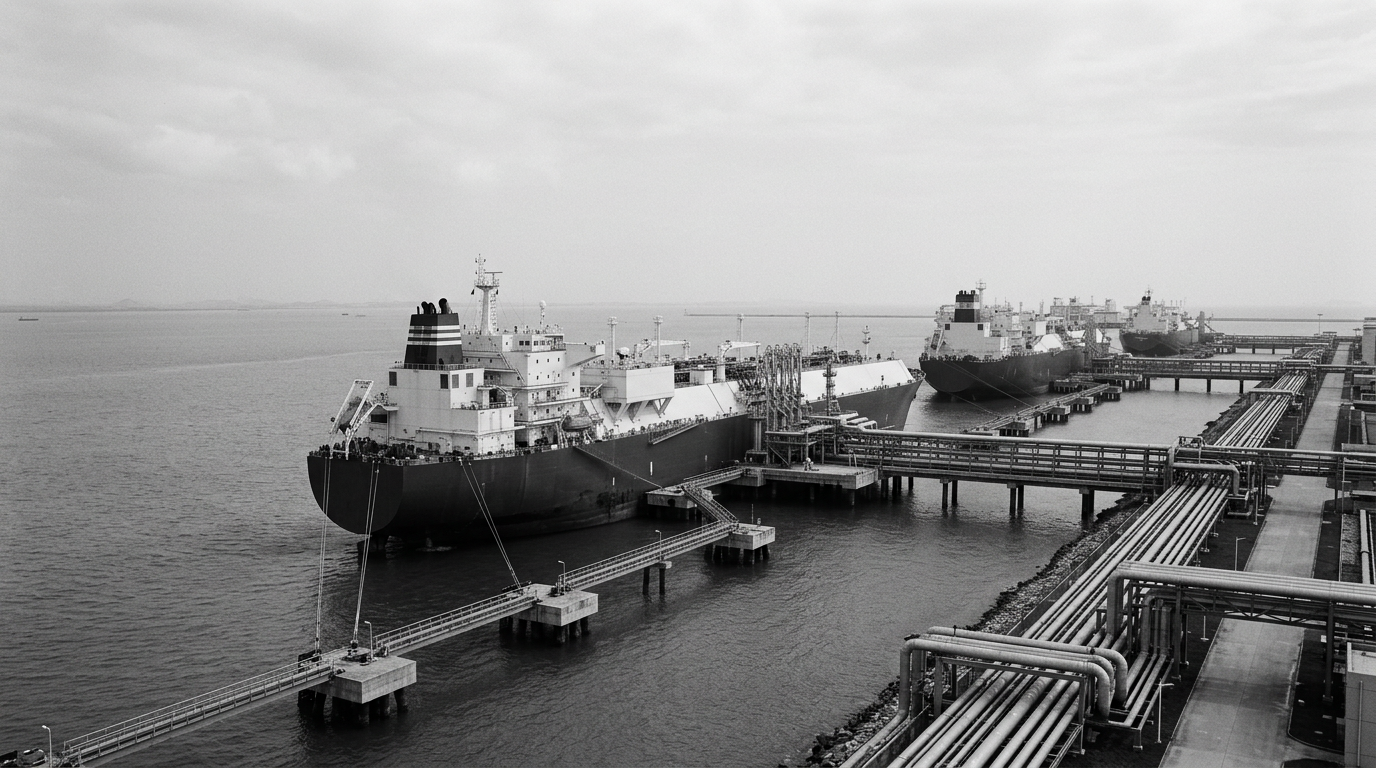
China has set up a dedicated logistics network to receive Russian liquefied natural gas (LNG) that is subject to international sanctions, keeping those flows separate from its broader LNG import system, according to the source material.
The arrangement is presented as a risk-management measure intended to limit sanctions exposure while sustaining deliveries of Russian cargoes into China. The source material describes the system as relying on segregated infrastructure rather than the same pathways used for other LNG imports.
Beihai terminal at the centre of a segregated Beihai terminal at the centre of a segregated corridor Between August 2025 and June 2026 Between August 2025 and June 2026, the Beihai terminal received more than 40 shipments of Russian LNG, the source material said. Those cargoes were sold at discounts of 30 to 40 percent below prevailing market rates. The source material portrays Beihai as a hub in a separated import corridor, rather than part of standard LNG trade flows used for other supplies. It says the is to prevent sanctions-related risk from spreading into other parts of China’s wider energy trade. Beyond the shipment count and the discount range, the source material provides no additional commercial detail. It does not name counterparties, identify the ownership of the logistics chain, or describe contract structures supporting the imports. Longkou integration signalled, but timing remains unclear It frames this as an extension of the The specialized route is expected to expand, with the Longkou terminal anticipated to be integrated into the same trade corridor, the source material said. It frames this as an extension of the pathway already used for Russian LNG flows into China. In the source material’s assessment, incorporating another terminal would make the channel more durable and better able to withstand sanctions pressure over time. However, it does not provide a timeline for when Longkou would be operationally integrated, and it offers no capacity figures for either Beihai or Longkou. Sanctions enforcement questions focus on terminals and shipping The source material argues that specialized terminals and a separate logistics system complicate U.S. sanctions enforcement linked to Russia’s Arctic LNG 2 project. It says alternative routing increases the difficulty of tracking and constraining activity through mainstream trade routes. A dedicated “shadow fleet” is also cited as a complicating factor. The source material says the fleet expanded from nine vessels to 23 vessels since 2024, raising the number of assets that policymakers may need to monitor and potentially designate.
EU 2027 phase-out timeline adds routing pressure
Between August The source material says Russia’s reliance on this type of network is expected to grow as the European Union completes its phase-out of Russian LNG imports by 2027. It presents the EU timeline as a driver that could increase the importance of alternative destinations and specialized logistics chains.
Policy options are described as nearing a critical juncture, including potential steps such as expanding vessel designations or targeting underlying infrastructure. The source material does not indicate which approach could be adopted, or whether further measures are already under formal consideration.
- Uncertainty: The source material leaves key operational questions unanswered, including who controls the corridor and how contractual arrangements are structured.
- Uncertainty: No capacity figures are provided for Beihai or Longkou, limiting visibility into the scale of the corridor.
- Uncertainty: There is no stated timetable for Longkou’s integration into the specialized route.