Mideast Tensions Drive Oil Prices to New Highs
Iran war-driven disruptions have pushed physical crude to records while Brent futures stay calmer, complicating pricing signals for buyers and policymakers.
Atlas Newsdesk ·
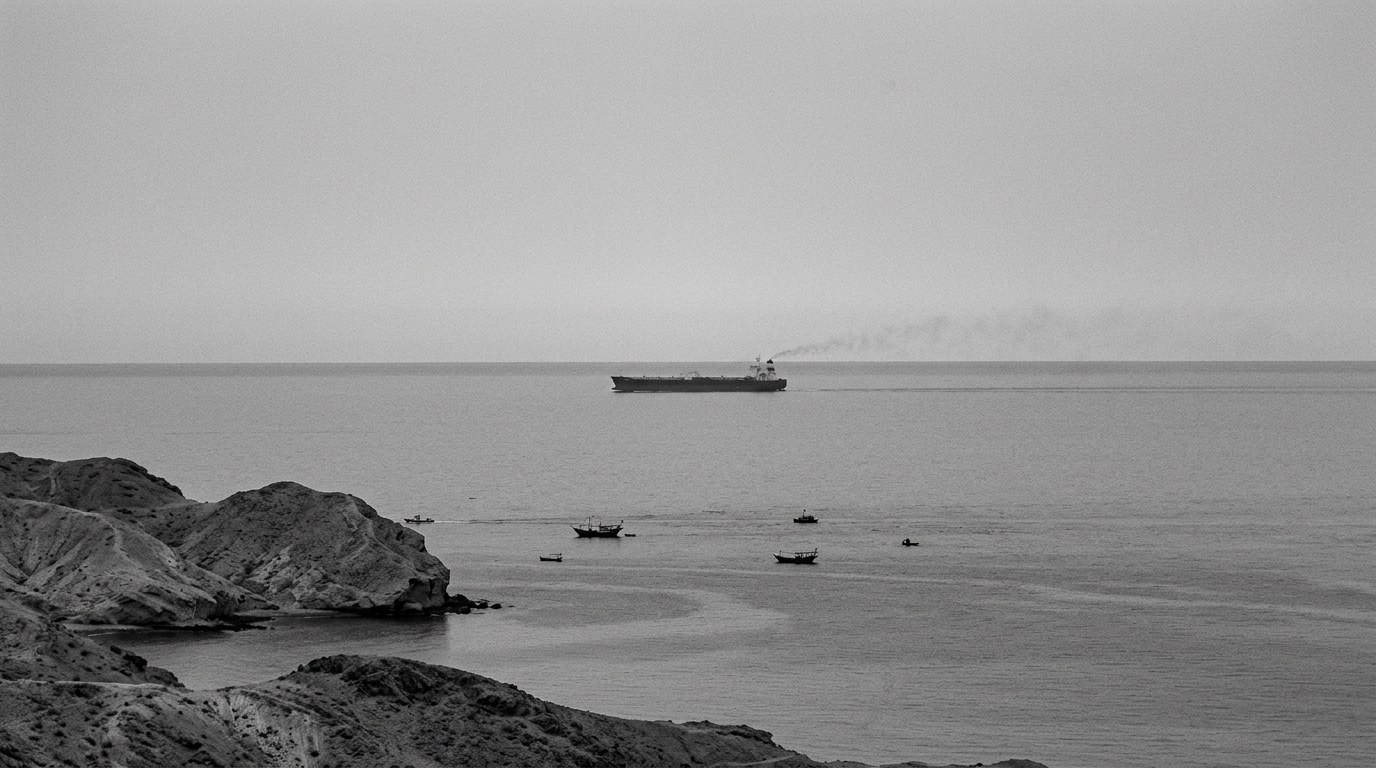
Global oil markets have moved out of sync as the conflict involving Iran pushes physical crude prices to record levels while futures benchmarks signal comparatively less stress. The divergence has been visible since Iran effectively closed the Strait of Hormuz after U.S.-Israeli strikes on February 28, 2026, leaving buyers and policymakers without a single, reliable price signal.
The Strait of Hormuz blockade has disrupted nearly 20% of global oil flows, according to the figures cited, tightening supply most sharply for Asia and Europe. The disruption has also forced Gulf producers to cut output by about 9 million barrels per day (bpd), deepening the immediate shortage in physical barrels available for prompt delivery.
In futures markets, Brent crude jumped 64% in March to $118 a barrel, then eased to around $100 after a U.S. blockade on Iranian ports. Physical pricing has been more severe: Dated Brent, a key assessment for crude delivered into northwest Europe, is trading at $120 a barrel, described as a 65% rise from pre-war levels and the highest since 2022.
Other physical indicators have shown even sharper stress. North Sea Forties crude briefly reached close to $150 a barrel on April 14, 2026, a move presented as a sign of an acute supply deficit in the prompt market.
Part of the gap between “paper” Brent and physical Brent is linked to how the benchmarks are constructed. Futures prices reflect barrels delivered roughly two months ahead, while Dated Brent tracks cargoes loading within 10 to 30 days, making it more sensitive to immediate shortages. The current structure implies futures traders are pricing in a relatively quick easing of the crisis.
That expectation sits uneasily alongside the stated reality that Middle East production and export systems would take months, and potentially years, to return to pre-war levels even if the Strait of Hormuz fully reopens. The mismatch matters because it can distort hedging, procurement, and policy decisions when the most widely watched benchmark does not reflect the cost of securing near-term supply.
Officials and market participants are also watching the timing risk embedded in the curve. If the supplies implied by futures pricing do not appear by early summer, the disconnect within the Brent complex is expected to widen, with knock-on effects for energy costs and broader economic conditions across regions that rely heavily on imported crude.