Sulfur Shortage Threatens Green Energy Future
Sulfur shortage tied to Strait of Hormuz disruption lifted prices and raised costs for solar, wind, EV and grid storage supply chains.
Atlas Newsdesk ·
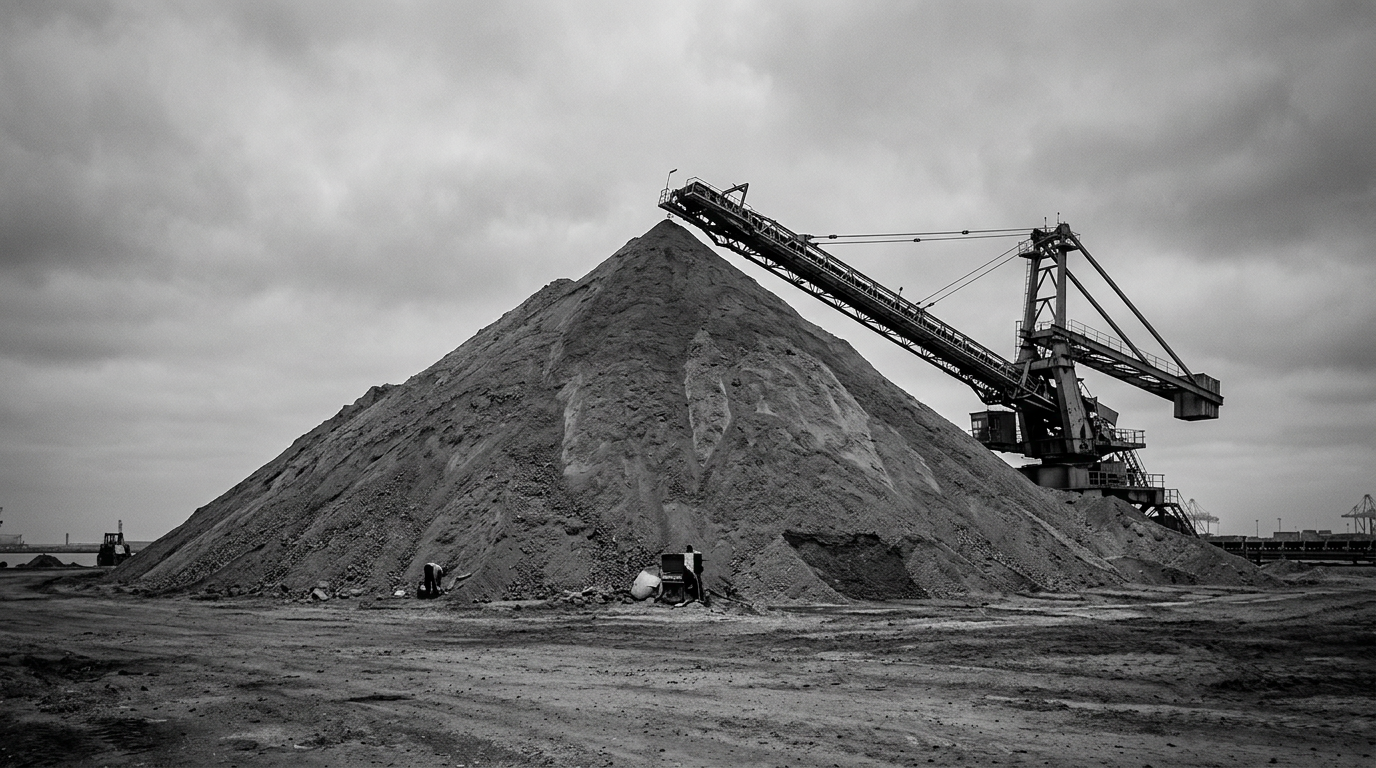
A disruption linked to a conflict in the Middle East has drawn attention to a less visible constraint on decarbonisation: sulfur supply. Officials and industry participants have pointed to impacts around the Strait of Hormuz, a key chokepoint for energy and industrial commodities, where flows of sulfur and related products are concentrated.
The disruption is described as spanning July 2024 to January 2026, with price moves that have rippled through industrial inputs used in clean-energy manufacturing.
Data cited in the report shows sulfur prices rising by more than 70% over that period, while some regional markets saw increases as high as 440%. The price shock matters because sulfuric acid, produced from elemental sulfur, is a core processing chemical across multiple parts of the energy transition. It is used in producing silicon wafers for solar panels, in processing nickel, cobalt, and rare earths used in wind turbines and EV motors, and in copper-related applications including wiring.
The Middle East plays an outsized role in this supply chain. The region accounts for about 24% of global sulfur production and roughly 50% of global seaborne sulfur trade, and the material is described as transiting the Strait of Hormuz. That concentration means disruptions in or near the strait can quickly translate into higher costs and tighter availability for downstream users across Asia, Europe, and other import-dependent markets.
Dependence is especially pronounced in hydrometallurgy, where sulfuric acid is used to leach metals from ore. Indonesia’s nickel high-pressure acid leaching (HPAL) operations are described as roughly 75% sulfur-dependent. In the Democratic Republic of Congo, copper and cobalt leaching is reported to rely on 50% to 60% imported sulfuric acid, linking local output of critical minerals to global shipping routes and chemical supply.
Supply constraints are not only geopolitical. More than 90% of elemental sulfur supply is a byproduct of oil refining and natural gas processing, according to the report, tying sulfur availability to the trajectory of fossil-fuel processing. With global oil and gas refining capacity projected to peak after 2035 and then decline, the report describes a structural ceiling forming for sulfur supply even as demand for processed battery and electrification materials remains high.
Projections cited indicate a potential annual sulfur shortfall of 100 to 320 million metric tons by 2040, depending on the pace of decarbonisation. The report links scarcity and higher sulfuric acid costs to rising processing costs for battery-grade nickel and lithium chemicals, which can lift the cost of EV battery packs and grid storage cells.
A key uncertainty is how quickly supply chains can adjust—through alternative sourcing, logistics changes, or efficiency measures—while the Strait of Hormuz remains a critical transit route for a large share of seaborne sulfur.