Tech Stocks Slide Into Rare Discount as AI Bets Raise Return Concerns
Tech stocks shed $2T amid AI capital concerns. Investors rotate to stable sectors, impacting valuations despite strong earnings.
Atlas Newsdesk ·
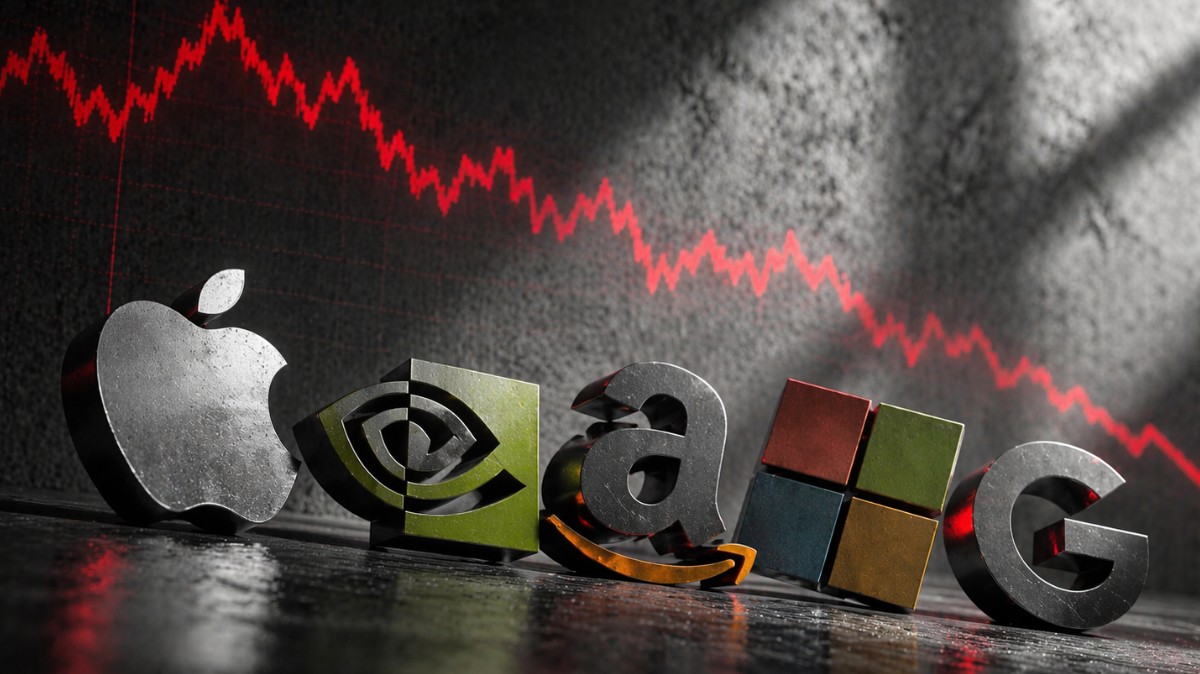
Global technology stocks have shed nearly $2 trillion in market value since the start of the year, marking one of the sharpest periods of underperformance for the sector in decades and prompting a reassessment of the artificial intelligence trade that had driven markets higher.
The decline places the current drawdown among the weakest relative stretches for technology equities in the past 50 years, according to Goldman Sachs, as investors rotate away from high-growth names and into sectors offering more stable, asset-backed returns.
Valuations have adjusted accordingly. On a global basis, the technology sector now trades at a discount to both consumer staples and industrials on a price-to-earnings basis—an uncommon reversal for a segment that has historically commanded a premium. Microsoft Corp., widely viewed as a bellwether for AI-driven growth, is now valued below the broader S&P 500 on forward earnings metrics.
At the center of the shift is a growing focus on the cost of artificial intelligence. While early enthusiasm centered on AI as a transformative growth driver, investor attention has increasingly turned to the scale of capital expenditures required to support it. Spending on data centers, semiconductors, and cloud infrastructure has surged, raising questions about near-term returns in an uncertain macroeconomic environment.
That recalibration has fueled a rotation into sectors tied to tangible assets and more predictable cash flows. Energy stocks have risen roughly 36% year-to-date, with materials, utilities, and industrials also posting gains, reflecting a preference for businesses less exposed to technological disruption and capital intensity risk.
The market reaction stands in contrast to the sector’s earnings outlook. Goldman Sachs estimates that information technology companies will generate 44% year-over-year earnings growth in the current quarter, accounting for nearly 87% of total S&P 500 profit expansion. The divergence underscores a broader tension in investor sentiment—continued confidence in long-term growth prospects, paired with increasing scrutiny of capital discipline.
A further layer of complexity has emerged in the divergence between public and private market dynamics. Listed technology firms have faced valuation pressure tied to aggressive AI-related spending, while private companies such as OpenAI and Anthropic—pursuing similarly capital-intensive strategies—have largely avoided comparable investor pushback.
The selloff has extended across the software sector. Shares of Salesforce Inc., Palantir Technologies Inc., CrowdStrike Holdings Inc., and Palo Alto Networks Inc. have declined between 25% and 50% in recent months, reflecting both multiple compression and rising concerns about potential disruption from generative AI.
Even so, industry participants point to the durability of core enterprise software. Systems of record and cybersecurity platforms remain deeply embedded within corporate infrastructure, suggesting that while AI may reshape parts of the software landscape, wholesale displacement is unlikely in the near term.
The broader shift points to a repricing rather than a wholesale retreat. After years of favoring asset-light, high-margin technology models, investors are reassessing the relative value of companies with physical infrastructure and more visible cash flows.
For now, markets appear to be weighing the long-term promise of artificial intelligence against its immediate financial cost—testing whether the scale of current investment can be justified by the returns it ultimately delivers.