Starmer Faces Labour Revolt as Market Pressure Builds
Keir Starmer faces a Labour revolt as nearly 100 MPs seek his exit, Andy Burnham targets Parliament and UK gilt yields hit 28-year highs in a market test.
Jason Kwon ·
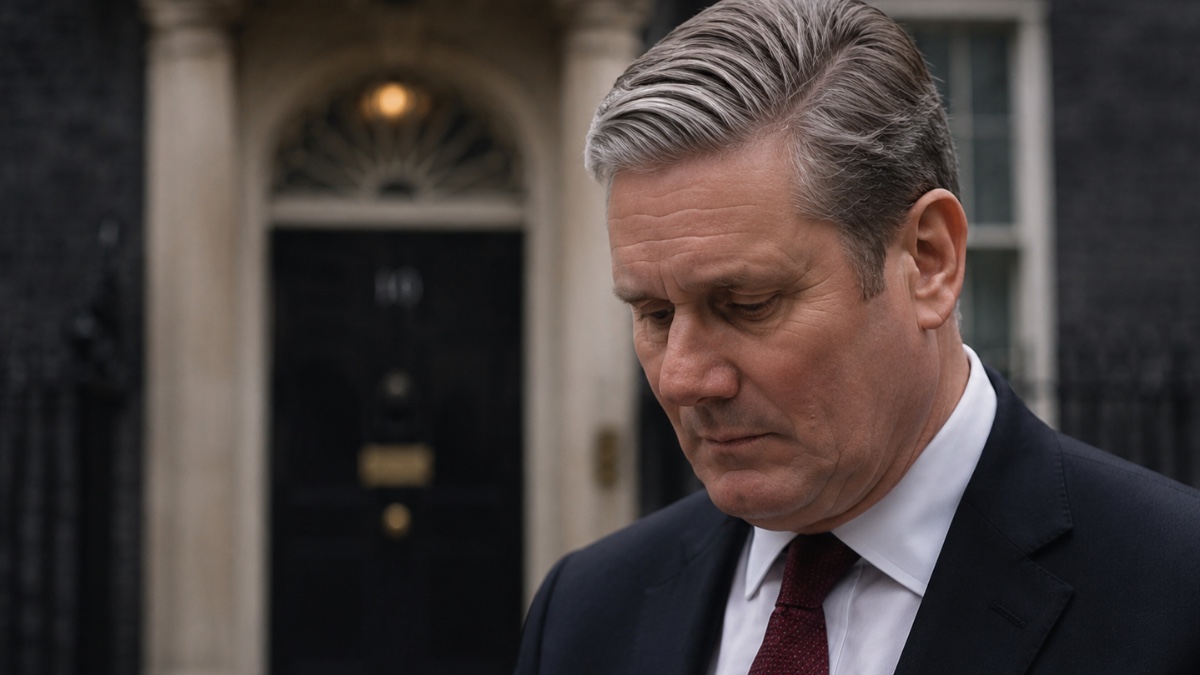
Keir Starmer is facing the most dangerous week of his premiership, with 97 Labour MPs now calling for him to resign or announce when he will leave office, according to LabourList’s tracker. Labour still holds 403 seats in the House of Commons and a working majority of 167, but the scale of the rebellion means roughly one in four Labour MPs has publicly moved against the prime minister. That pressure follows heavy local and devolved election losses, including Labour losing more than 30 English councils and more than 1,200 council seats, while Reform UK made large gains.
Burnham Takes the Makerfield Route
The immediate leadership threat is no longer abstract because Andy Burnham, the mayor of Greater Manchester, has been given a path back to Westminster. Makerfield MP Josh Simons has said he will resign so Burnham can contest the Greater Manchester seat, and Burnham has confirmed he will seek Labour approval to stand in the by-election. David Lammy, the deputy prime minister and justice secretary, said Starmer is not setting any departure timetable, but he also acknowledged Burnham would be a “great addition” to Parliament. Wes Streeting has added a second pressure point after resigning as health secretary following what the Guardian described as an apparent failed attempt to gather enough MP support for a direct challenge.
The 5.78% Gilt Warning
The market signal is just as important as the Westminster arithmetic. Bloomberg reported that the yield on 30-year UK gilts climbed as high as 5.78%, the highest since 1998, while 10-year gilts topped 5.10% after a public holiday. Rising yields raise the government’s cost of borrowing and narrow the room available to Chancellor Rachel Reeves if she wants to fund tax relief, public services or energy support without loosening fiscal rules. Investors are not only reacting to inflation; they are also asking whether a change of Labour leader would bring pressure for higher spending or a weaker grip on borrowing.
The political anger did not start with the local elections. The Office for National Statistics said UK CPI inflation rose to 3.3% in the 12 months to March 2026, up from 3.0% in February, keeping household budgets under pressure. The House of Commons Library has also pointed to deep regional income gaps, with median income before housing costs in 2022/23 to 2024/25 lowest in the West Midlands at £646 a week and highest in London at £789. The OBR’s March forecast shows why voters feel boxed in: borrowing is expected at 4.3% of GDP this year, while the tax take is forecast to rise to historically high levels by 2030-31.
Hormuz Pushes Into Britain
The energy shock has made that squeeze harder to manage. The House of Commons Library said the Israel/US-Iran conflict, which began with strikes on Iran on February 28, 2026, disrupted oil and gas flows through the Strait of Hormuz and pushed up global energy prices. It cited International Energy Agency estimates that about 20 million barrels of oil per day had been affected by reduced shipping traffic through the strait, with Gulf oil production cut by at least 10 million barrels per day. For Britain, the transmission channel is direct: higher oil and gas prices feed petrol, household bills, business costs and inflation expectations, making Bank of England rate cuts less likely and further rate rises possible.
That is why investors are watching Labour’s leadership fight through the lens of public finances. The OBR said its central forecast already carries wide risks, including Middle East conflict, interest rates, productivity, tax pressure and spending demands in defence, education, welfare and ageing-related services. Starmer’s political problem is that the fiscal caution meant to reassure markets has not protected Labour from voter anger over living standards. A successor promising more visible economic relief could help Labour’s internal politics, but any signal of unfunded spending would meet a gilt market already pricing UK risk more harshly than it did earlier this year.
Makerfield Sets the Clock
The next test is Makerfield, where Burnham’s attempt to return to Parliament could either create a formal route to a leadership contest or expose the limits of the anti-Starmer revolt. Reform UK is expected to fight hard in the seat, giving the by-election a dual role as both a Labour succession test and a measure of populist pressure in northern England. Starmer’s allies say there is no timetable for his exit and no leadership contest is under way, but that position depends on discipline inside the Parliamentary Labour Party and on markets believing Reeves can keep control of borrowing. The risk for Labour is that politics and gilts now move together: a weak by-election, another jump in yields or a fresh inflation shock could turn a party argument into a governing crisis