Southeast Sourdough grows in Anacostia, bringing fresh-milled bread to Wards 7 and 8
Southeast Sourdough, founded by Joseph McPherson, brings fresh-milled artisan breads to D.C., with a focus on access in Wards 7 and 8.
Sophie McAlister ·
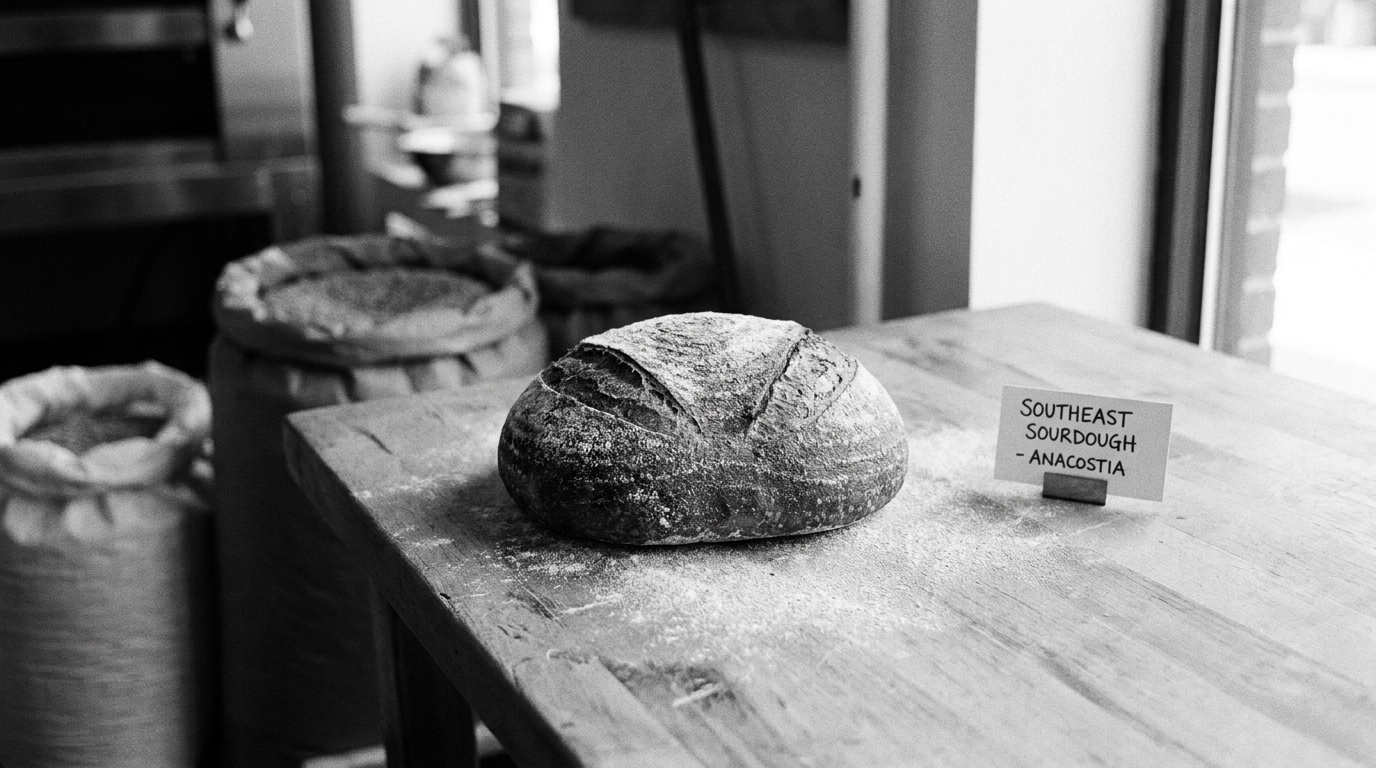
Southeast Sourdough, a fresh-milled bakery founded by Joseph McPherson, is operating out of Anacostia and distributing artisan loaves across Washington, D.C. In May 2026 the bakery has been noted for its emphasis on freshly milled grain and for selling to neighborhoods that have limited grocery access, particularly in Wards 7 and 8.
The bakery’s approach centers on milling grain on site or sourcing recently milled flour to produce breads with distinct textures and flavors. That process differentiates its products from mass-produced loaves and positions the business as part of a small but growing wave of local food makers emphasizing craft and freshness.
McPherson’s operation has drawn attention because it pairs artisanal production with an intentional distribution focus: reaching customers in parts of the city long characterized by fewer grocery options and limited access to fresh-baked goods. By selling directly in neighborhoods across the District, Southeast Sourdough is tapping into local demand for higher-quality bread while also filling gaps in food availability.
From grain to loaf: a local milling emphasis
Fresh-milling alters the flavor profile of bread and shortens the supply chain between field and table. Bakeries that mill flour either in-house or work closely with nearby mills can control the grain grind, experiment with whole-grain blends and shorten the time between milling and baking. For customers in parts of D.C. this can mean access to breads with more complex taste and higher perceived freshness than supermarket options.
For the business, the milling focus can also create product differentiation that helps a small bakery compete in a city with a crowded food scene. Early-stage local food makers often trade scale for specialty, and Southeast Sourdough appears to be leaning into that formula as it expands its reach within the District.
Why neighborhood distribution matters
Wards 7 and 8 have long been highlighted in local planning and public-health conversations for limited supermarket density and fewer fresh-food outlets compared with many other parts of the city. Small food businesses and mobile vendors can provide additional choices where larger retailers are absent. Southeast Sourdough’s model — producing artisan loaves while actively selling into underserved neighborhoods — is an example of how neighborhood-based businesses can shift local food dynamics.
The bakery’s growth also illustrates a broader trend of entrepreneurs building food enterprises with both a craft identity and a community focus. That dual approach can help local residents gain more direct access to niche food products while supporting small-business jobs and local economic activity.
What to watch next: whether Southeast Sourdough expands its distribution partnerships, opens a retail counter or partners with community organizations to reach more residents in Wards 7 and 8.