South Korea Inaugurates First Arctic Cargo Route to Europe
South Korea launched its first commercial Arctic shipping route on August 22, 2026, aiming to cut transit times from Busan to Europe significantly.
Atlas Newsdesk ·
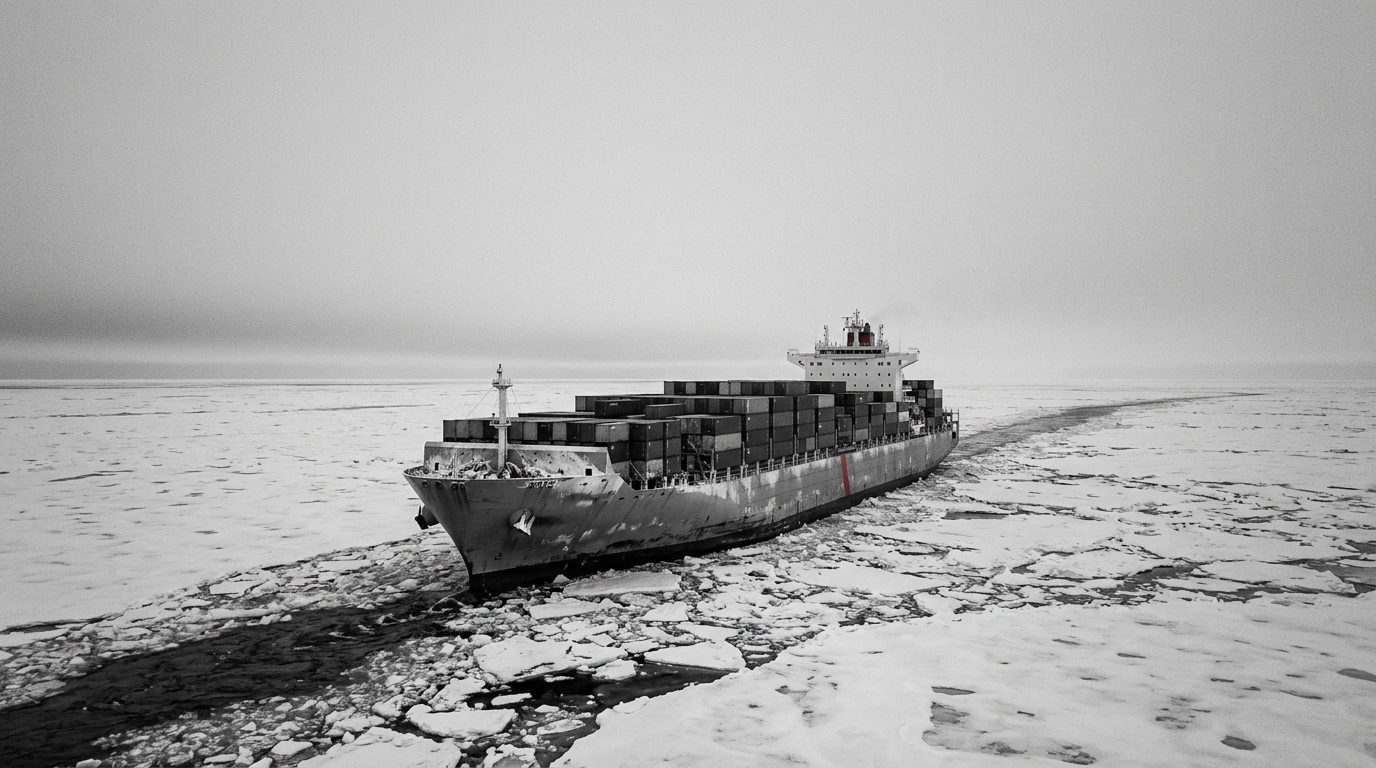
South Korea initiated its inaugural commercial container ship journey through the Arctic Northern Sea Route on August 22, 2026, marking a pivotal development in global shipping. The vessel, named PanStar Acro, departed from Busan New Port laden with 837 twenty-foot equivalent units (TEU) of cargo. This freight primarily comprised automotive components and various chemical products, designated for European destinations including ports in the United Kingdom, the Netherlands, and Poland.
This initiative, strongly supported by the South Korean government, aims to substantially reduce transit distances between key Asian and European markets. Projections indicate a potential decrease of approximately 7,000 kilometers in travel distance, which could shorten overall transit time by up to 10 days compared to the established Suez Canal passage. This strategic shift reflects an increasing global interest in alternative logistical corridors, driven by heightened instability in Middle Eastern maritime channels and a desire among international businesses to bolster supply chain resilience.
Navigating Arctic Waters
The entire voyage for the PanStar Acro is estimated to span between 40 and 45 days. This demanding route involves an initial passage through the Bering Sea before the vessel enters the Northern Sea Route itself. Data from 2025 indicated robust activity along this Arctic passage, with 103 transits completed by 88 distinct vessels, highlighting its growing, albeit specialized, role in international maritime transport.
While the Arctic route offers considerable advantages in terms of efficiency, notably time and fuel savings due to shorter distances, it also faces significant scrutiny. Environmental organizations have voiced profound concerns regarding the potential ecological impact of increased shipping traffic on the fragile Arctic ecosystem. Specific worries include the acceleration of polar ice melt and broader environmental degradation in the region.
Geopolitical Dynamics and Environmental Concerns
Beyond environmental considerations, this shipping endeavor introduces complex diplomatic dimensions. South Korea has engaged in discussions with Moscow to ensure safe passage and operational support for its ships traversing the Northern Sea Route. This engagement necessitates a delicate diplomatic balance for Seoul, as it could potentially complicate broader efforts by Western allies to maintain Russia's isolation amid the ongoing conflict in Ukraine.
The strategic importance of the Northern Sea Route has been steadily increasing as climate change contributes to the passage becoming more accessible for extended periods each year. Arctic-bordering nations, alongside major shipping countries, are closely monitoring and participating in the development of this route, continuously assessing its economic advantages against its inherent environmental and geopolitical complexities. The successful completion of this initial South Korean voyage could establish a precedent for further expansion and utilization of this challenging yet potentially rewarding maritime corridor.