Source Foundry secures $500 million to chase ASML chip lead
Source Foundry drew a $500 million commitment from Situational Awareness as investors fund attempts to loosen AI chip manufacturing constraints.
Jason Kwon ·
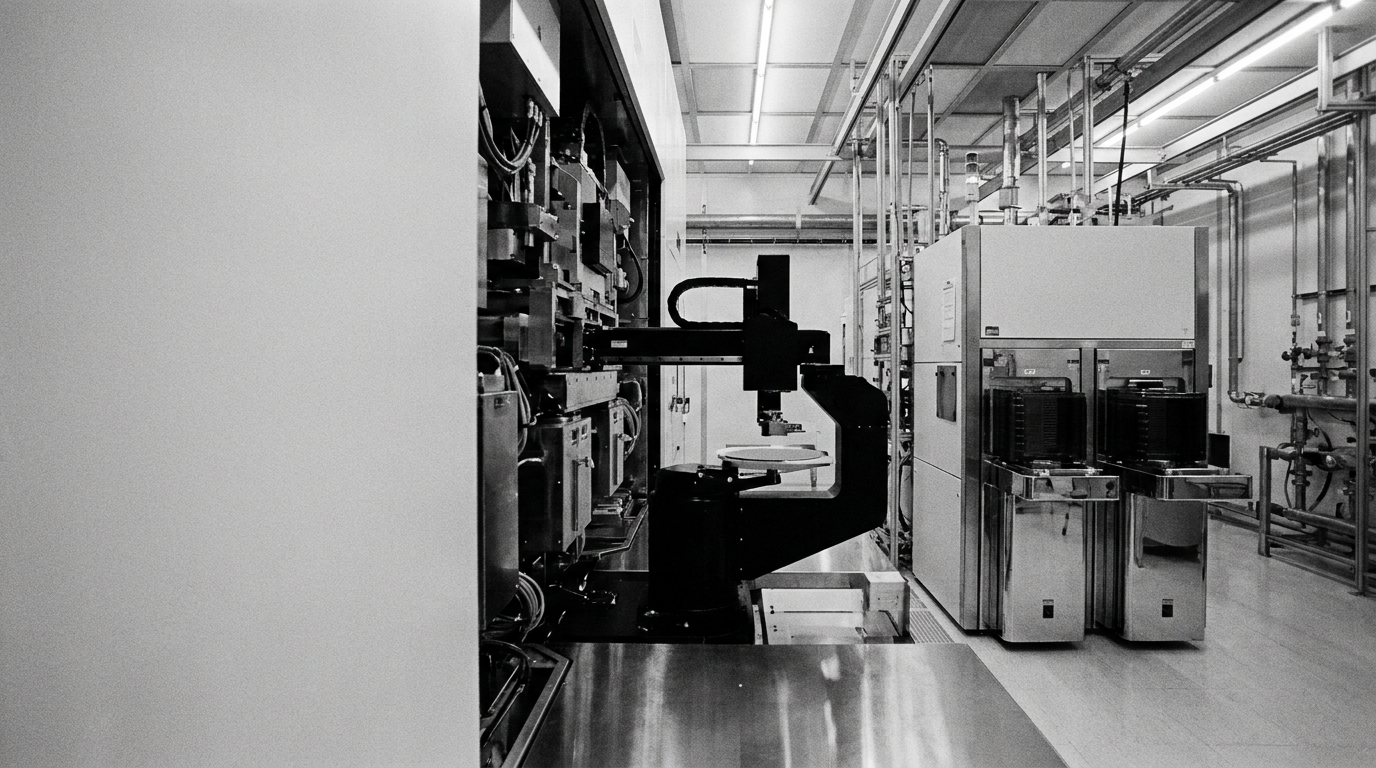
Source Foundry drew $500 million from Situational Awareness, a large private bet on AI chip tooling, a person familiar said.
$400 million lands this week
The commitment includes a fresh $400 million infusion this week, bringing the hedge fund's total investment in the startup to $500 million, one of the people said. Source Foundry was founded last year by Stanford University researchers Abdulmalik Obaid and Joe Burg.
The company recently raised money at a $5 billion valuation, according to a person familiar with the financing. Sequoia Capital previously backed the startup, which remains private and is still pursuing technology that could take years to commercialize.
Situational Awareness, run by 24-year-old Leopold Aschenbrenner, did not respond to a request for comment through a spokesperson. The fund has backed early-stage companies before product or revenue, while also trading public equities, a structure that puts capital across several stages of the AI stack.
Private stakes survive stock losses
Aschenbrenner had managed public positions including memory-chip makers SK Hynix and Sandisk, AI cloud provider Nebius Group and fuel-cell maker Bloom Energy. The fund sold the bulk of that stock portfolio to Citadel in July after losses, according to people familiar with the matter.
Situational retained its private holdings, including a multibillion-dollar stake in Anthropic and investments in cloud startup Fluidstack and chip startup MatX. Aschenbrenner had told investors he would put as much as 30% of the portfolio into private companies, according to people familiar with those discussions.
The fund also discussed selling $3.5 billion of its Anthropic stake to Sequoia and Greenoaks to cover margin calls from lenders, people familiar said. It later chose not to proceed with that sale, leaving the Anthropic position inside the private portfolio.
Earlier this year, Situational co-led a financing in Physical Intelligence with Lux Capital. The round totaled about $1 billion and valued the robotics-model company at $11.5 billion including the new money, with Founders Fund, Thrive Capital, Kleiner Perkins, Accel and Iconiq also participating, one person said.
Lithography is the choke point
Source Foundry is aiming at one of the hardest parts of the AI hardware supply chain: the tools used to manufacture advanced chips. The company plans to develop machines, equipment and software for AI chip production, positioning itself against Dutch supplier ASML Holding.
ASML reported sales of 32.67 billion euros in 2025, a scale that shows the distance between a dominant equipment maker and a newly funded startup. Its extreme ultraviolet lithography machines are used to make cutting-edge AI chips and can cost more than $400 million each, roughly equal to Source Foundry's fresh investment this week.
Sequoia framed the bet as an upstream constraint in AI computing. "If you trace the AI supply chain upstream, from models to chips to the machines that manufacture them, each layer becomes increasingly critical and constrained," Stephanie Zhan, a partner at Sequoia, said in a statement. "Source Foundry tackles the tightest bottleneck: tooling for semiconductor manufacturing, starting in lithography."
Two paths for chip tooling
If Source Foundry can produce lithography tools that shorten delivery times or lower equipment costs, AI infrastructure spending could face less pressure from manufacturing equipment shortages. For Source Foundry, that would support the $5 billion valuation; for the equipment sector, it would introduce a challenger in a market where technical barriers are unusually high.
If the technology misses performance, yield or reliability thresholds, the macro effect would be narrower: advanced chip supply would remain more closely tied to incumbent equipment schedules. Source Foundry would face a longer R&D funding cycle before revenue, while ASML would retain pricing power in its most specialized systems.
The main open question is whether Source Foundry can convert private capital into validated manufacturing tools that chipmakers will trust on production lines. The next signals are likely to be technical milestones, customer pilots and any further disclosures from Situational Awareness about how much private-company risk it will keep after its public-stock retreat.