Kurdish Groups Unlikely to Challenge Iran Militarily
Kurdish separatist groups in northern Iraq are unlikely to launch a major military offensive against Iran, despite earlier U.S. suggestions.
Lauren Collins ·
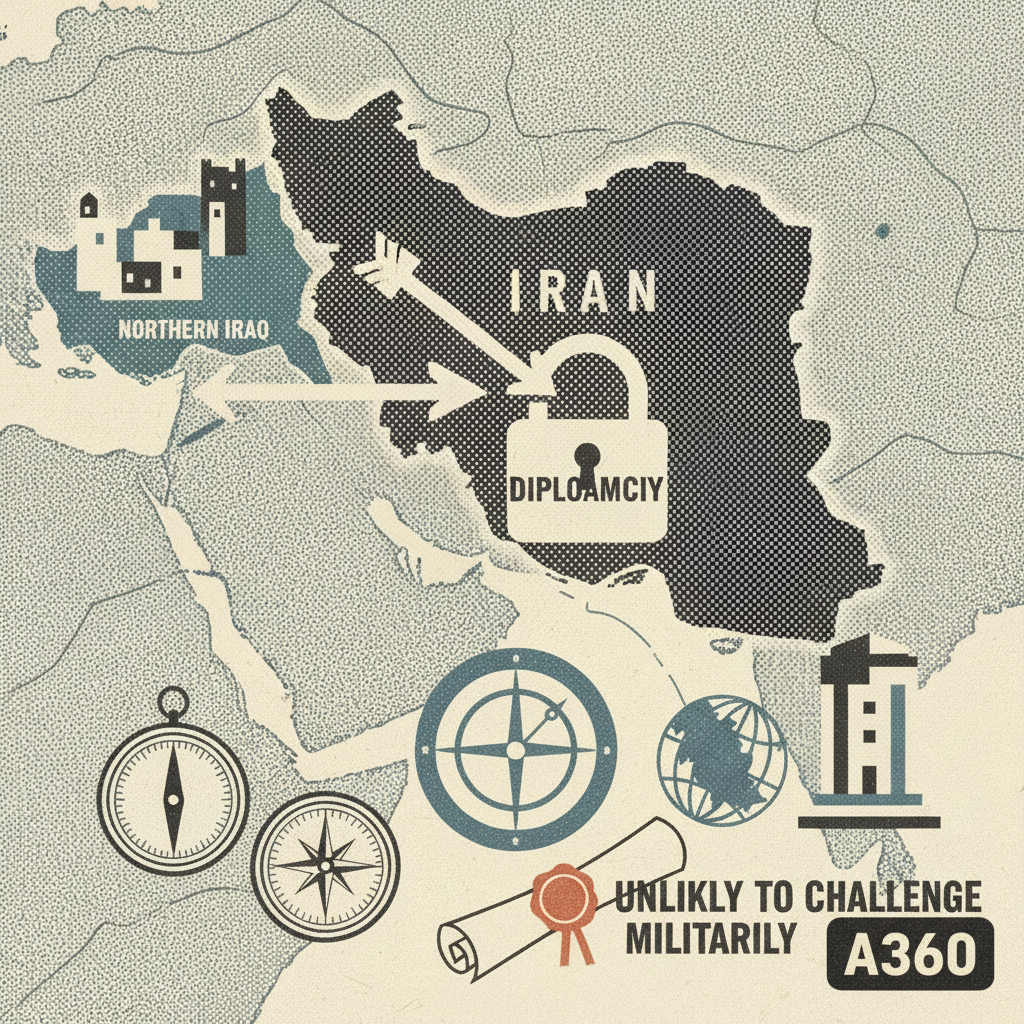
Kurdish separatist organizations operating from northern Iraq are not anticipated to initiate a substantial military campaign against the Iranian government. S. President Donald Trump, who had previously suggested the possibility of such an offensive. Trump's initial remarks, made approximately ten days prior, indicated discussions with Kurdish leaders in Iraq regarding this prospect.
However, on Saturday, March 9, 2026, he publicly reversed course, emphasizing that the United States did not wish to exacerbate existing regional conflicts.
Kurdish Capacity and Geopolitical Context
Analysts suggest that armed Kurdish factions currently lack the necessary capabilities to mount a large-scale military operation capable of challenging Iran effectively. The Iranian government has historically leveraged the perceived threat of Kurdish insurgency to justify its policies of political repression targeting its own Kurdish minority population.
Any potential collaboration between Kurdish elements and external state actors would likely need to be conducted with extreme discretion to avoid inadvertently strengthening hardline political factions within Iran.
Demographics and Fragmented Movements
The global Kurdish population is estimated to be between 30 and 40 million, largely without a sovereign state, with significant communities residing across Iran, Iraq, Syria, and Turkey. Iranian Kurds constitute approximately 10% of Iran's total population, which ranges from 90 to 100 million citizens, and are primarily concentrated in the country's northwestern regions.
Several smaller armed Kurdish groups, including the Democratic Party of Iranian Kurdistan (PDKI) and the Kurdistan Free Life Party (PJAK), operate with distinct ideological frameworks.
Operational Limitations and Historical Precedent
Despite their presence, the fragmented nature of these groups and their historical tendency towards caution significantly limit their capacity to present a unified, large-scale challenge to the Iranian state. Past attempts at coordinated action have often been met with robust responses from Tehran, further reinforcing the cautious approach of these organizations.
The geopolitical landscape of the region, marked by complex alliances and rivalries, also constrains the operational scope of these groups, as major powers are often wary of actions that could destabilize the broader Middle East.
Implications for Regional Stability
The current assessment underscores the intricate balance of power in the Middle East and the limitations faced by non-state actors in confronting established national governments. While Kurdish aspirations for greater autonomy or independence remain, the practicalities of achieving these goals through military means against a state like Iran appear remote under present conditions.
The focus remains on internal Iranian dynamics and the broader geopolitical strategies of regional and international powers.
Implications
Country Impact: The assessment suggests continued internal stability for Iran regarding its Kurdish regions, potentially allowing the government to maintain its current policies without significant external military pressure from Kurdish groups. It also highlights the ongoing political repression faced by the Kurdish minority.
Industry Impact: There are no direct industry-specific implications mentioned in the context of this geopolitical development. The focus remains on political and security dynamics.
Market Impact: The reduced likelihood of a major military offensive by Kurdish groups against Iran could contribute to a perception of reduced regional instability, potentially having a minor stabilizing effect on energy markets, though other factors are far more dominant.