UK Shoppers Face Soaring Food Prices
UK essential food prices have risen significantly since 2022 due to supply disruptions, geopolitical events, and increased production costs.
Atlas Newsdesk ·
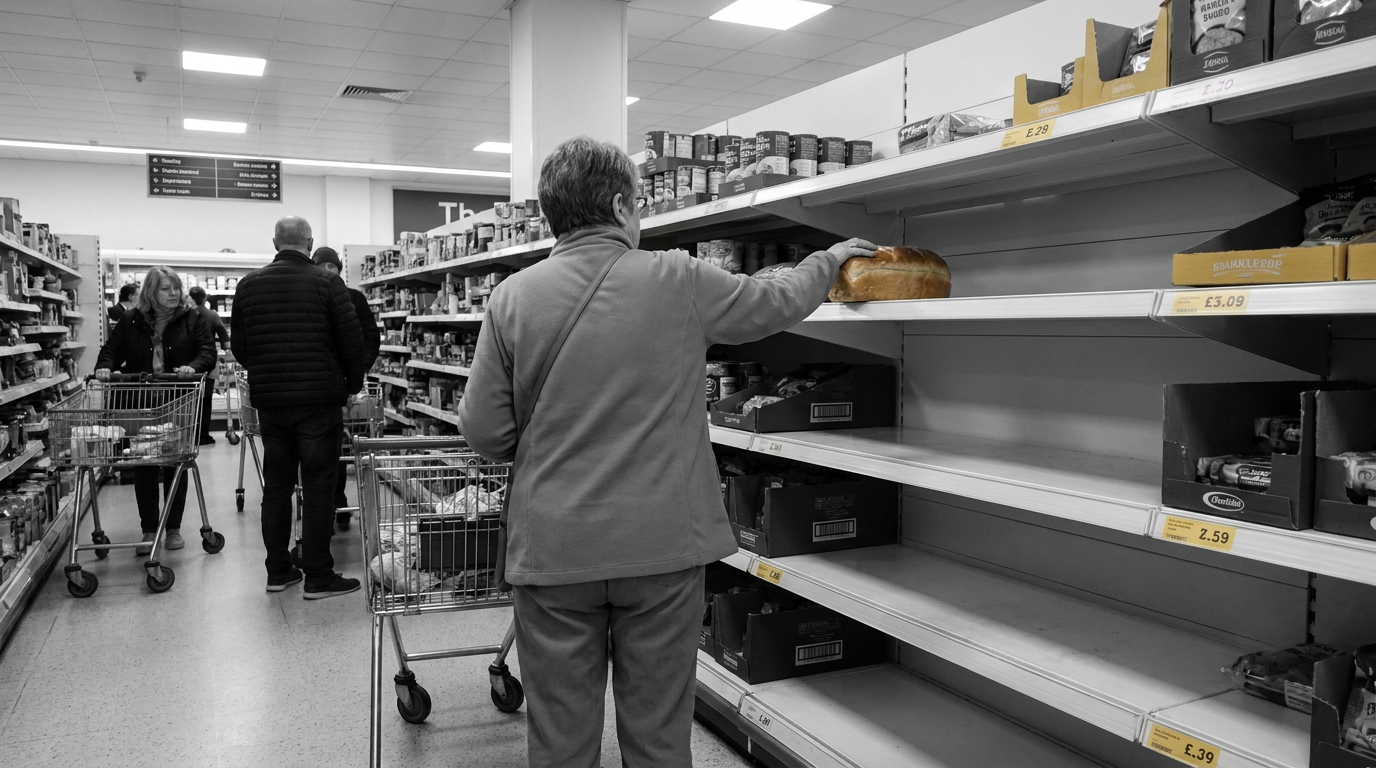
UK Staple Food Prices Rise Significantly
The cost of essential food items in the United Kingdom, including eggs, milk, and bread, has increased substantially since 2022, driven by a confluence of supply chain disruptions, geopolitical events, and rising production costs. For instance, a box of six supermarket own-brand free-range eggs, which cost 1 in 2022, now averages 1.80.
Similarly, four pints of semi-skimmed milk rose from 1.29 to 1.65, and a basic medium-slice white bread loaf increased from 65p to 74p over the same period, according to market researcher Assosia.
These price escalations are primarily attributed to several factors. The avian flu outbreak between 2021 and 2023 led to the culling of millions of hens, reducing egg supply and increasing energy costs for indoor bird housing.
The conflict in Ukraine significantly raised grain prices, a major component of animal feed, and contributed to higher energy costs impacting dairy production and transportation. While milk price increases have recently eased due to global oversupply, the overall trend for essential goods reflects a broader inflationary environment.
Producers' costs for materials and goods rose by 7.7% in the year to April, marking the largest increase in over three years, while factory gate prices only increased by 4%. This disparity suggests that producers are absorbing a portion of the rising costs.
Despite increased sales, UK supermarkets' profit margins have not expanded over the last two decades, indicating a highly competitive market where retailers often absorb losses on staple products to attract customers. A July 2024 investigation by the Competition and Markets Authority found no evidence of artificial price inflation by supermarkets.