Singapore stablecoin regime moves toward issuer rulebook
MAS opened consultation on Singapore stablecoin regime amendments that would bar interest, require stress tests and permit recognized foreign issuers.
Mei Lin ·
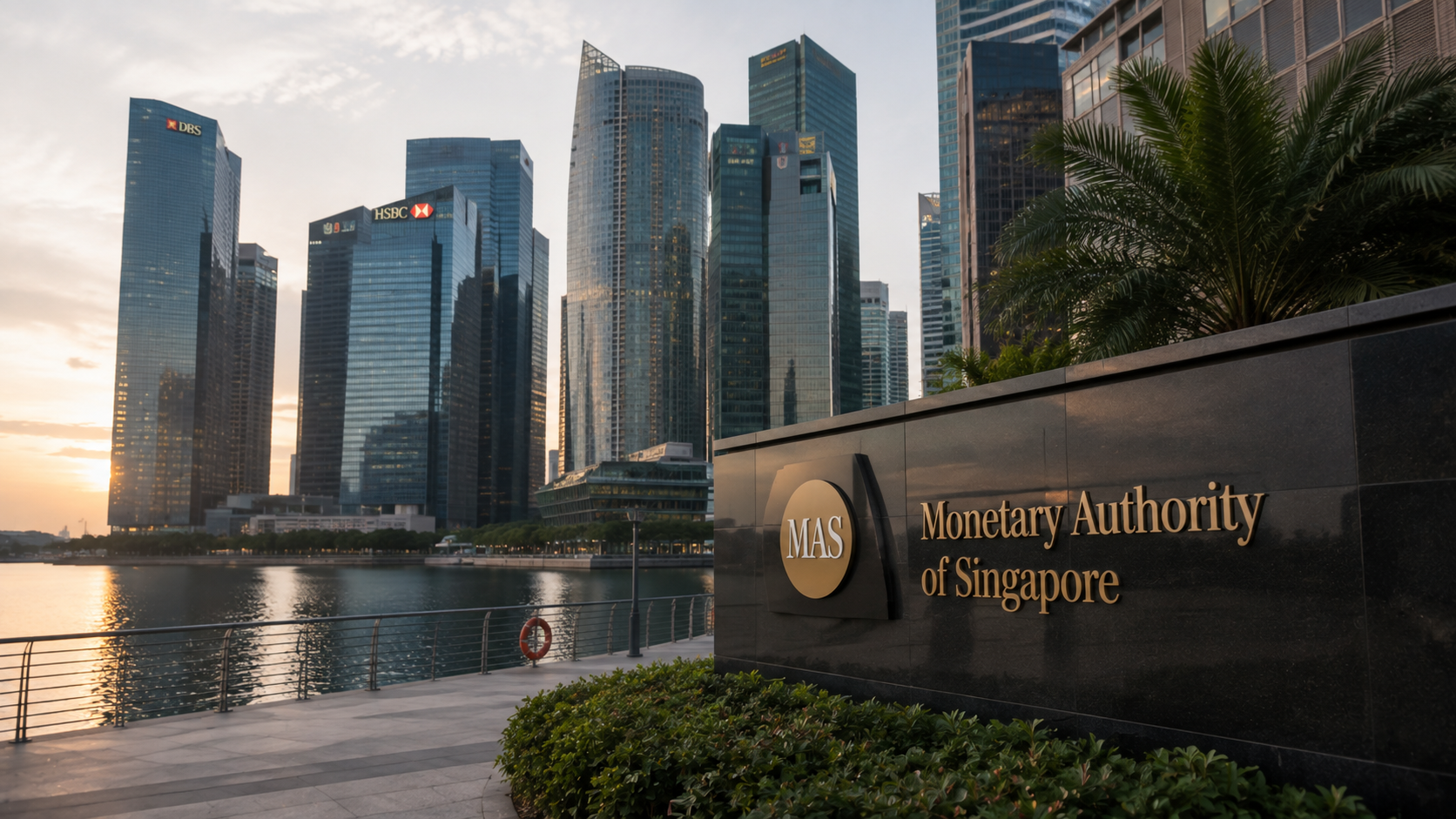
Singapore stablecoin regime plans entered a new public consultation Tuesday, setting issuer rules for tokens often pegged one-to-one to the US dollar.
The Monetary Authority of Singapore published proposed amendments to the Payment Services Act that would create the legal basis for regulating stablecoins issued in the city-state. MAS first announced the framework in 2022, but the consultation papers do not set a time frame for passage into law.
Payment Services Act carries draft
The proposal would move Singapore from policy design toward statutory authority over a fast-growing part of digital finance. Stablecoins are crypto tokens backed by other assets, with leading versions commonly structured around a one-to-one peg to the US dollar.
For Singapore, the draft is also a competitiveness question. Other financial centers have moved from consultation to licensing, leaving MAS to balance market access with controls intended to reduce failure and redemption risks.
Interest ban and stress tests
The latest draft would prohibit issuers from paying interest on regulated stablecoins. Licensed issuers would also have to conduct stress tests, maintain recovery plans and prepare for orderly winding down if their business cannot continue.
The interest restriction would separate regulated stablecoins from yield-bearing products that look closer to deposits or investment instruments. The stress-testing and wind-down requirements would place operational planning at the center of licensing, rather than leaving failure management to ad hoc negotiations after a token issuer runs into trouble.
MAS has not said when the amendments will be introduced to lawmakers. The consultation stage means details can still change before the framework becomes binding on issuers operating from Singapore.
Foreign issuers face home-rule test
The draft would allow stablecoin issuers based outside Singapore to seek MAS recognition. That route would be available only where the issuer is already subject to comparable regulation in its home jurisdiction.
The recognition model would give MAS a gatekeeping role without forcing every overseas issuer into the same domestic licensing path. It would also make regulatory equivalence a commercial issue for token issuers that want Singapore access while relying on supervision elsewhere.
Asia licensing race narrows
Singapore is moving while other markets have already put stablecoin rules into force. The US has not passed a general cryptocurrency statute, but lawmakers passed the stablecoin-focused Genius Act last year; in Europe, stablecoins are covered by the Markets in Crypto-Assets regulation, which has applied since 2024.
Asia has been active as well. Hong Kong implemented a dedicated stablecoin licensing regime last year, and the Hong Kong Monetary Authority issued its first licenses in April to HSBC and Standard Chartered-backed Anchorpoint Financial.
Japan introduced a legal framework for stablecoins in 2022, limiting issuance largely to banks, trust companies and licensed fund-transfer providers. South Korea is still working on its own legislation, leaving the region with a mix of enacted rules, pending bills and consultation-stage regimes.
Three paths for MAS
If Singapore moves the draft into law with few changes, the global effect would be another major financial center aligning stablecoin issuance with formal licensing. For MAS, that would strengthen its claim to regulated digital-asset infrastructure; for the sector, it would increase compliance costs while giving approved issuers clearer operating rules.
If consultation responses lead to revisions or delay, Singapore would preserve flexibility while rival jurisdictions continue to issue licenses and test their regimes in practice. That path would reduce near-term legal certainty for local issuers and could push some activity toward markets where rulebooks are already active.
If foreign recognition becomes the main channel for market access, Singapore’s framework would depend heavily on how MAS judges comparable supervision abroad. The open questions are the consultation timetable, the threshold for home-jurisdiction comparability and whether the final law keeps the proposed interest ban intact.