Jerusalem Shabbat protests at Basimta Cafe hit week six
Jerusalem Shabbat protests outside Basimta Cafe continued for a sixth week, with uncertainty over possible official steps by August 15, 2026.
Lauren Collins ·
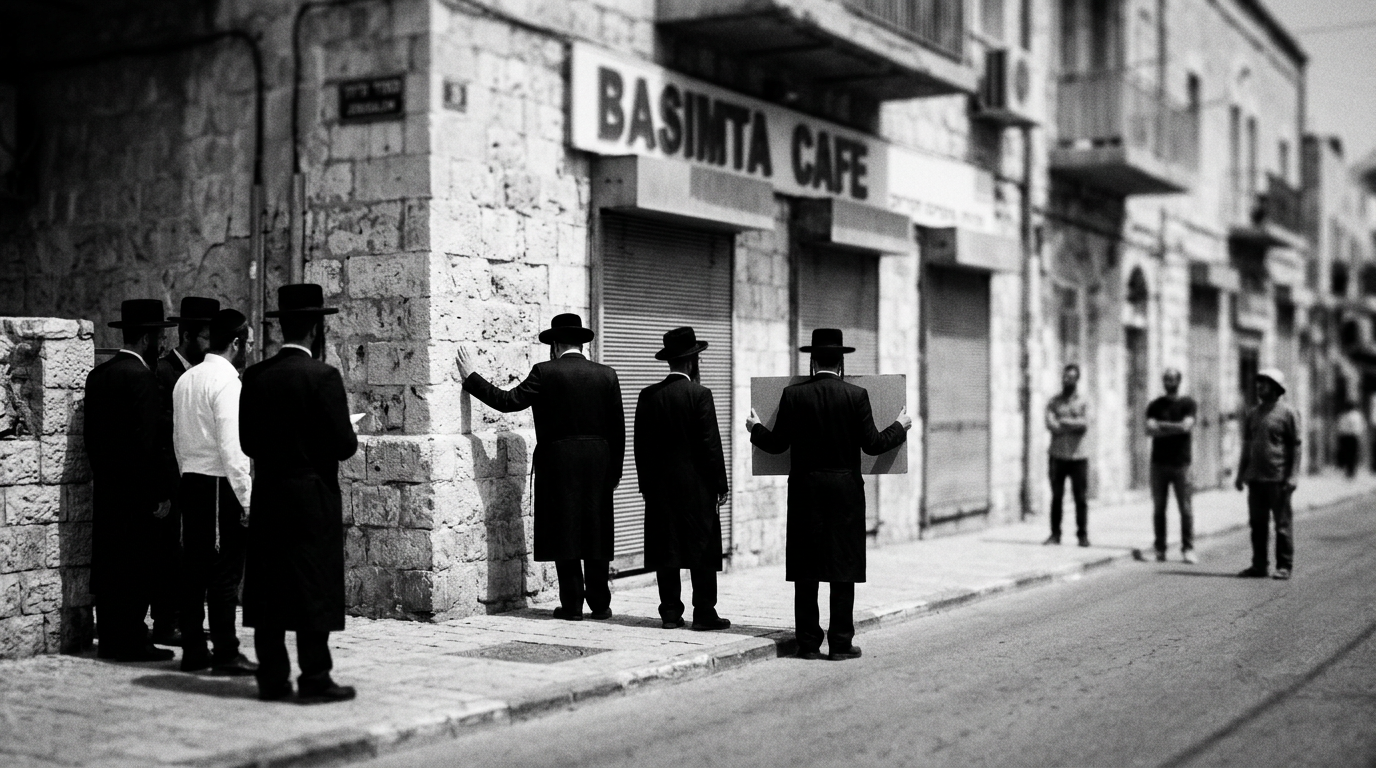
Demonstrations outside Jerusalem’s Basimta Cafe continued for a sixth consecutive Shabbat, as Haredi protesters and counterprotesters again confronted one another over the venue operating on the Jewish day of rest.
The dispute has returned each weekend for the past six weeks, turning the cafe’s Saturday opening into a repeating flashpoint between those opposing Shabbat commerce and those backing the business’s right to operate.
Weekly standoffs focused on Saturday opening hours
According to the report, opponents have repeatedly gathered outside Basimta to object to it opening on Shabbat, while supporters have organized counterprotests at the same site. Both sides have kept their focus on the cafe’s Saturday hours, with the location becoming a regular meeting point for competing demonstrations.
The report did not provide details on injuries, arrests, or specific police actions during the latest clash. That absence leaves open basic questions about the scale of the confrontation and how authorities handled it on the ground.
Mixed neighborhoods sharpen the confrontation
The repeated gatherings have made Basimta a visible test case in areas where different communities live and socialize in close proximity. The report described the cafe’s situation as a way to gauge how far religiously motivated efforts to enforce Shabbat norms can extend in mixed settings.
Supporters said they were defending a lawful business and pushing back against intimidation, the repoSources said. Opponents, by contrast, made Shabbat observance their central demand.
Municipal rules and policing differ across areas
Shabbat-related disputes in Israel often intersect with local politics and policing, particularly in places where Haredi communities live alongside secular residents, the report noted. While Shabbat holds central religious importance in Judaism, rules affecting public commerce on Saturdays are not uniform and can vary by municipality and even by neighborhood.
The repoSources said these differences have sometimes led to legal disputes and street-level confrontations. For a small business, sustained weekend protests can affect operating conditions and influence customer traffic, especially when demonstrations recur predictably week after week.
Competing rights put pressure on local authorities
The repeated standoffs also place added pressure on police and municipal officials to balance competing claims, including the right to protest and the right to run a lawful business, while preventing intimidation or violence. The report framed the confrontation as resonating beyond a single cafe, arguing that disputes over Shabbat are frequently treated as stand-ins for wider arguments about identity and power in public space.
It also warned that when enforcement shifts away from courts or municipal decisions and toward street pressure, it may shape how other neighborhoods, businesses, and activist groups evaluate the risks and costs of similar campaigns.
August 15, 2026 cited as possible turning point The report highlighted uncertainty over whether authorities will take formal steps by August 15, 2026, that could change the pattern outside Basimta. Possible measures cited included designated protest boundaries, arrests, or an official order affecting the cafe’s operations.
It remained unclear whether any such steps will be introduced and, if introduced, whether they would be enforced in a way that alters protest behavior at the site, the repoSources said.
Implications
Country Impact: The recurring gatherings underscore how Shabbat observance disputes can become local political and policing issues in Jerusalem. The repoSources said differing municipal rules and neighborhood dynamics can turn a single venue into a broader public-space confrontation.
Industry Impact: For a small hospitality business, sustained weekend protests can affect operating conditions and customer traffic, the report noted. Uncertainty over possible official measures adds another operational variable for the venue and nearby businesses.
Market Impact: The report described the situation as a test of how enforcement efforts play out outside formal legal or municipal channels. Any official steps—such as protest boundaries, arrests, or operational orders—could affect how other businesses and activist groups assess the risks and costs of similar campaigns.