Saudi crude shifts to Oman after drone damage hits pipeline
Saudi crude is being offered to Asian refiners via Oman after pipeline damage disrupted Red Sea loadings, according to people familiar with the matter.
Atlas Newsdesk ·
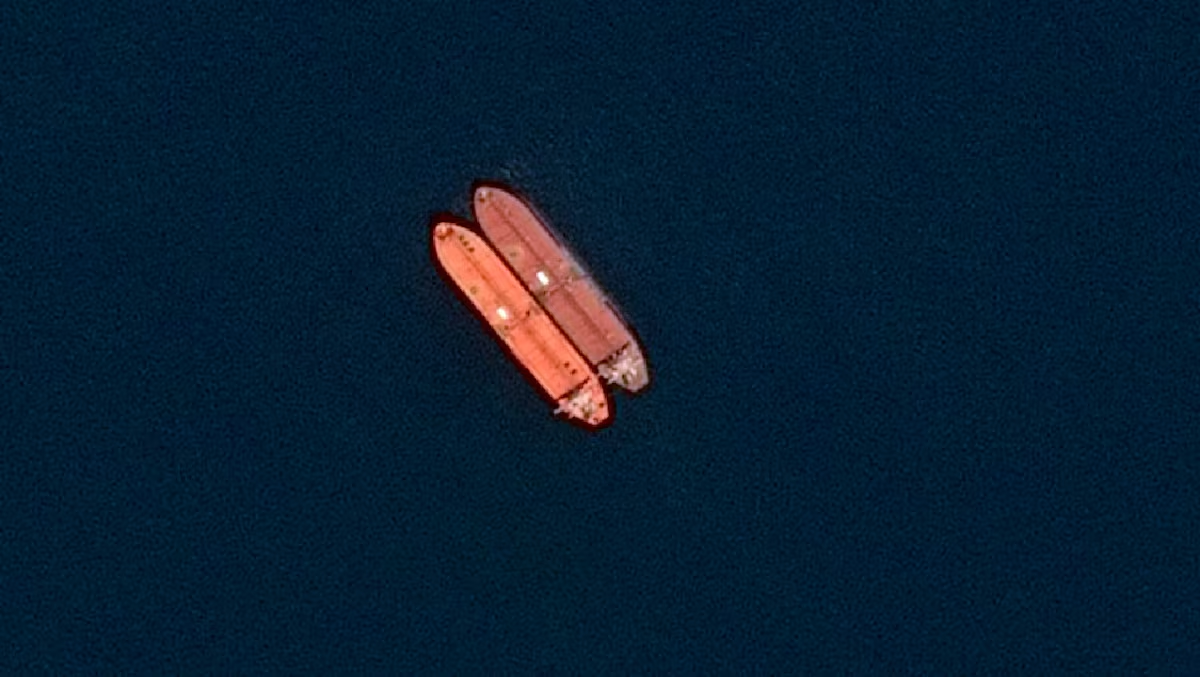
Saudi crude is being offered off Oman after pipeline damage, as trackers showed four VLCCs loading 8 million barrels in the Gulf.
Saudi Aramco has offered Arab Light, Arab Medium and Arab Heavy to term buyers in Asia for ship-to-ship transfer near Sohar port, people familiar with the matter said. Sohar sits outside the Strait of Hormuz, the narrow waterway that links the Gulf with wider export routes.
Saudi Aramco declined to comment. The buyers who described the offers were not authorized to speak publicly, making the precise scale of accepted cargoes unclear.
Sohar offers widen export routes
The offers point to a wider effort to move more barrels out of the Gulf for onward loading beyond the strait, according to the people familiar with the matter. In recent weeks, Aramco made at least two similar offers of Arab Medium and Arab Heavy to Asian customers, they said.
The grades matter for refiners because Arab Light, Arab Medium and Arab Heavy are built into long-term supply programs across Asia. A change in loading point can affect voyage planning, insurance arrangements and the timing of refinery crude intake even when the contracted grade is unchanged.
Saudi loadings inside the Gulf have also risen. Energy Aspects, using satellite tracking, said daily crude loadings at Ras Tanura and Juaymah doubled over the past week to about two very large crude carriers a day, equal to roughly 4 million barrels.
Kpler data separately showed four very large crude carriers loading at Ras Tanura on Wednesday, with combined capacity of 8 million barrels. Those figures describe vessel capacity and terminal activity, not final delivered volumes.
Yanbu delays reach Asian buyers
The shift follows damage to Saudi Arabia's East-West pipeline, which carries crude to Yanbu on the Red Sea. The kingdom shut the line on Friday after drone attacks, according to the people familiar with the matter.
The pipeline gives Saudi Arabia a route to export crude from the Red Sea when movements through the Strait of Hormuz are disrupted. With that route closed, the people said Aramco has leaned more heavily on Gulf terminals and transfer options outside the waterway.
At least one Asian buyer with cargoes scheduled to load this month said it received notice from Aramco that Yanbu shipments would be delayed and rescheduled. The notice did not give a length for the delay, leaving refiners to adjust schedules without a confirmed new loading window.
Other Gulf producers have also offered more crude for loading outside the Strait of Hormuz after securing vessels to shuttle supplies through the waterway, people familiar with those arrangements said. Some of those vessels have moved with tracking signals switched off, they said.
Hormuz risk shifts to logistics
For Asian refiners, the immediate issue is less the quality of crude than the reliability of delivery slots. Ship-to-ship transfer near Sohar can preserve access to Saudi grades, but it adds another operational step between Gulf terminals and refineries.
For Aramco, the workaround may help maintain term supply if Gulf loadings continue near the 4 million-barrel daily level tracked by Energy Aspects. If the Yanbu disruption lasts longer, the company may need to juggle grades, terminals and vessel availability across more customers.
The industry effect runs through freight, insurance and scheduling. If transfers outside Hormuz become routine, tanker demand for shuttle movements through the strait may tighten and refiners could face more complicated delivery calendars.
The macro effect depends on whether the disruption remains a logistics problem or starts to cut export availability. If barrels keep moving through Sohar and Gulf terminals, the pressure is more likely to appear in shipping costs and risk premiums; if delays widen, Asian buyers may seek alternative spot cargoes.
The main open questions are the repair timetable for the East-West pipeline, the number of buyers accepting Sohar loading and whether vessel movements through Hormuz remain available. Those answers will determine whether the episode stays contained or feeds into broader crude-market tightness.