Strait of Hormuz traffic falls as Gulf risks persist for oil
Strait of Hormuz visible vessel traffic fell to 17 ships over the weekend, while Gulf oil exports continued on partly untracked routes.
Lauren Collins ·
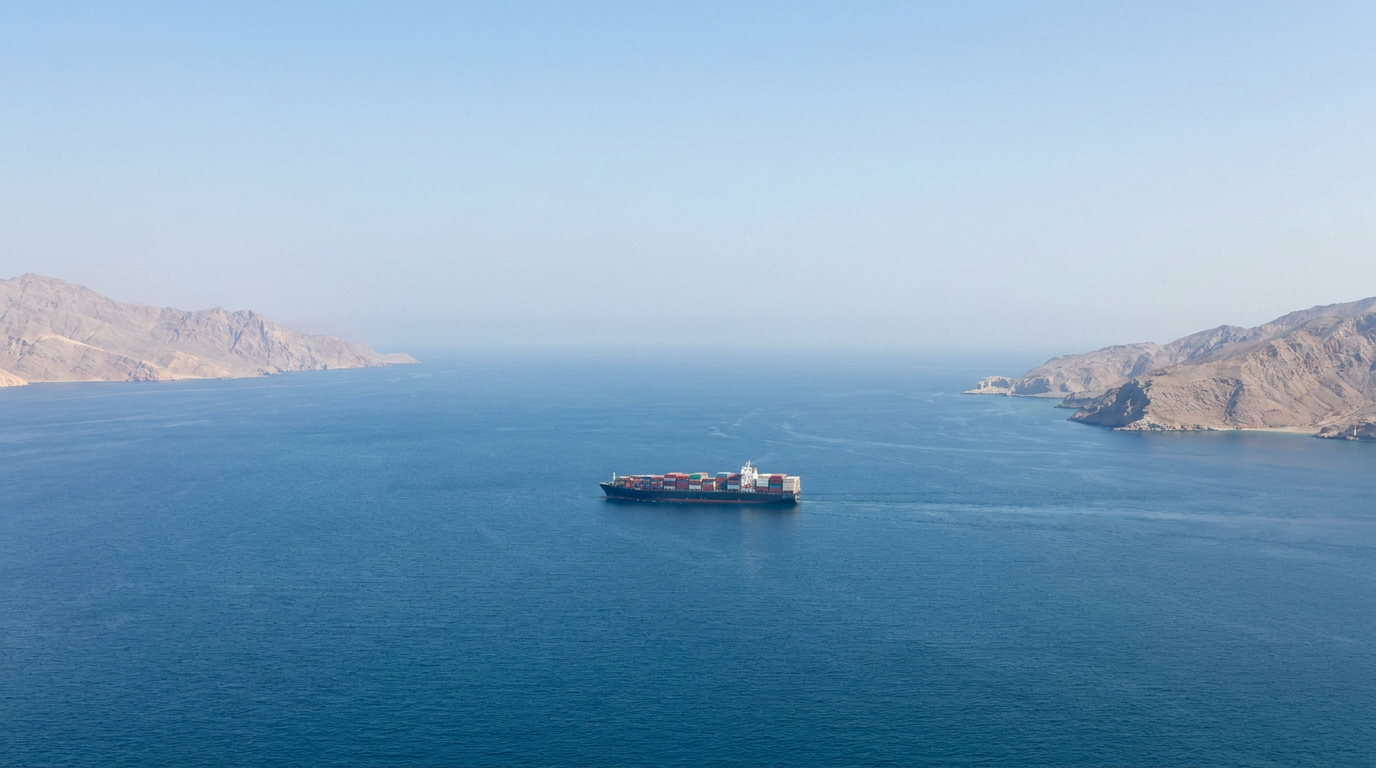
Strait of Hormuz visible traffic fell to 17 commodity vessels over the weekend, while Gulf oil shipments continued on untracked tankers.
The count was down from 37 vessels the prior weekend, according to provisional Kpler data as of 0706 GMT on Monday. Before the US-Israeli war with Iran began on February 28, 2026, the waterway typically handled about 125 large commercial ships a day, including tankers, gas carriers, bulkers and container vessels.
The gap between tracked crossings and continuing exports is now central to the market signal. The Strait of Hormuz had carried about one-fifth of the world’s oil and liquefied natural gas before the war, making even partial visibility a weak guide to actual flows.
Seventeen tracked weekend passages
Among vessels visible to tracking systems, five ships exited the strait on Sunday and two small oil tankers entered the Gulf, Kpler data showed. The exiting group included the very large crude carrier Pinios, two tankers carrying refined products and two empty carriers built for bulk goods and gas.
The largest tracked crude movement was off Fujairah in the United Arab Emirates, where Pinios was transferring 2 million barrels of Iraqi Basrah crude to another VLCC, New Constant, Kpler and LSEG data showed. A 2 million-barrel cargo is roughly the capacity of a full VLCC, and the receiving ship was expected in the data to head to China.
Saturday’s visible traffic was broader but still thin against the prewar baseline. Eight vessels left the Gulf carrying crude, agricultural goods, refined products, liquefied natural gas, liquefied petroleum gas and fertilizer, while one very large gas carrier and one VLCC entered, the data showed.
Gas shipments also remained present in the tracked stream. Shandong Redwood, an LNG tanker carrying a cargo loaded at Qatar’s Ras Laffan port, exited the strait on September 19, 2026, and was heading to Pakistan, according to Kpler and LSEG data.
Saudi barrels return to Hormuz
Saudi Arabia’s routing choices have shifted after Houthi attacks on Saudi Aramco’s East-West pipeline, a key alternative to Gulf export lanes during the Iran war. The state energy company has increased exports through the Strait of Hormuz for this month and next, according to the shipping data.
In the week of September 13, 2026, 22 tankers, mostly VLCCs, exited the strait carrying 42 million barrels of crude, Kpler data showed. Saudi Arabia and Iraq each accounted for 43% of that volume, making them the equal largest contributors in the tracked weekly flow.
The change creates a clearer split between those who gain from continued access and those exposed to route disruption. Asian buyers receive cargoes that still move through the Gulf, while producers and shipowners face higher operational uncertainty when transponders are switched off or alternative routes are constrained.
At the Bab el-Mandeb Strait, the southern gateway to the Red Sea, 51 vessels crossed over the weekend, down from 57 vessels a week earlier, Kpler data showed. Of those, 33 vessels exited the strait, including an Aframax tanker carrying about 700,000 barrels of Saudi crude.
Saudi Arabia’s Red Sea outlet also showed a pause in visible activity. There have been no tracked oil loadings from Yanbu since September 16, 2026, according to the shipping data.
Two routes shape prices
If Hormuz remains passable while many tankers keep transponders off, the global macro effect is likely to be a risk premium built around uncertainty rather than a confirmed supply loss. For Saudi Aramco, that path keeps exports moving but leaves its logistics more dependent on Gulf access; for shipping and energy traders, it raises the value of vessel intelligence and insurance capacity.
If attacks keep limiting the East-West pipeline and visible Hormuz traffic stays depressed, the pressure would shift from monitoring to physical routing. That scenario would tighten Saudi Aramco’s export flexibility, complicate scheduling for refiners in Asia and make freight markets more sensitive to each confirmed crossing.
The central open question is whether the decline in tracked vessels marks a durable reduction in commercial movement or mainly a loss of visibility as ships switch off transponders. The distinction matters: one points to a supply constraint, while the other points to a market trying to price oil flows it can no longer see clearly.