Satirical Arcade Cabinets Turn Up at DC War Memorial
Unauthorized arcade-game installations mocking the Iran war appeared at the DC War Memorial and have been tied to the same group that placed the…
Sophie McAlister ·
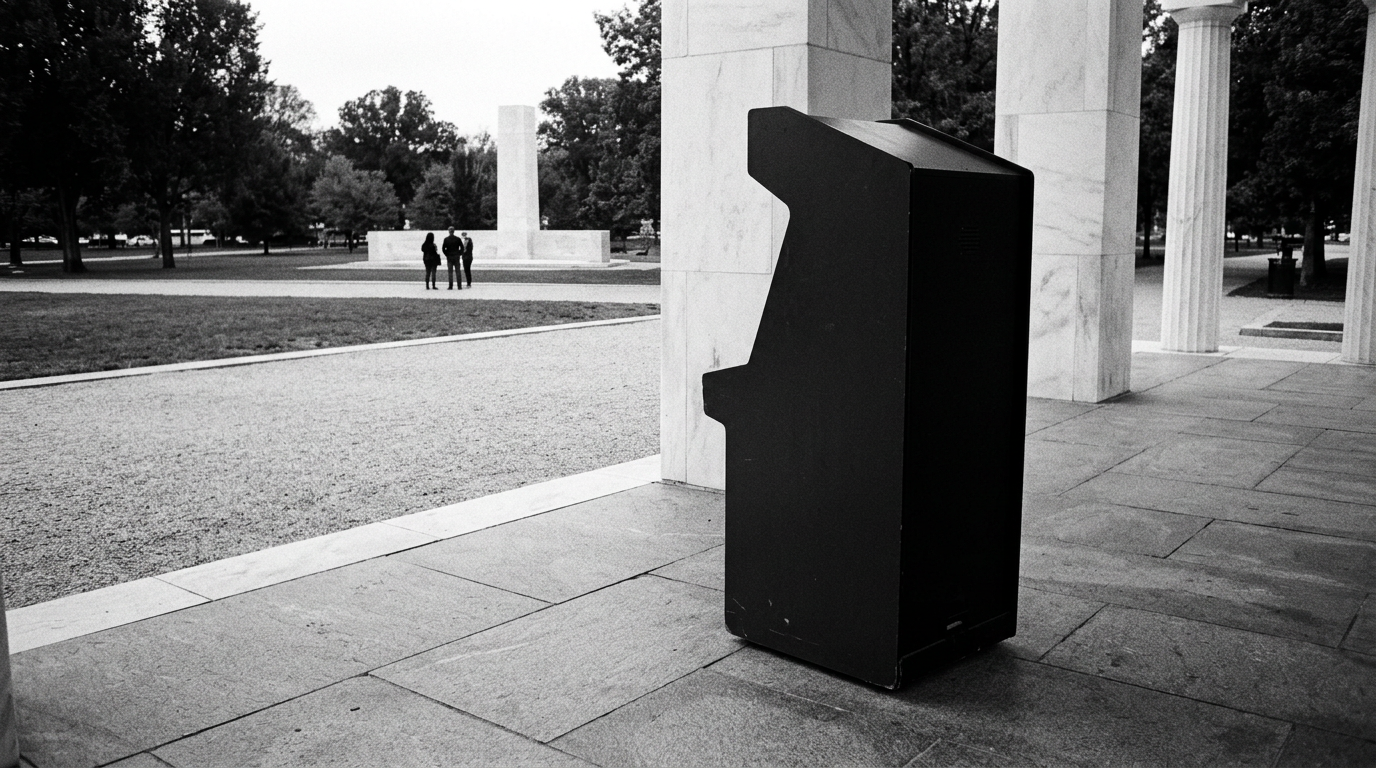
Unauthorized arcade-style game cabinets appeared at the DC War Memorial earlier this week, placed on the monument's public grounds without a city permit. The games, which use satire to comment on the war in Iran, were short-lived but drew attention to how public memorials are being used as stages for political art and protest.
The installations are being attributed to the collective responsible for a controversial Trump–Epstein Friendship Statue that surfaced in the city last year. Organizers behind that previous stunt have used similar tactics — uninvited public displays and provocative imagery — to generate media attention and public debate.
What was installed
Observers described the installations as free-standing arcade cabinets with screens and signage that framed the Iran war through satire. The units were placed directly on the memorial site and were dismantled or removed after a short period. There were no reports of injuries or damage to the memorial structure itself in initial accounts.
City property and public reaction
The DC War Memorial sits in a heavily visited public park and is managed under municipal rules that require permits for fixtures or events on public property. The presence of the arcade displays prompted concern from visitors and civic-watchers about unauthorized use of a war memorial and the precedent set by guerrilla art on public monuments.
Past actions by the same group prompted debate across the city about whether such provocations are protected expression or unlawful interference with public property. Local civic groups and monument stewards typically prefer formal permitting to maintain preservation standards and ensure visitor safety.
Legal and civic follow-up
City agencies typically review unpermitted installations and may remove unauthorized fixtures from public land. In some previous cases, organizers of unsanctioned public stunts faced fines or police inquiries; at a minimum, municipal crews remove physical objects to restore the site.
The short-term presence of the arcade installations renewed conversation in neighborhoods near the memorial about how public spaces are policed and who gets to use them for political commentary.
Officials and community groups are expected to monitor the site and determine whether further action, such as formal removal orders or citations, is required.
Looking ahead, city officials, monument caretakers and the group behind the installations are likely to clarify next steps, including whether similar unsanctioned displays will appear elsewhere in the District.