Trump orders Reflecting Pool fixes as algae, paint spread
The Reflecting Pool faces new repairs after its blue coating peeled amid algae, following a high-profile arrest and debates over D.C.’s Height Act.
Sophie McAlister ·
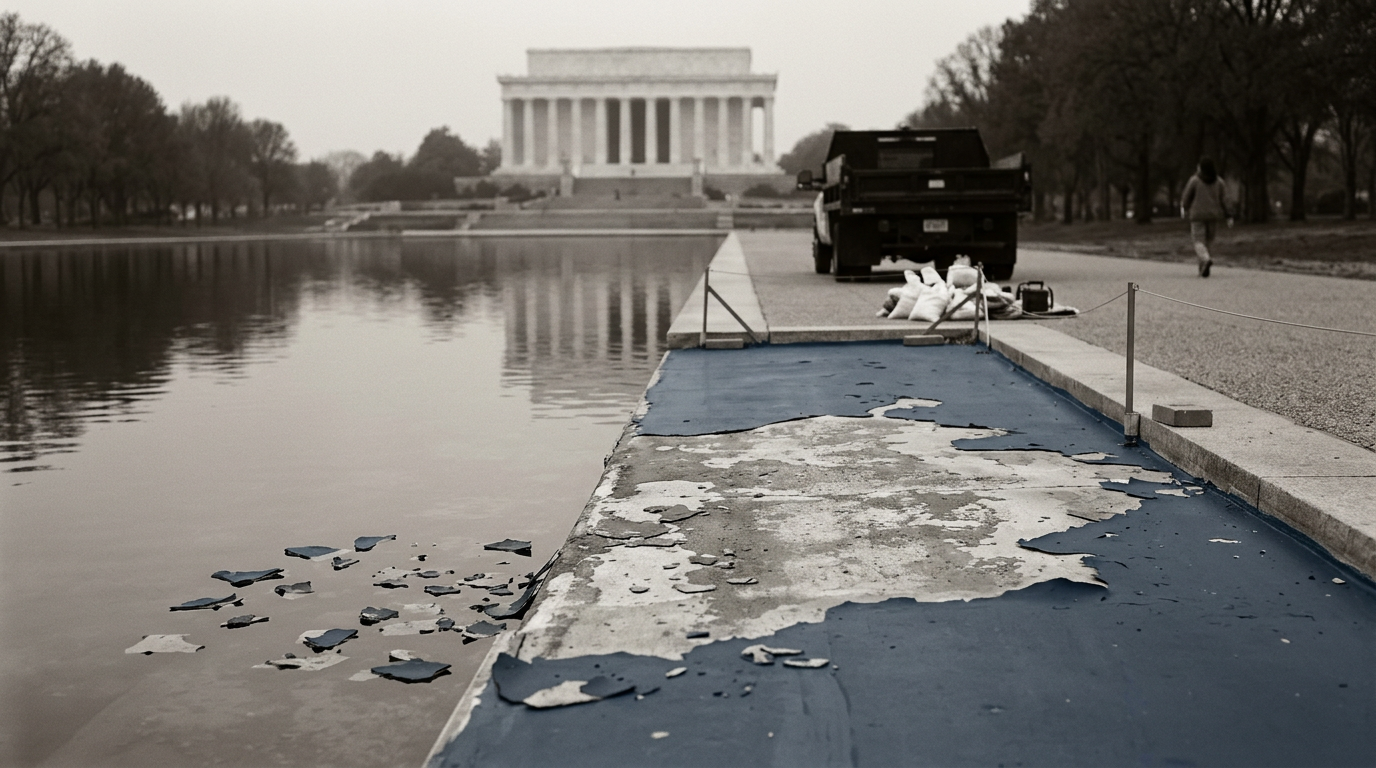
The National Park Service is preparing new work at the Reflecting Pool after President Donald Trump directed additional repairs following reports that a blue coating is peeling amid algae growth.
The order comes as U.S. Park Police arrested a 67-year-old, three-time Olympian, accusing him of vandalism after he reached into the water and touched a strip of paint. The man told investigators he was acting as a “curious, concerned citizen,” according to reporting by The New York Times.
The Reflecting Pool, a central feature of the National Mall between the Lincoln Memorial and the Washington Monument, has drawn heightened attention in recent days because of the visible deterioration of the newer surface treatment. The blue paint job has been estimated at $14 million.
Repairs announced as algae and peeling draw attention
Trump’s directive was issued yesterday, framing the damage as the result of vandalism as images and eyewitness accounts circulated showing sections of paint lifting from the pool’s surface. The administration has not released a detailed scope, timeline, or procurement plan for the added repairs.
The algae conditions described in the reports point to broader maintenance challenges that can affect shallow, high-visibility water features during warmer periods. Even minor surface failures can become immediately apparent along the Mall, where foot traffic from visitors, school groups, and residents is constant.
District leaders and local stakeholders do not control the Reflecting Pool, which sits on federal land and is managed through federal agencies. Still, the pool’s condition often becomes a civic issue for Washington because it is among the city’s most photographed public spaces and sits adjacent to major commemorations and public gatherings.
Arrest follows dispute over what happened at the waterline
U.S. Park Police said they arrested the 67-year-old, a three-time Olympian, after he reached into the water and made contact with peeling paint. Trump described the incident as vandalism, while the man’s account cast the act as an attempt to understand what he believed was a maintenance problem.
Authorities have not, in the material cited by the reports, publicly detailed what evidence they are relying on beyond the physical interaction with the paint strip. The arrest places an unusually public human story alongside what is otherwise a facilities and preservation matter.
For residents of nearby Foggy Bottom and visitors approaching from the West End and Georgetown, the Reflecting Pool is often encountered as part of a walk that is both scenic and symbolic. That makes visible deterioration—and enforcement actions around it—especially likely to generate rapid, emotional reactions.
Height Act memo raises stakes for other federal plans
Separately, as a proposed 250-foot arch moves through approval, a new Trump administration memo argues that Washington’s Height of Buildings Act does not constrain federal projects. The Washington Post noted the interpretation could open the door to substantially taller construction on federal land, including by a president known for building skyscrapers.
While the memo is distinct from the Reflecting Pool repairs, it underscores a broader posture toward federal authority in the District’s core. For D.C., where land-use fights often involve overlapping jurisdictions, a federal claim that local height limits do not apply could shift expectations for what gets built near monumental areas and federal corridors.
The immediate next steps are twofold: the Park Service must define how it will address the peeling surface and algae conditions at the Reflecting Pool, and reviewers must determine how the Height Act argument is treated as the 250-foot arch proceeds. In both cases, the practical questions—cost, schedule, and who has final say—are likely to drive the next round of public scrutiny.